


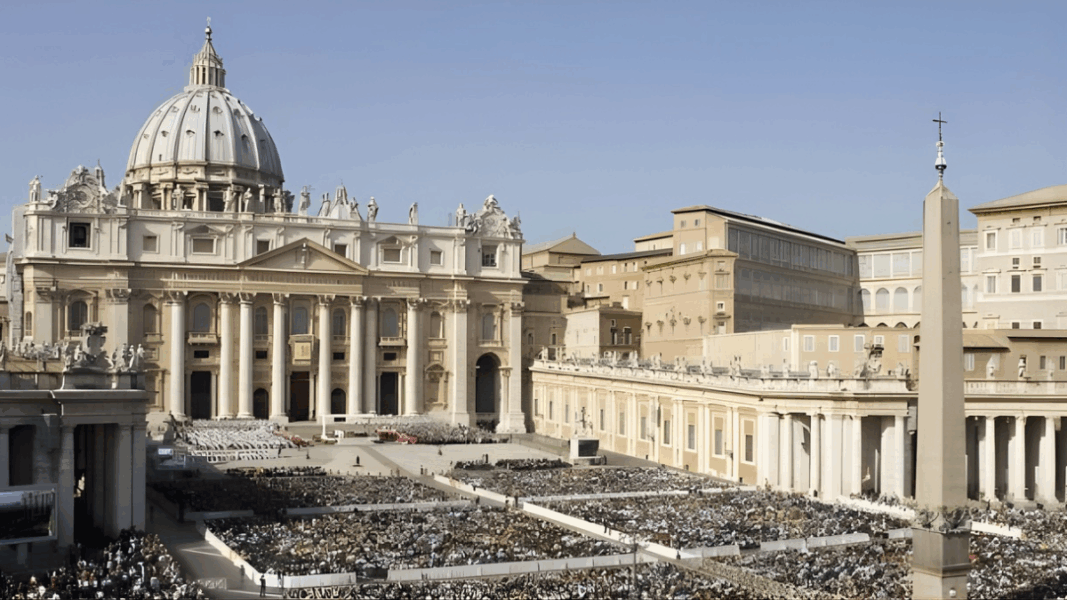
The Holy See has published on this November 24 the new General Regulations of the Roman Curia, approved by Leo XIV and which will enter into force on January 1, 2026 for five years ad experimentum. The document is not a minor adjustment, but a complete reconstruction of the curial system: from the administrative structure to the documentary regime, including digitalization, the rights of the faithful, and the renewed centrality of the Secretariat of State.
The text also marks the closure of the cycle begun in 2022 under the pontificate of Francis, when a Chirograph ordered a review of the entire normative apparatus to adapt it to Praedicate Evangelium. What was then a provisional commission—presided over by Mons. Filippo Iannone and made up of high-ranking officials of the Holy See—today concludes its work with a completely renewed body of norms… and profoundly different from the ecclesial climate that marked the last years of the previous pontificate.
A historic separation: Curia and personnel for the first time in distinct texts
For decades, a single regulation mixed administrative, labor, and institutional norms. The new model, initially promoted in 2022, introduces a clear division: General Regulations on the functioning of the dicasteries, processes, internal relations, and official acts, and the Personnel Regulations that govern hiring, obligations, evaluations, ethics, and integrity.
It is not a cosmetic change. The Holy See adopts a clearer and more professional organization, consistent with contemporary standards of public administration, something long demanded—especially after years of opacity and bureaucratic disorder in the previous stage—.
Latin is no longer mandatory
The most visible change is in the use of languages. Acts no longer need to be drafted “by rule” in Latin. The new text normally allows the use of Italian, English, French, or other modern languages, without needing to be justified as an exception.
Transparency and right to response: a necessary shift after years of silences
The new Regulations introduce a key novelty: every request addressed to the Holy See must be registered, assigned to a responsible party, and receive a response.
This is the first time that a right of the faithful to have their requests not fall on deaf ears is explicitly recognized.
Until now, the practice—especially in painful or controversial matters—was to respond selectively. That institutional silence, which for years protected unclear internal maneuvers and fueled illegitimate pressures, is banished by a traceable and controllable system.
Recovered centrality of the Secretariat of State: the end of a fragmented stage
The text clearly reinforces the role of the Secretariat of State, weakened during the pontificate of Francis by decisions and prejudices that generated unnecessary tensions and lack of coordination.
The new Regulations establish the obligation to share documents among dicasteries, coordinated management of multiple competencies, periodic review of internal reports, co-signing of common acts, and systematic sending to the Secretariat of State of every act intended for the Pope.
The Curia ceases to be a mosaic of watertight compartments and becomes an integrated and hierarchically ordered organism.
A modern administration
The Holy See assumes a modern administrative system. Now every act must be legally motivated, there is an internal appeals procedure, the dicasteries can review their own decisions, everything is recorded in a single archive also digital and the electronic notification acquires legal value.
These obligations, non-existent in the previous regime, make curial acts more verifiable and less arbitrary.
End of discretionary interventionism
The Regulations set clear norms to avoid unilateral decisions without dialogue with the particular Churches; therefore, every intervention regarding a diocese requires listening to the bishop first, decisions on religious institutes require dialogue with the superiors, and measures on movements must respect the competence of the bishops and the corresponding dicastery.
It is an explicit correction to the practice—frequent in past decades—of acting “from above” without consulting, injuring basic human and canonical rights. The Curia returns to being at the service of the bishops, not above them.
Digitalization, archive, and security
For the first time, a system ofmandatory digital archiving is established, classification of reserved acts into three levels, access logs, controlled destruction of documents, and the use of certified IT systems.
The Vatican thus leaps from an analog structure to a digital administration after years of delay. On this point, the harmony between Leo XIV and the technical bodies has been total: the Pope has even ordered the digitalization of the Pontifical Household to modernize even the most basic processes.
Training, integrity, and evaluation
The new system requires mandatory ongoing training, annual performance evaluations, declaration of conflicts of interest, and ethical criteria linked to the Personnel Regulations.
None of this existed before. The reform introduces responsibility, rigor, and professional demands in an environment that for years was marked by informality and lack of control.
A new institutional spirit
Seen as a whole, the reform is not a technical update but an institutional refounding: the Curia passes from being a rigid, slow, and divided conglomerate to a functional, connected, and transparent organism.
Leo XIV himself asked to review and perfect various passages before granting final approval, which explains the more balanced tone and the clear correction of certain trends from the previous stage.
As an internal source cited by Silere Non Possum points out, the documents “not only apply Praedicate Evangelium, but correct its course”.
With this norm, the pontiff marks a clear direction: a more orderly and more responsible Curia.