


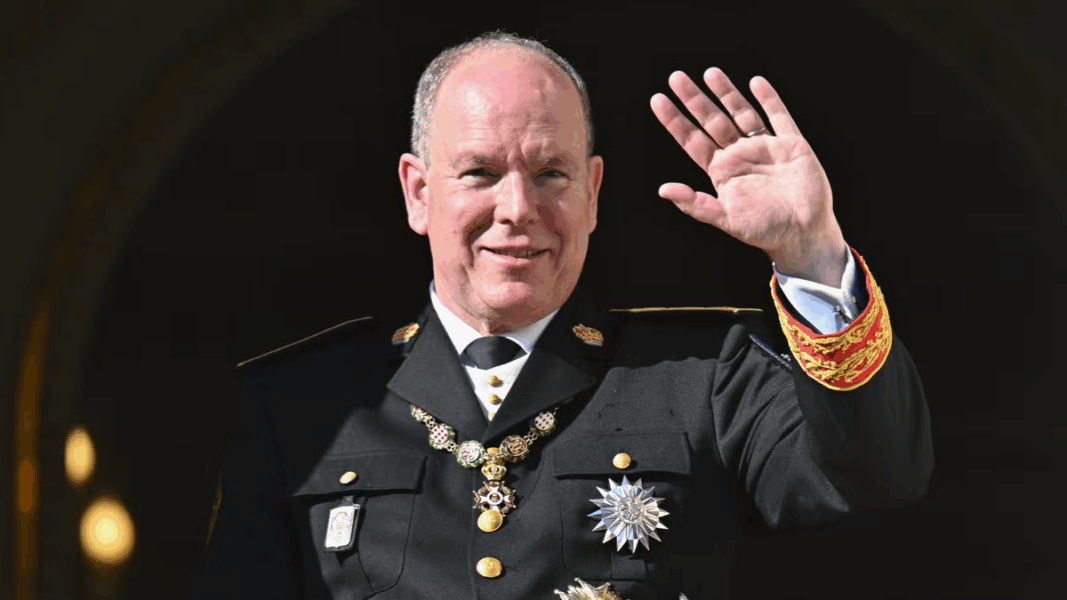
Monaco has traditionally maintained one of the strictest legislations in Europe on abortion matters. Until a few years ago, the interruption of pregnancy was penalized in any circumstance: women could receive sentences of up to three years in prison, and doctors risked even professional disqualification.
Since 2019, abortion has been decriminalized—that is, it no longer entails criminal sanctions—but it remains illegal except in the exceptional cases established by the 2009 law. As the Catholic News Agency recalls, this situation has led many women to resort to France to abort, where the practice is legal, without this being prosecutable by Monégasque authorities.
The sovereign’s position is supported by an explicit constitutional principle: the Catholic religion is the religion of the State. This recognition is not merely cultural, but a pillar of the country’s anthropological and legal vision. With his veto, Albert II reaffirms this foundation.
The Magisterium’s warning about “abortion laws”
To understand the scope of the prince’s decision, it is worth keeping in mind the Church’s doctrine on the legal value of laws that allow abortion. In Evangelium Vitae, St. John Paul II states that abortion laws are “laws completely devoid of authentic legal validity” and do not bind in conscience, as they contradict the very essence of law: the protection of the innocent.
The text emphasizes a key point: no human norm can declare just what is intrinsically unjust. Therefore, abortion cannot be configured as a right without destroying the first of all rights, the right to life.
A political decision that affirms a civilizational principle
Albert II’s refusal does not stem from a religious imposition, but from an anthropological and legal conviction: a civilization is measured by its capacity to protect the most vulnerable. And few human beings are more defenseless than the unborn child.
The prince has recalled that the defense of life does not oppose the rule of law, but sustains it. As Humanae Vitae teaches, human life is “sacred” from its origin, a gift directly linked to God’s creative action. Therefore, Paul VI warned, “it is not lawful, not even for the gravest reasons, to do evil that good may come of it” (HV 14).
An inevitable confrontation: the case of Andorra and the role of the episcopal Co-Prince
Albert II’s decision inevitably opens the comparison with another European microstate whose Catholic identity also conditions—and restrains—attempts to legalize abortion: Andorra. There, international pressure to introduce abortion into the legislation has intensified in recent years, but the country faces an institutional limit that Monaco does not have: the existence of a Co-Prince who is a bishop in office, the bishop of Urgell, which allows direct influence from the Vatican.
Read also: The Vatican asks for discretion on abortion in Andorra to buy time
This figure, provided for by the Andorran Constitution, makes the prelate—currently the bishop assigned to the Holy See—a head of State, along with the President of the French Republic. If abortion were legalized in Andorra, the episcopal Co-Prince would be in an impossible situation: to sanction a law that directly and explicitly contradicts Catholic doctrine on the inviolability of human life.
A reflection for the Holy See
It seems easier for a country that does not depend on the Holy See to decide clearly on abortion issues than for the Vatican itself to refuse a negotiation that puts the lives of innocents at stake.
In a recent publication, Msgr. Viganò clearly denounces the hypocrisy hidden behind the Vatican’s delays in this negotiation that seem to be extended to avoid giving a definitive response:
The «Synodal Church» listens to the «cry of the Earth,» while pretending to ignore the groans of the exterminated children. It is too busy promoting the «sustainable objectives» of Agenda 2030 (which also includes abortion, hypocritically defined as «reproductive health») to denounce the human sacrifices of this inhuman and anti-Christian society. Too busy profiting from the trafficking of illegal immigrants, which it should denounce as a tool for the Islamization of a once Christian Europe.
By vetoing the legalization of abortion, Prince Albert II affirms that a State can—and must—fulfill its essential mission: to defend the most defenseless human being. And he does so not as a confessional gesture, but as an elementary act of true civilization.