


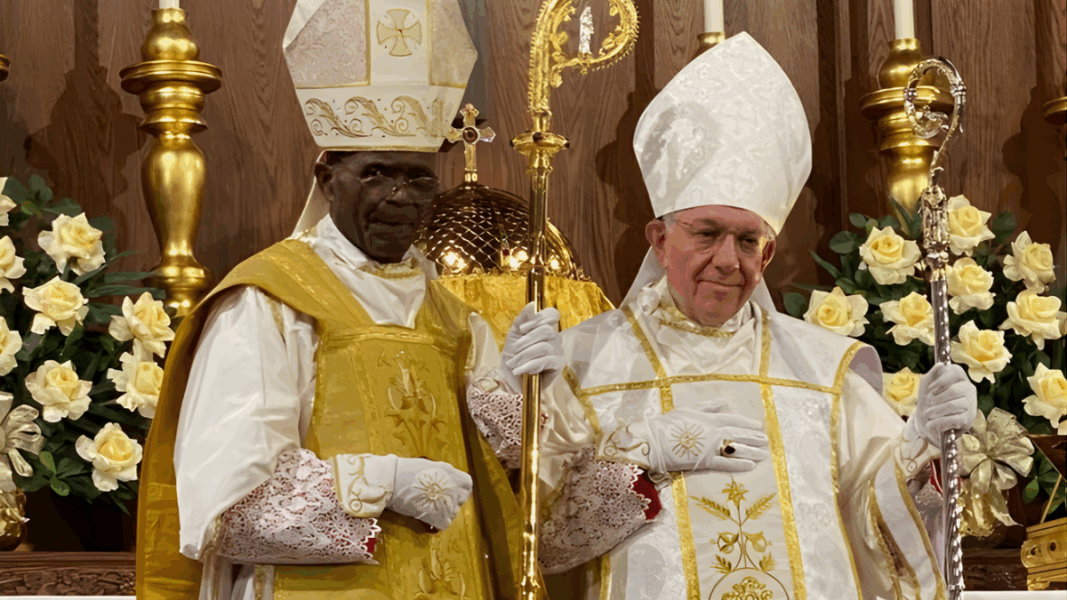
The father Anthony D. Ward, founder of the traditionalist community Servants of the Holy Family (Siervos de la Sagrada Familia, SSF), has publicly revealed that he was secretly consecrated as a bishop in 2024 without a pontifical mandate, an act considered illicit that has earned him automatic excommunication by the Holy See. The admission, announced after the Sunday Mass on November 16, confirms that both Ward and the prelate who consecrated him have incurred latae sententiae excommunication, as officially notified to them by Cardinal Víctor Manuel Fernández, prefect of the Dicastery for the Doctrine of the Faith.
A traditional community without canonical recognition
The Servants of the Holy Family were founded in 1977 and are headquartered in Colorado Springs (state of Colorado, USA). They are a semi-contemplative traditional Catholic community, dedicated exclusively to the celebration of the traditional Latin Mass and to apostolate through the liturgy and sacraments according to the ancient rite. In their public materials, the community presents itself as “faithful to the traditional Latin Mass and to Catholic doctrine and morals”, even aiming to count on the discreet support of bishops around the world who back their mission. However, it lacks recognized canonical status to date: it is neither erected nor approved by ecclesiastical authority and operates independently of the local diocese and the Holy See.
This irregular situation has caused long-standing tensions with ecclesiastical authorities. Already in 2004, the then Bishop of Colorado Springs, Msgr. Michael Sheridan, warned the faithful that Servants of the Holy Family was not part of the Roman Catholic Church, urging them to leave the community and return to full communion with the Church. In his pastoral letter of that year, Sheridan emphasized that “no one can claim to be authentically Catholic if they are not in communion with the diocesan bishop and the Pope”, going so far as to point out that the SSF’s separation from legitimate jurisdiction nullified certain sacraments administered by them, such as marriage and confession. Subsequently, in 2013, Msgr. Sheridan himself issued a formal decree reiterating that Ward and his congregation “were not on good terms with the diocesan Church nor with the universal Church”.
Father Anthony Ward: from the FSSPX to the founding of the SSF
Anthony Ward, born in the United States, was ordained a priest in 1973 by the French archbishop Marcel Lefebvre, founder of the Priestly Fraternity of Saint Pius X (FSSPX). As a priest of traditional spirituality, Ward initially held the position of first rector of the seminary that the FSSPX established in Armada (Michigan) in the 1970s. However, after internal disagreements, he left the fraternity in 1976 and the following year established his own religious community in Colorado, the Servants of the Holy Family.
From its beginnings, the congregation founded by Ward embraced the pre-conciliar traditional liturgy and a strict adherence to the Church’s classical magisterium but has rejected schismatic positions such as sedevacantism: the SSF recognizes the authority of the Pope and legitimate bishops, but maintains what they describe as a “resistance” to doctrinal or liturgical innovations that they consider incompatible with Tradition.
A distinctive feature of the community has been its efforts to ensure the validity of its sacraments: instead of consecrating their own bishops, for decades they resorted to bishops in full communion—often retired prelates or from distant dioceses—to ordain their seminarians, confer minor orders, administer confirmations, and provide the holy oils annually, all using exclusively the traditional rituals prior to 1970.
Clandestine episcopal consecration in 2024
In an unprecedented decision for the community, Father Ward received episcopal consecration confidentially on March 19, 2024 – the feast of St. Joseph – at the hands of Msgr. Telesphore G. Mpundu, emeritus archbishop of Lusaka (Zambia). The sacramental rite was carried out following the traditional Latin liturgy and without the Pope’s mandate, an indispensable requirement according to canon law (Canon 1387) for the licit consecration of a bishop. This secret ordination, while considered valid with regard to the sacrament itself, constituted an illicit act outside ecclesiastical discipline and, therefore, brought ipso facto the penalty of excommunication for the consecrating bishop and the newly consecrated bishop.
The identity of the consecrating prelate was kept reserved for more than a year within the community, but finally, on November 16, 2025, Ward publicly announced to his parishioners that he had been consecrated bishop in March 2024 by Msgr. Mpundu. In his address, he also revealed that both he and the Zambian archbishop had recently received an official notification from the Vatican informing them of the excommunication incurred by said act.
Excommunication notification from the Holy See
As confirmed by Ward himself, the notification came from Cardinal Víctor M. Fernández, prefect of the Dicastery for the Doctrine of the Faith, and it was a declaration of latæ sententiæ (automatic) excommunication based on the unauthorized episcopal consecration. No official communication from the Dicastery on this case has been made public to date, but Ward’s confirmation, who reported it with calm and acceptance, amounts to recognizing the validity of the decree and the gravity of the infraction in the eyes of Rome. From a canonical point of view, Ward is now a validly but illicitly consecrated bishop, and is outside full communion with the Church.
Reactions from Ward and the SSF community
In his message on November 16, Ward stated that he does not consider this disciplinary measure as a break with the Church, but as the consequence of a decision taken out of “fidelity to Tradition.” He explained that the consecration was motivated by the need to ensure the continuity of traditional sacramental life in the face of current restrictions.
The SSF community has backed its founder and reiterated its commitment to the traditional Mass and perennial doctrine. While no remorse was expressed for the illicit consecration, they insisted that they do not proclaim any formal break with Rome, and expressed their hope of regularizing their situation without renouncing the traditional liturgy.