


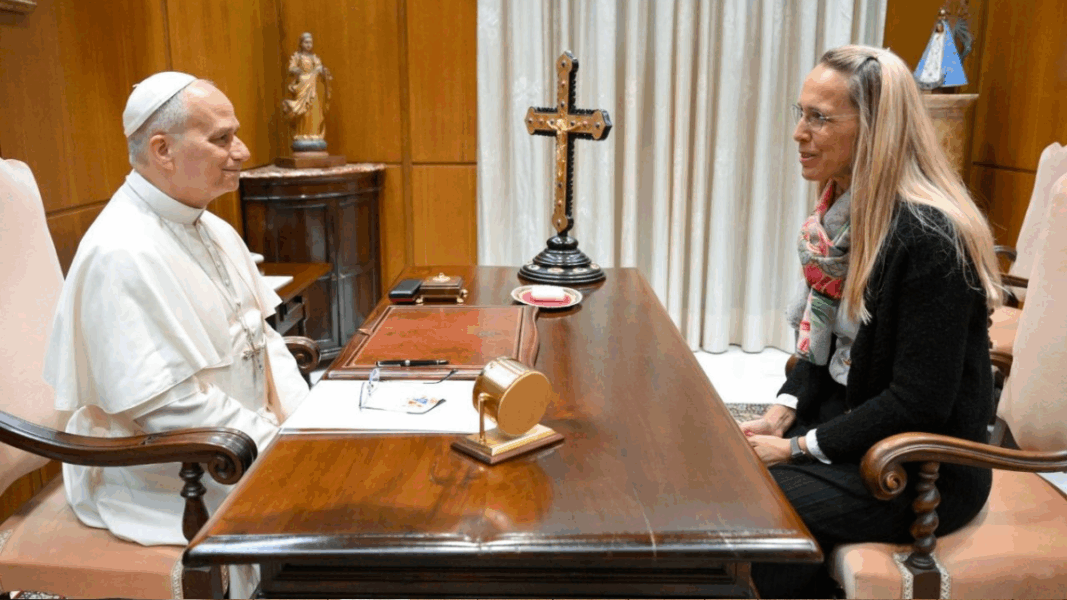
On the morning of November 22, 2025, Pope Leo XIV received in private audience Katharina Westerhorstmann, professor of Theology and Ethics at Franciscan University of Steubenville. The German theologian, known for her critical stance towards the German Synodal Way, was one of the signatories of the letters addressed at the time to Pope Francis to express her concern about the doctrinal orientation of the German process, especially regarding sexual morality and unity with Rome.
It is worth remembering that the Pope, from the beginning of his pontificate (May 2025), has dialogued with both German bishops critical of the Synodal Way—for example, receiving Bishop Stefan Oster of Passau—as well as qualified lay voices, including Westerhorstmann. Unlike his predecessor Francis, who had chosen to respond by letter to the concerns presented, Leo XIV has wanted to listen personally to the theologian, expanding the dialogue to discern how to address the current situation of the Church in Germany.
A Resignation with Doctrinal Weight
Trained in Moral Theology in Germany, she has been a professor at various European universities and collaborates as an advisor to the German Episcopal Conference. She is the author of several studies on sexual ethics, bioethics, and theology of the body. Her thought, influenced by Edith Stein, places at the center the dignity of the person, the vocation to love, and fidelity to Christ.
In 2022, Westerhorstmann resigned from her active participation in the Synodal Way’s sexual morality forum after realizing that her proposals were systematically excluded for not aligning with the majority reformist direction. She denounced a doctrinal drift that sought to alter Catholic moral teaching and break with Christian anthropology. Along with three other participants, she completely disengaged from the process in 2023, warning about an increasingly greater distancing of the Church in Germany from Rome.
Read also: Four German theologians ‘drop out’ of the Synodal Way due to its heretical drift
Westerhorstmann has maintained that human sexuality must be understood from the truth of Christian love, without subjectivisms or relativisms. She claims the value of chastity, the complementarity of man and woman, and marriage as the proper context for sexual life. She warns that modifying sexual morality implies altering the Christian vision of the human being. Regarding women, she defends their real protagonism in the Church, but without equating dignity to structures of power or ordination, as proposed by certain synodal currents.