


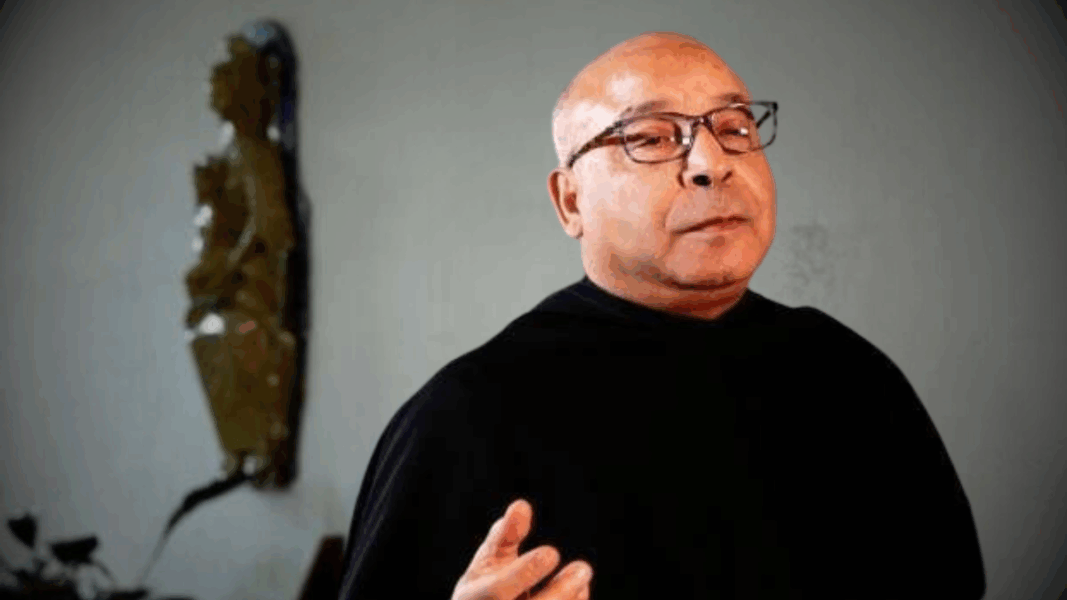
The renowned Italian Mariologist Salvatore M. Perrella, one of the most authoritative voices in the contemporary study of the Virgin Mary, has offered a critical reading of the Note Mater Populi Fidelis, published by the Dicastery for the Doctrine of the Faith. In an extensive interview granted to the Swiss media outlet RAI, the theologian warns that the document interprets Mariology from an “excessively Christological” framework and “too dependent” on the perspective of Pope Francis, leaving out essential dimensions for understanding Mary’s place in the economy of salvation.
According to Perrella, the doctrinal Note “opens necessary debates,” but reveals serious internal imbalances. In his view, the text reduces to practically zero the ecclesiological, anthropological, Trinitarian, and symbolic dimensions of Mariology, treating it solely from a perspective functional to Christ. This deficiency, he states, impoverishes the understanding of the tradition and hinders offering an integral vision of the faith.
The importance of doctrinal memory: a void that weakens the Note
Perrella emphasizes that the Magisterial explanation of Mary’s cooperation in the redemptive work should be supported by doctrinal developments after the proclamation of the dogma of the Immaculate Conception, where theologians and pontiffs—from Leo XIII to Pius XII—recognized in Mary a fruit of divine mercy and a subject of mission within the salvific plan. However, he considers that the new document does not adequately incorporate that evolution or the historical memory that sustains it.
The title “Co-Redemptrix”: tradition, nuances, and reductions
One of the central points of the interview is the critique of the assessment of the title “Co-Redemptrix.” Perrella is critical of the term, although he acknowledges its presence in the post-conciliar Magisterium, especially under St. John Paul II, who used both the title and equivalent expressions. “As a theologian, I cannot ignore it,” he states.
However, he condemns the way in which Mater Populi Fidelis disqualifies the title by relying exclusively on statements from Francis, without dialoguing with the previous theological and Magisterial tradition. The Mariologist recalls that Lumen gentium opted for an intelligent method: welcoming the previous vocabulary without absolutizing it or repudiating it. In his opinion, the Note from the DDF does precisely the opposite: it stigmatizes some traditional expressions without offering doctrinally more solid alternatives.
Disproportionate ecumenical concern and loss of Roman “sobrietas”
Another aspect that Perrella highlights is the ecumenical concern, which he considers legitimate but disproportionate. In his judgment, the Note sacrifices doctrinal depth to avoid tensions with other Christian confessions, something he qualifies as “a misstep.” He adds that the text suffers from excess length and a lack of sobrietas, a distinctive note of the traditional Roman Magisterium.
An inconsistent argument: excessive explanations?
In particular, the theologian is critical of the reasoning in paragraph 22, where the Dicastery argues that a title requiring too many catechetical explanations loses its utility. Perrella considers this logic unsustainable, for by that criterion, essential titles like “Mother of God,” “Immaculate,” or “Mother of the Church” should also be abandoned, all of which require extensive theological elaboration. “That is precisely the task of theology and catechesis,” he states.
The current doctrinal crisis: Mary as key to recovering the full faith
The Mariologist warns that the underlying problem is not Mary, but the contemporary doctrinal crisis itself. “Today many no longer believe in the Trinity, nor in the divinity of Christ,” he points out. In that context, the figure of Mary “is second but not secondary,” as Benedict XVI recalled, and her correct understanding would help recover the internal coherence of the faith. However, he accuses the document of offering a “too monophysite” vision, incapable of sustaining that task.
Lack of specialists in the preparation of the document
Perrella also regrets the absence of specialized competence in the drafting of the Note. In his view, a document of this nature should have involved experts in Mariology, dogmatics, and Magisterial tradition. The final result, he denounces, does not reflect the rigor that historically characterized the Dicastery for the Doctrine of the Faith.
Severe criticism of the use of the new norms on supernatural phenomena
The Mariologist devotes a particularly forceful critique to paragraph 75, in which the Note refers to the new norms of the Dicastery for the discernment of alleged supernatural phenomena. According to him, these norms—and the new document’s dependence on them—dilute the doctrinal heritage accumulated since 1978 and break with the prudent, historical, and profound line that had guided the Church until the Curia reform promoted by Francis.
Tradition, sensus fidelium, and devotion: keys that the Note does not incorporate
Perrella concludes by recalling that authentic Mariology does not arise from theoretical whims, but from the Word of God, the living tradition of the Church, and the sensus fidelium, where popular devotion continues to reveal profound wisdom. He points out that, over two millennia, the Christian people have invoked Mary with titles rich in theological meaning, such as those in the Salve Regina, which express the spirituality and intuition of the faithful as a whole. In his judgment, Mater Populi Fidelis fails to integrate that richness and thus misses an opportunity to strengthen the faith of the people of God.
We provide below the full interview translated into English:
Mater Populi Fidelis. For many, it is an inappropriate, harmful, and useless document…
Regarding the question of its uselessness, I disagree. Everything is useful in some way, even a controversial document, because it provokes and sustains debate. In this specific case, the doctrinal Note opens debates in theology and Mariology, especially regarding the different dimensions involved. It reveals a perspective that interprets Mariology in a strictly Christological sense. But there is little, almost no space for the ecclesiological and anthropological dimensions. And the Trinitarian and symbolic dimensions are completely absent. The document must, in any case, be understood within a much broader perspective.
What perspective?
Behind this Note, as the document itself suggests—and I hope the authors are aware—paragraph 20 must be considered, where Pope Francis’s stance on the title of Co-Redemptrix is addressed. The issue of Marian titles has always been on the agenda: it reappears and then fades. So, what can be said? Regarding titles related to Mary’s cooperation, these became the object of renewed reflection starting from 1854 with the dogmatic definition of the Immaculate Conception. It was precisely within the framework of Immaculist doctrine that deeper interpretations of Mary’s service or munus in the work of salvation were favored, using a variety of terms. Some, in truth, were entirely inappropriate, such as Redemptrix or Substitutrix of what is proper to God. This led theologians and popes, from Leo XIII to Pius XII, to understand the Immaculate in the work of salvation both as fruit and as mission: the fruit of mercy, Mary’s mission.
What was missing, in your opinion, in that interpretation?
First of all, Mary’s creaturely dimension was overlooked. Today that aspect is fortunately present, though perhaps somewhat excessively. In summary, we need a balance that is currently lacking. As for the doctrinal Note, my opinion—after reading and rereading it—is that it formally adheres, though not always accurately, to the teaching of the Second Vatican Council, especially Lumen Gentium 60–62, later taken up by John Paul II in Redemptoris Mater, particularly in paragraphs 40–42. These are today the pillars of the doctrine on Mary’s cooperatio. Personally, I am not a supporter of the title “Co-Redemptrix,” but as a theologian I cannot fail to take into account that it has also appeared in the post-conciliar Magisterium.
John Paul II, in fact, used the title Co-Redemptrix seven times. And although—after the Feria IV of the former Holy Office on February 21, 1996—he no longer used it, as the Note points out, it is also true that he subsequently used equivalent expressions such as Cooperatrix of the Redeemer or Singular cooperatrix in the Redemption. What can you say about this?
All true. Specifically examining the document Mater Populi Fidelis, I find it unmistakably “Franciscan,” in the Bergoglian sense. Paragraph 21, which introduces paragraph 22, resorts to three statements from Pope Francis to explain why the term Co-Redemptrix is “inappropriate” and “useless.” Personally, I would never have used such expressions. I prefer the intelligent approach of Lumen gentium, which takes into account the previous vocabulary: neither stigmatizing it nor adopting it. Moreover, I have the impression that the Note is dominated by ecumenical concern. And this, I believe, is a misstep. Such concern must be present, of course, but it should not be predominant. The priority should be the pastoral character of the doctrine. I also find the Note excessively long, in contrast to the Roman Magisterium, traditionally characterized by sobrietas, that is, conciseness.
What is particularly problematic is the following passage from paragraph 22: “When an expression requires many repeated explanations to avoid deviating from a correct meaning, it does not serve the faith of the People of God and becomes useless.” But from this point of view, titles like Mother of God, Immaculate, or Mother of the Church would also seem inappropriate, since they too require extensive explanations—the task that, after all, corresponds to theology and catechesis. Doesn’t it seem so to you?
Without a doubt. The truth is that we are in history, but we are not aware of it. This disconnection was already evident from the beginning with the title Theotokos. All the fuss around titles is artificial, because they have a single foundation: Sacred Scripture and what divine Providence, as Father Calabuig taught, willed and designated ab aeterno for Mary. The document—despite being broad and expansive—lacks historical memory. And that, so to speak, is a poverty. Even the very objective of the document; that is, drawing attention to Mary’s role in the work of salvation—expressed, moreover, in an excessively radical way—poses difficulties. Indeed, we should ask ourselves: What is today the urgent concern of the Church in matters of faith? Today people no longer believe in the Trinity; there are doubts about the divinity and messianic identity of Christ. Now, Mary is subsidiary to all this. Mary, to use an expression dear to Benedict XVI, “is second but not secondary.” And the Note, which I would describe as “too monophysite,” unfortunately does not help promote the integral and complete understanding of the Christian faith that is needed. In my judgment, the document required more careful consideration and elaboration, but above all it should have been prepared by competent people in the field.
In presenting Mater Populi Fidelis, Cardinal Fernández stated that certain Marian titles are a topic that “has caused concern to recent popes.” What do you think of that?
It does not seem to me that the popes have been troubled by such an issue. Their concern was something very different: the receptio immediate of Lumen gentium and of the Council. We continue to live under a mythical reception of Vatican II, whose documents, unfortunately, are not deeply known.
Paragraph no. 75 of the Note refers to the new Norms for Proceeding in the Discernment of Alleged Supernatural Phenomena, on which you have been openly critical. What are your reasons?
Forgive the neologism, but that paragraph is another “not so precious” pearl of the Note. And it is precisely because of its close connection with the new Norms published by the Dicastery in 2024. I always held in high esteem the Norms approved by Paul VI in 1978 and officially published in 2011. I particularly appreciated the preface signed by the then-prefect, Cardinal William Levada. At the time, having been consulted by the Congregation, I firmly encouraged a revision of Paul VI’s Norms, but from the perspective of a wise deepening, not a squandering of the great rhetorical and conceptual heritage of language, content, and perspectives.
Could you explain more?
To understand the new Norms and what has emerged in these two years of Cardinal Fernández’s prefecture, one must always keep in mind the figure—always present—of Pope Francis, especially his reform of the Roman Curia in Praedicate Evangelium. That constitution, which broke all diplomatic, political, and operational customs of the Vatican, has also had an impact on Mariology and the Marian identity of the Church. With the Curia reform under Francis, the Secretariat of State lost its primacy and coordinating role, while the principal dicastery became that of Evangelization. However, the primacy of evangelization cannot dispense with the words of Christ, who did not abolish even the smallest letter of the Law (cf. Mt 5:17-19). This fundamental principle should have guided—and should continue to guide—Magisterial declarations with greater prudence, greater respect for history and the present in a future-oriented perspective, and with careful attention to other realities. This also applies to the question of Marian titles.
The document also reflects on popular devotion. However, popular devotion has always had its own language—the language of the heart, of feeling. A notable example is the variety of titles with which, over two millennia, the faithful have invoked Mary, Mother of Christ and of the Church. Think, for example, of the liturgical antiphon Salve Regina, where she is invoked as Spes nostra and Advocata nostra…
They are titles that properly belong to the Holy Spirit, and yet we rightly attribute them to Mary by virtue of the principle of analogy. When I consider popular devotion and its language, I recall a splendid lecture that then-Cardinal Ratzinger gave at the Marianum on the double characterization of Mariology and the Marian dimension of the Church: namely, reason and feeling. From there arises the crucial question: How to harmonize these two demands? That is the real problem. Unfortunately, there are few well-prepared people in the Church who can help in this regard. And so, Mary continues to be exploited, as always, in the manner—if I may use the image—of an unpaid worker. If we really want to know Mary, we must do so through the Word of God and the sensus fidelium on the path of the Church.