


By Bishop James D. Conley
President Trump recently announced measures to expand access to in vitro fertilization (IVF) and reduce its costs. This is presented as an effort in favor of the family and life to help “American families have more babies.” Although the intention and goal are noble, IVF, in reality, undermines human dignity, marriage, and family life for various reasons.
But first, a word for those conceived through IVF, those who suffer from infertility, and, by extension, those who struggle with this aspect of Church teaching, which can seem contradictory, confusing, and even harsh.
- For anyone conceived through IVF, know that you are a gift, not only to your parents, but to all of us. Regardless of how a person was conceived, every human being has been created in the image and likeness of God and, therefore, is loved by God and shares the same inviolable dignity as each one of us.
- For those who struggle with infertility, I walk with you in your sufferings. There is a deep longing in the human heart to love and be loved. Spouses desire to unite in conjugal intimacy and bring a new human life into the world. When that desire is not fulfilled, it can cause disappointment, stress, shame, envy, anger, and despair.
- Like so many other sufferings, infertility is part of the mystery of Original Sin and the wounded and fallen world in which we live. However, God calls us to carry these crosses with grace and dignity.
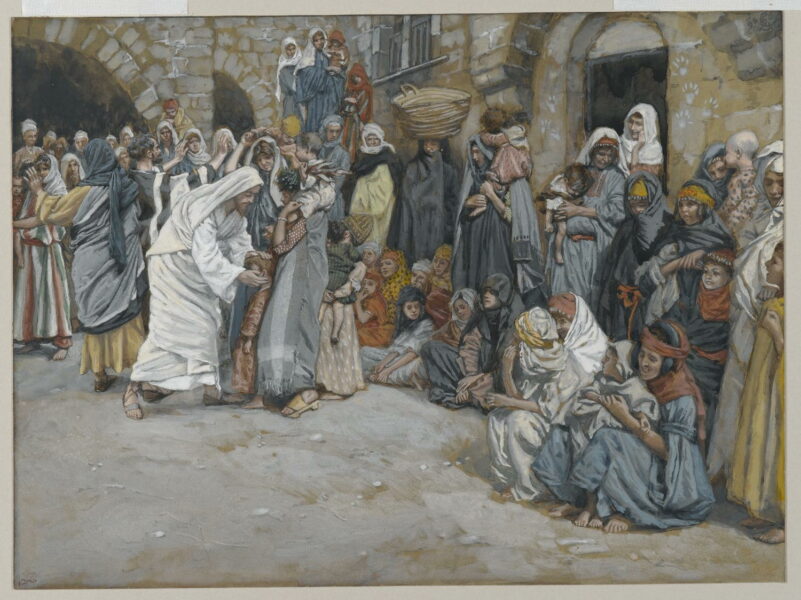
We do not need to carry our crosses alone. Jesus meets us in our sufferings. He walks with us, desires to restore us, and hopes that we see the good that He can bring out of suffering. As the Sisters of Life so beautifully say: “Jesus intimately knows the sterile desert and longs to meet us there until we can rest renewed with Him in the Promised Land.”
The Church supports technologies and medical interventions, such as restorative reproductive medicine, that help marriages address the root causes of infertility and achieve pregnancy naturally through sexual union. These interventions often have great success. Given the number of people with reproductive health issues, these efforts deserve greater commitment from our scientific and medical resources.
Infertility cannot always be successfully resolved, either through restorative measures or IVF. But restorative options offer great hope and opportunities to marriages, while at the same time respecting the dignity of human life, marriage, family life, and Church teaching.
Returning to President Trump’s recent executive action, there are several key reasons why this measure is ethically and morally misguided.
As our United States Conference of Catholic Bishops recognized, “the IVF industry treats human beings as products and freezes or kills millions of children who are selected to be transferred to a uterus or who do not survive.”
It is important to understand that in almost every IVF cycle, many more embryos are created in the laboratory than can or should be implanted in the intended mother’s uterus. Those not implanted are destroyed, frozen indefinitely, or abandoned, which often turns those tiny human beings into victims of medical experimentation.
Often in IVF, multiple embryonic human beings are implanted in the uterus and survive, but are then “eliminated” because they may endanger the life and health of the mother. In other words, the lives of these babies are ended through “selective reduction” abortions.
None of this is pro-life or pro-family. It is a disregard for human dignity and the true value of each individual life, one of the clearest examples of the “culture of discard” against which Pope Francis warned us.
At a fundamental theological level, IVF undermines the conjugal act as the natural means to achieve pregnancy. Instead of begetting new life through an act of love between husband and wife in accordance with God’s design for life-giving love, IVF relies on medical professionals and technicians who manufacture new lives—some to keep, others to discard—through the fusion of sperm and eggs in a Petri dish.
As John Haas, ethicist at the National Catholic Bioethics Center, has pointed out:
[In] IVF, children are begotten through a technical process, subjected to “quality control” and eliminated if they are considered “defective.” In their very coming into existence, these children are totally subjected to the arbitrary decisions that produce them.
Sometimes, in the IVF process, sperm or eggs from a “donor” are used, someone who is paid to provide genetic material and then disconnects forever. This raises profound concerns about the inherent right of children to come into the world through the loving embrace of their biological mother and father.
Another moral dilemma generated by IVF is what to do with the millions of babies in embryonic state who are frozen in liquid nitrogen and then “stored” in some laboratory repository. Should they be discarded? Preserved until ethical technologies or interventions allow their gestation and birth? Used for experimentation?
Who will regulate the sale of embryos?
These practical dilemmas—which occur in a virtually unregulated IVF industry—shed more light on this inhuman and immoral practice and show why this path is full of ethical dilemmas.
Ryan Anderson, president of the Ethics and Public Policy Center, notes that President Trump’s measures are “the least bad we could have hoped for.” There is no mandate for employers, no government subsidies for IVF, no violation of religious freedom or conscience rights, as was initially feared. There are also provisions for “comprehensive and holistic restorative medicine,” which can help promote more ethical options.
Conversations about the dignity of human life, marriage, family, and IVF can be difficult. But God has called us to witness to the goodness, truth, and beauty of the human person and human relationships: the Gospel of Life and the Culture of Love that He desires for our country.
So, in the words of Jesus: “Do not be afraid!” Have the courage to be witnesses and evangelizers of the Gospel of Life in all its fullness.
About the author
The Most Rev. James D. Conley is bishop of Lincoln, Nebraska, National Episcopal Advisor of the Catholic Medical Association, and chairman of the Episcopal Advisory Board of the Catholic Health Care Leadership Alliance.