


The Heralds of the Gospel, an international association of the faithful approved by the Holy See, have been living since 2017 under a canonical intervention that has been prolonged for eight years. The apostolic visitation and the subsequent commissariat—instituted by the then-prefect of the competent Dicastery, Cardinal João Braz de Aviz—have generated deep controversy, especially due to legal irregularities, abuses of authority, and unilateral decisions that, according to numerous documents, marked the entire process.
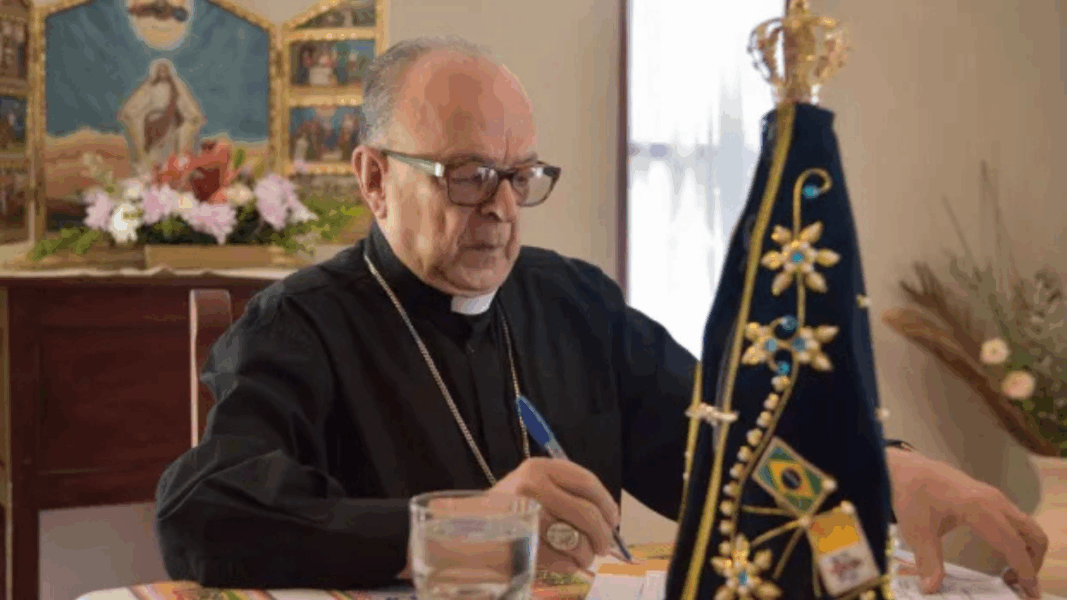
The figure of Cardinal Raymundo Damasceno Assis, who presented his letter of resignation on November 18, was at the center of the daily management of the commissariat. Appointed pontifical commissioner for the three entities linked to the Heralds, his role is described in a complex manner: at once responsible for executing the Vatican’s orders and a victim of pressures, internal sabotage, and decisions taken above him.
From Infovaticana, we present a reconstruction of Damasceno’s profile as set forth in the book: The Commissariat of the Heralds of the Gospel. Chronicle of the Events 2017-2025. Sanctioned without Dialogue, without Evidence, without Defense, Coordinated by Prof. Dr. José Manuel Jiménez Aleixandre—doctor in Canon Law from the Pontifical University of St. Thomas Aquinas (Angelicum) in Rome—and Sister Dr. Juliane Vasconcelos Almeida Campos, doctor in Philosophy.
A Commissioner Caught Between Roman Authority and Pastoral Reality
Cardinal Raymundo Damasceno was appointed pontifical commissioner in 2019, assuming governmental control of the Heralds of the Gospel Association and its two societies of apostolic life: Virgo Flos Carmeli and Regina Virginum. His mission, in theory, consisted of supervising, correcting, and reorganizing the internal life of these institutions.
However, the documents show that his mandate was marked from the beginning by a climate of opacity. In fact, the book points out that even the commissioner himself received contradictory, irregular decrees or those directed to non-existent entities, which not only hindered his work but—according to the authors—“humiliated” him publicly by turning him into the executor of questionable provisions.
The first characteristic that stands out is his conciliatory style. In the face of pressures from the Dicastery, Damasceno tried to apply pastoral, moderate criteria adjusted to law. This provoked direct clashes with Prefect Braz de Aviz, who favored harsher and faster measures.
The Case of the Minors: The Turning Point
One of the most revealing episodes is the order that, in 2021, the Dicastery sent to expel all minors who lived or studied with the Heralds. It was justified by anonymous denunciations and supposed disciplinary irregularities, without any concrete evidence being presented.
Damasceno, aware of the daily reality and the impact that measure would have on low-income families, initially refused to execute it, relying on canon law, which allows suspending null or imprudent orders.
His stance clashed head-on with Rome. The Substitute of the Secretariat of State, Monsignor Edgar Peña Parra, informed him that the decision had the Pope’s direct approval. Braz de Aviz, annoyed with the commissioner’s “excessive deliberation,” initiated parallel maneuvers through assistants who acted without informing him, with the aim of imposing the prohibition anyway.
This episode showed the isolation in which Damasceno operated and accentuated the internal tension of the commissariat.
An Authority Undermined from Within
The book describes a series of sabotages carried out by members of the commissioner’s own team, many of them appointed by the Dicastery without his knowledge or approval.
The most striking case was that of Carmelite Friar Evaldo Xavier, who acted as a “commissioner of the commissioner,” delivering official notifications even before Damasceno received them. Irregularities by canonist Monsignor Denilson Geraldo are also mentioned, who surreptitiously modified official documents, inducing the cardinal into error.
These maneuvers, combined with sudden resignations for personal reasons or moral scandals of some assistants, left Cardinal Damasceno practically alone in the face of an apparatus that did not always act under his authority, but behind his back.
Attempt to Close the Commissariat and Restore Normality
Despite the hostile environment, Damasceno drew up a formal plan to end the commissariat in 2024, after five years of work. His proposal included: updating constitutions, processing texts before the Holy See, convening chapters and assemblies, and electing new authorities.
The tone of the letter sent to the prefect showed his desire to restore the ordinary life of the institutions. However, the Dicastery responded with new conditions, delays, and contradictions, which evidences internal resistance to concluding the intervention.
An Obedient Commissioner, but Not an Accomplice
The profile that emerges from pages and pages of evidence is that of a cardinal who, while complying with the orders received, tried to adjust them to justice and prudence. He does not appear as an ideologue or as a frontal opponent, but as a traditional and balanced ecclesial figure, distanced from the more aggressive approach of the prefect.
It is significant that several voices within the Vatican considered him “too conciliatory” and that, according to cited testimonies, his removal was even planned. This reinforces the image of a commissioner who did not fully fit into the strategy that others intended to execute.
An Intermediate Figure in a Process Marked by Tensions
Cardinal Raymundo Damasceno appears, in the book’s narrative, as a key piece of the commissariat, but also as one of its great victims. His work was marked by a constant effort at moderation, a desire to act in accordance with the law, and a personal experience of pressures, blockages, and contradictions.
For the authors of the work, Damasceno was not the architect of the intervention, but the prelate who tried to avoid its excesses and who, despite this, had to bear the responsibility of executing decisions taken in offices to which he had no access.
The final portrait is that of a cardinal who remained faithful to his mission, but surrounded by forces that acted unevenly and disorderly, in a case that, eight years later, continues to leave open wounds in the life of the Church.
https://infovaticana.com/2025/11/20/exclusiva-el-cardenal-damasceno-renuncia-como-comisario-pontificio-de-los-heraldos-del-evangelio/