


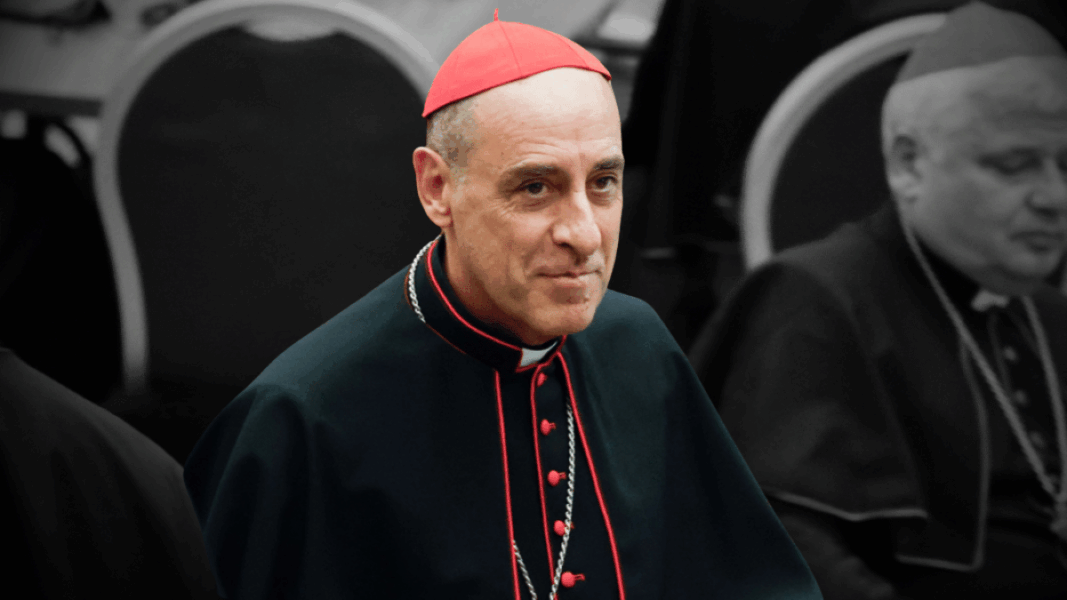
The trajectory of Cardinal Víctor Manuel Fernández —alias Tucho— at the head of the Dicastery for the Doctrine of the Faith (DDF) is adding controversy after controversy, bewilderment, and unnecessary tensions in the Church. This is denounced by an analysis published by The Catholic Herald, which describes the long chain of scandals, doctrinal errors, and credibility crises accumulated even before his appointment in 2023 by his friend and mentor, Pope Francis.
Far from pacifying the ecclesial climate, the presence of the Argentine cardinal —known for his progressive positions and for a wide pastoral bibliography that is poorly cared for— has meant a notable increase in distrust towards the Holy See, accompanied by an evident deterioration of the doctrinal authority of the dicastery he presides over.
A controversial prefect even before his appointment
The article recalls that already in 2009, when Fernández was proposed as rector of the Universidad Católica Argentina, the then-Cardinal Bergoglio had to defend him before a preliminary investigation requested by the DDF itself due to doctrinal concerns about his writings.
His rise to prefect in 2023 came accompanied by the media reappearance of several of his most controversial books, including his texts on sexual content and reflections on the “kiss” and the “orgasm” in his book «Sáname con tu boca. El arte de besar», works that the Vatican omitted —unsuccessfully— from the official biography disseminated after his appointment.
From Fiducia supplicans to global bewilderment
Fernández’s pontificate at the head of the DDF was marked from the first moment by Fiducia supplicans, a document that, despite its nuances, provoked one of the deepest ecclesial crises since the Second Vatican Council.
The reaction was so intense that one of the Pope’s closest advisors, Cardinal Fridolin Ambongo, managed a de facto “opt-out” for all of Africa after meeting personally with Francis and with Fernández himself. The result was a visible fracture and a new wave of distrust towards the Holy See.
Erratic decisions and failed documents
Parallel to Fiducia supplicans, Fernández has promoted in just a few months several texts of uneven doctrinal quality, including his questioned document on supernatural phenomena presented in spring 2024, criticized by theologians and bishops for its superficiality and lack of rigor.
Even within the Vatican, according to the Herald, the prefect would have been advised to avoid interviews and external emails due to the negative echo generated by his statements.
“Mater Populi Fidelis”: another unnecessary fire
The latest episode —Mater Populi Fidelis, on the Marian title of “Co-Redemptrix”— has reignited the controversy. By declaring that the term is “always inappropriate”, Fernández ignored centuries of theological development and the explicit use of the concept by several pontiffs.
The way of presenting the document did not help either: in a “launch event” to avoid questions from journalists, under the argument that they would not understand “the theological intricacies”. The attempt failed when a Marian expert present in the room began to berate the prefect during the presentation itself.
The result, once again, has been greater visibility of the debate and an unexpected boost to the theologians who uphold the doctrinal validity of the Co-Redemptrix title.
“It was not necessary to say anything”
The veteran journalist Phil Lawler summarized the general malaise:
“When it is not necessary to say anything, it is necessary not to say anything. This was one of those cases.”
For Lawler, the document was not only unnecessary, but predictably incendiary.
A crisis that affects the doctrinal credibility of the Church
The Herald recalls that this is not the first time a cleric with scant suitability has been promoted in Rome —it cites the cases of Gustavo Zanchetta and Marko Rupnik—, but it points out that Fernández adds a new element: a prefect who openly admits not having the capacity for the disciplinary task required by the DDF.
The cardinal himself had stated before taking office: “In many matters I am more progressive than the Pope”. A statement that, at a time of vocational crisis and massive disaffection in Europe, did not exactly contribute to generating trust.
Cardinal Gerhard Müller, one of his predecessors and former prefect of the DDF, summed up the problem as follows:
“The media praise for progressive reformers has not brought anyone to faith in Jesus Christ. Only in the living Son of God can hope be placed in life and in death.”
A discredited dicastery and a tense pontificate
Under Fernández’s direction, the DDF —former guardian of Catholic orthodoxy— has lost rigor, clarity, and authority. Scandals, controversies, and imprecise documents have become the norm.
And in the face of this drift, the conclusion is unequivocal: if Pope Leo XIV wishes to restore doctrinal peace and stability in the Church, he cannot keep Fernández at the head of the dicastery.