


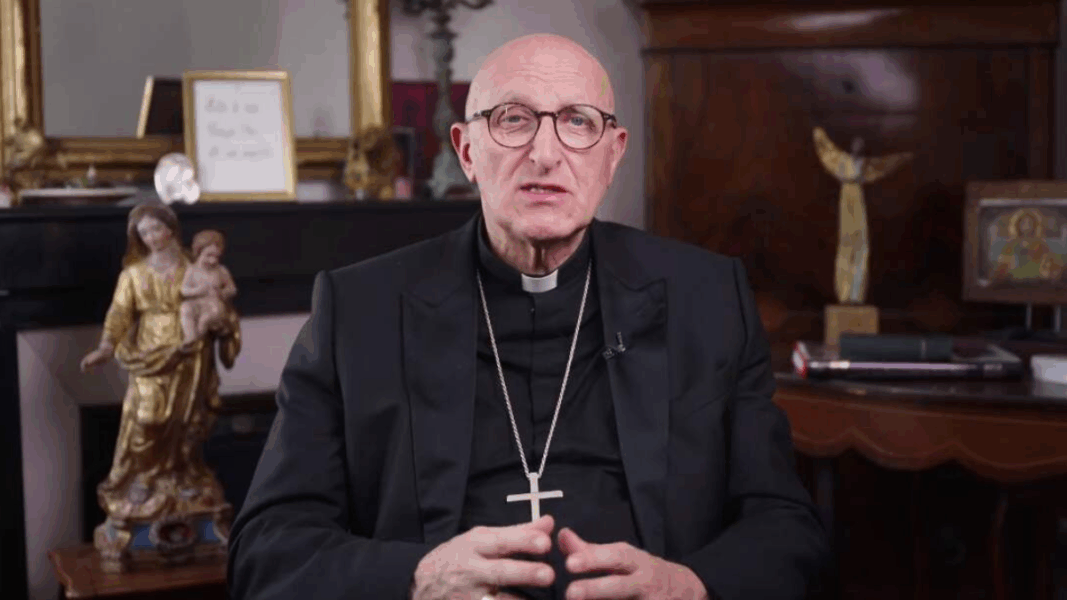
The emeritus bishop of Fréjus-Toulon (France), Mons. Dominique Rey, has granted an extensive interview to Tribune Chrétienne on the occasion of the publication of his new book Mes choix, mes combats, ce que je crois (Ed. Artège). In its pages, the prelate offers an open reading of his twenty-five years of episcopate, addressing without evasions his intuitions, his pastoral decisions, the moments of renewal, but also the crises, the misunderstandings, and the shadowy areas that have accompanied his ministry.
Known for his frankness, his missionary boldness, and a style uncommon in the French episcopate, Mons. Rey speaks out again without beating around the bush about the challenges the Church is facing today and about his own personal experience, marked by lights and wounds. “Trials select true friends”, he states, summarizing in one sentence the ecclesial and human stage he has lived through in recent years.
Traditionis custodes and the liturgy: “We are waiting”
In liturgical matters, Mons. Rey believes that the climate could evolve toward greater balance regarding the restrictions imposed after Traditionis custodes. “We have a prudent Pope who listens”, he states. He cites as an example the recent authorization for Cardinal Raymond Burke to celebrate in the ancient rite in St. Peter’s. “We are in a waiting phase to see where future decisions will go”.
Political accusations: “I have dialogued with everyone”
Regarding those who label him as a “right-wing” bishop or close to identity environments, Rey responds clearly: he has no political affiliation and has always welcomed people of diverse sensitivities in his diocese. “It is remembered that I received Marion Maréchal, but it is forgotten that at the same table there was a socialist deputy from the Antilles”, he comments. He assures that the episcopal ministry includes listening to everyone—from prominent figures to the humblest—just as Christ did in the Gospel.
Missionary renewal: “The Church in France has untapped potential”
Mons. Rey insists that, despite secularization, the Church in France retains a spiritual strength that can be revitalized. “We must move away from customary Christianity and recover boldness”, he states. Wherever fervent communities and committed laity emerge, he says, the continuity of St. John Paul II’s evangelizing impulse is perceived.
Fréjus-Toulon: a pastoral laboratory
The prelate acknowledges that his diocese was for years a “laboratory” of vocational and pastoral initiatives, driven by the welcoming of new charisms. He would advise a young bishop three keys: know the terrain, offer clear doctrinal references, and maintain communion amid diversity. Pastoral creativity, he notes, must always be united with discernment and charity.
Abuses: “I have always sought the truth and strengthened the protocols”
Mons. Rey also addresses the criticisms regarding the management of abuse cases during his episcopate. He states that from the beginning he established structures for welcoming, listening, and accompanying victims, in addition to canonical and civil protocols with transparency. He mentions the agreement signed with the Prosecutor’s Office to ensure the duty to report and the strengthening of the team in charge of these matters.
After his departure from Toulon: a different mission, but no less important
Despite the internal tensions and the wear and tear suffered in recent years, Rey maintains a message of hope. “The Church has gone through crises before and has always come through”, he states. He cites as encouraging signs the increase in conversions, baptism requests, and the dynamism of young Catholics in social and missionary initiatives.
His withdrawal from diocesan governance was widely commented on. He describes it as a change in perspective: “I no longer have the administrative burden, but I remain available to accompany projects and foster collaborations”. From Paris, where he resides in a parish, he continues to preach retreats, accompany groups, and collaborate in evangelizing initiatives.