


«Reading from the second letter of the Apostle Saint Paul to the Thessalonians
2 Thessalonians 3, 7-12
Brothers: You already know how you should live to imitate my example, since when I was among you, I knew how to earn my living and did not depend on anyone to eat; rather, day and night I worked until I was exhausted, so as not to be a burden to you. And not because I did not have the right to ask you for sustenance, but to give you an example to imitate. So, when I was among you, I told you again and again: ‘The one who does not want to work, let him not eat.’
And now I come to hear that some of you live as idlers, doing nothing, and moreover, meddling in everything. We implore those such and order them, on behalf of the Lord Jesus, to set to work in peace to earn their food with their own hands.»
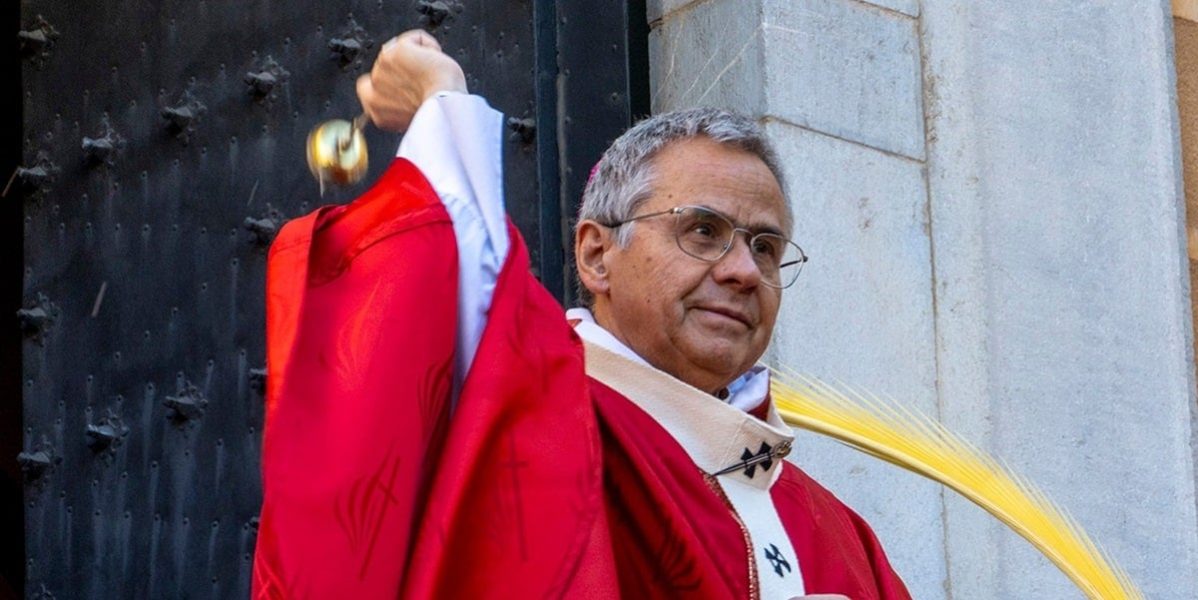
Today’s second reading—2 Thessalonians 3, 7-12—I dedicate to Archbishop Joan Planellas, with fraternal affection and a few drops of sulfuric acid. Yes, you, Your Excellency: the same one who is more scandalized by a rosary in front of an abortuary than by abortion itself; the one who detects ‘ideologization’ when an elderly woman prays an Ave Maria on the sidewalk, but not when a militant media outlet sets his pastoral agenda as if giving orders to a chauffeur.
Saint Paul says, with a clarity that surely seems ‘not very synodal’ to you: ‘When I was among you, I worked day and night until I was exhausted; not because I did not have the right, but to give you an example. The one who does not want to work, let him not eat.’ And one inevitably thinks of you, Monsignor. Not because you do not work—far from it—but because the ‘work’ you practice lately consists of repeating like a docile echo all the mantras of clerical progressivism, but with that liturgical accent that makes some believe the thing comes from on high and not from the editorial room of Público.
Saint Paul knew how to earn his bread with his hands. He did not live off complacent headlines or prefabricated interviews. He was not obsessed with being likable to the world. He did not need a trusted journalist to serve him a battery of tailored questions on a platter. Paul was tough; you, on the other hand, seem freshly out of a course on liquid sensitivities. When the Apostle says ‘the one who does not want to work, let him not eat,’ one suspects he is speaking directly to you, like dropping a letter on a desk full of disordered papers ‘with method.’ Because you, work, what is called work, certainly did not break your back in a factory like those worker priests that the progressives of yore so idolize. That was progressivism: utterly wrong, but at least they sweated for their bread and did not live with their mother’s Russian caregiver while giving lessons on the exploitation of the oppressed.
It is curious: the authentic progressives, the ones in blue overalls and workshop sirens, those who got into the mine, the shipyard, or the construction site, may have confused the Gospel with the Central Committee, but at least they got up at five in the morning. You, on the other hand, have perfected salon progressivism: everything is sermons on welcome, inclusion, and migrants, while demonizing the faithful who pray the rosary and enthusiastically blessing the whims of the latest planetary fashion. But putting your back into it, what is called putting your back into it… never. In that, you are not at all Old Testament.
And then there is the meddling. Saint Paul speaks of those who ‘do nothing and moreover meddle in everything.’ What a fine portrait: the bishop who, unable to raise his voice against abortion, liturgical scandal, or doctrinal collapse, nevertheless finds unlimited energies to scold Catholics who dare to pray in public spaces. Some pray, others pontificate on whether praying seems appropriate to them. Who works and who meddles?
Today’s reading requires no great exegesis. No need for a patristic treatise, nor a synod, nor a community listening process. It is simpler. Saint Paul is telling you, Monsignor: stop living off ready-made phrases, stop treating the faith as if it were a press release from Amnesty International, stop settling into a diocese whose main problem, according to you, seems to be that some faithful pray too loudly. Work. Teach us the faith. Defend the innocents. Call sin sin. Call injustice injustice. Assume that the Gospel did not come to apologize.
In the meantime, there remains today’s reading. Do not worry if it stings: the Word of God usually does. And even more so when it is applied to someone who does not want to get his hands dirty, but dares to correct those who still do use them to pray the rosary.