


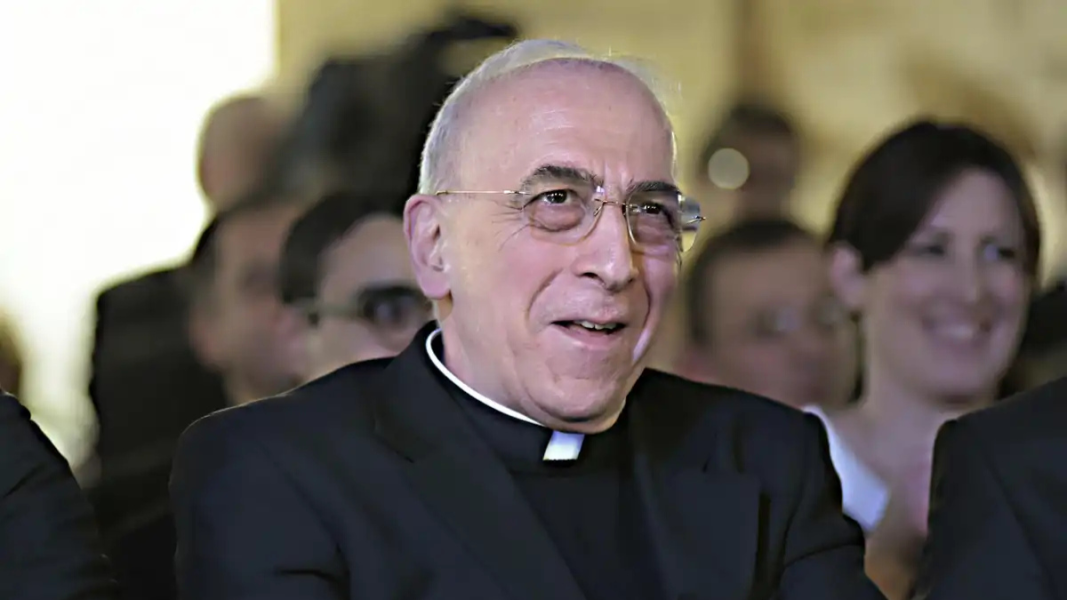
During the “Summorum Pontificum” pilgrimage held in Rome, the Italian theologian don Nicola Bux, consultant for years to the former Congregation for the Doctrine of the Faith, offered a series of reflections on current ecclesial and moral issues in an interview published by La Brújula Cotidiana. Bux emphasizes that the Church has no authority to modify the doctrinal content received from Revelation, especially on issues such as anthropology, sexuality, or Christian morality.
The priest recalled that the Church’s teaching is based on Sacred Scripture and cited texts such as Genesis 1:27 and Matthew 19:4 to reaffirm the biblical vision of man and woman. In that sense, he insisted that the Catechism can be developed “only to advance doctrinal understanding”, but without contradicting the revealed truth: “The Church cannot change even an ‘i’ or a ‘tilde’ of these words”, he affirmed.
Contemporary culture and the risk of ideologization
Regarding the impact of current cultural currents on ecclesial language, Bux warned of the risk of incorporating approaches foreign to Tradition. Citing St. Paul, he pointed out that the criterion for Christian discernment remains Christ himself: every proposal or theory must be examined in the light of revealed truth.
The theologian emphasized that Christian anthropology is not based on changing concepts, but on the identity of the human being as created by God. Therefore, he considered that gender ideology cannot be harmonized with the Catholic faith and recalled that pastoral accompaniment involves leading to the truth, not confirming error.
Welcoming the person and correcting behavior
In the interview, Bux explained that the pastoral welcome of persons does not equate to approving behaviors contrary to moral good. Recalling the Council of Chalcedon and the Catechism, he remembered that the Christian concept of person assumes recognizing the goodness of human nature, created male and female. Thus, he affirmed that true pastoral care seeks to heal and correct what deviates from the truth, in the same way that medicine intervenes on the pathological.
Regarding the debate on the pastoral care of mercy, he pointed out that it never means leaving the person in sin, but accompanying them on a path of conversion. He mentioned the suffering of those who have given up “gender transition” processes as an example of the wounds that a vision contrary to the reality of the human body can cause.
Doctrine, Christian freedom, and the language of the Catechism
Asked about those who describe Catholic doctrine as “non-inclusive”, Bux indicated that Christ himself announced that his message would imply division and that fidelity to the truth does not depend on social consensus. Christian freedom, he affirmed, consists in adhering to the truth even when it contradicts cultural fashions.
Regarding the Catechism’s expression that qualifies homosexual acts as “intrinsically disordered”, the theologian pointed out that it is not a surmountable language, but a moral judgment rooted in the Christian notion of order, understood as right orientation toward the end desired by God.
Tradition, Synodal Way, and the authority of the Magisterium
In relation to recent statements by Italian bishops about a “Church that changes”, Bux recalled the teaching of John XXIII: doctrinal progress is an organic development, not a substantive alteration. The Church —he said— is called to convert the world to Christ, not to adapt to it.
Finally, he emphasized that the Magisterium binds the bishops because its authority is exercised in persona Christi. Citing the constitution Dei Verbum, he insisted that the Magisterium is not above the Word of God, but at its service. Therefore, he affirmed that a pastor who proposes a “flexible gospel” ceases to be a teacher of the faith to become an echo of the world.