


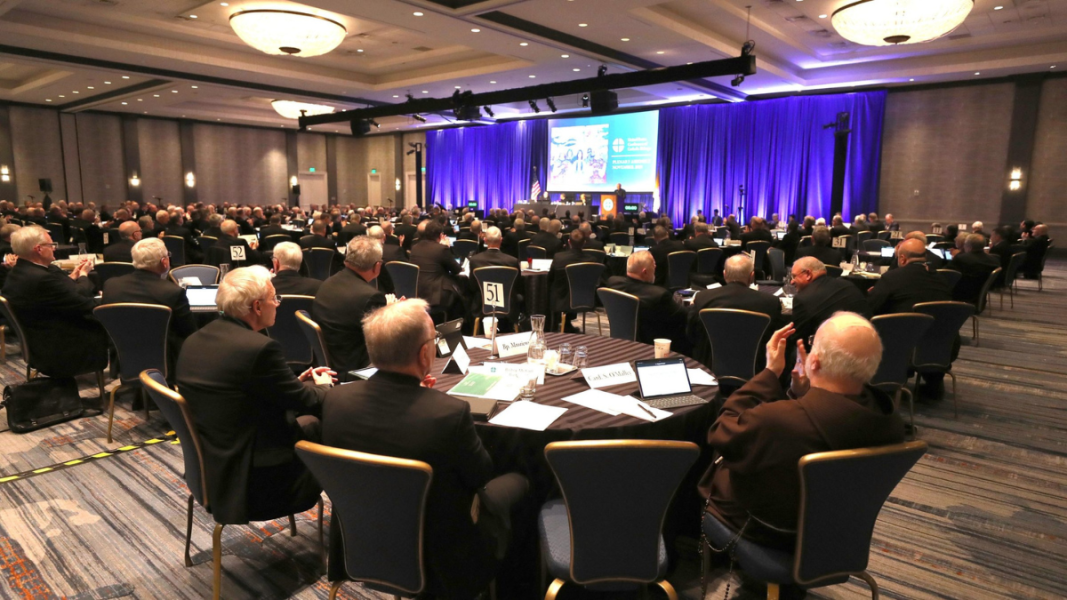
During the Fall General Assembly of the United States Conference of Catholic Bishops (USCCB), the prelates released an official video message in which they express their concern about the country’s migration situation and what they describe as a growing “climate of fear and anxiety” among immigrant communities.
In the recording—approved by more than 95% of the episcopate—the bishops state that they are “disturbed” by the public rhetoric that, in their view, “vilifies immigrants.” They also lament the conditions in some detention centers, the arbitrary loss of legal status for certain people, and the fear of parents who avoid taking their children to school for fear of being detained.
The message insists that the Church is united with the suffering of immigrants and reminds that generations of them have contributed to the country’s well-being. Affirming that “human dignity and national security are not in conflict,” the bishops call for a significant immigration reform, safer legal pathways, and the rejection of what they describe as “indiscriminate mass deportations”.
The video appeals to biblical teaching—with references to the Good Samaritan and Jesus’ command to love one’s neighbor—to underscore the Christian obligation to accompany the stranger and protect the vulnerable. In that sense, the bishops assure immigrants: “You are not alone”, thanking the work of priests, religious, and laity who already help with their basic needs.
A Border Agent Criticizes the Episcopal Message and Warns It Could Encourage Illegal Immigration
While the bishops called for compassion, the reaction from the border security sector was immediate. According to Catholic News Agency, the “border czar” and former ICE director, Tom Homan, harshly criticized the message and stated that the Church is “wrong”.
Homan—a practicing Catholic—warned in an interview with EWTN that the episcopal message could send a dangerous message to the world: that crossing illegally has no consequences and that court-ordered deportations would not be enforced. According to his words, this approach would encourage more people to undertake deadly journeys and expose both migrants and U.S. citizens to greater risks.
The official recalled that during the relaxation of border control in previous years more than 4,000 migrants died in the crossing, and that the migration crisis has been linked to the massive influx of fentanyl into the country. He emphasized that “secure borders save lives” and that enforcing the law is a way to protect both the migrant and the host nation.
Although the bishops mentioned in their own message the need to “regulate the borders” as a duty of the State, Homan considers their public stance insufficient and contributing to confusion at a time of crisis.
Human Dignity, Legality, and the Common Good
The contrast between the bishops’ pastoral message and the reaction from the border security sector highlights a challenge that cannot be ignored: the defense of human dignity must be united with the responsibility to maintain a just order. Every person, regardless of their origin or migration status, deserves dignified treatment. That affirmation is non-negotiable and is part of the very heart of the Christian faith.
However, dignity does not negate the reality that a country has the moral and civic duty to protect its borders, ensure the security of its citizens, and preserve its internal stability. Compassion cannot turn into permissiveness, just as the firmness of the law must not degenerate into dehumanization. The two dimensions—mercy and justice—must support each other for the common good to be possible.