


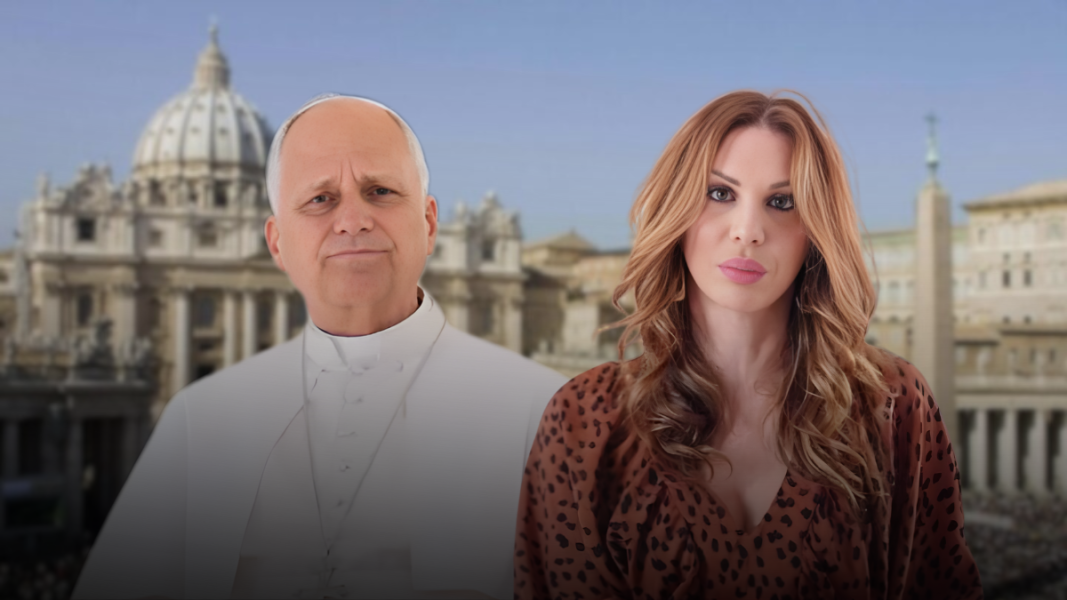
Pope Leo XIV will share a lunch this Sunday with five trans activists, invited to the Jubilee of the Poor meeting in the Paul VI Hall. The decision, confirmed by the Italian press, reignites one of the most tense debates of the previous pontificate: the relationship between pastoral care toward people who identify as trans and doctrinal clarity on human nature.
The most prominent presence will be that of Alessia Nobile, a man who identifies as a woman and a regular figure in LGBT activism in Italy. Nobile assured that the invitation came after personally requesting an audience with the new pontiff out of fear that the Church “would backtrack on rights” after Francis’s death.
A history that reflects the greatest tension within the Church
Nobile is not an unknown figure. His meeting with Pope Francis in 2022 opened a close relationship marked by unprecedented gestures: personalized audiences, preferential greetings at public events, and a letter in which the pontiff addressed him as “dear sister”.

These gestures, celebrated by LGBT activism, generated concern among sectors of the Church that saw in them a risk of doctrinal confusion, especially since they were never accompanied by a clear reaffirmation of Catholic teaching.
For years, Nobile has publicly promoted his vision of sexual identity and has denounced the Church for traumatic episodes from his adolescence, although without renouncing an activism that seeks ecclesial recognition of his gender identity, something incompatible with Catholic anthropology.
Expectation and pressure on Leo XIV
The election of Leo XIV, heir to Francisco’s complex legacy, has awakened unease among those who fear a continuity of ambiguous gestures celebrated by trans activism. Nobile has said it openly: he wants to ensure that the new Pope does not “backtrack”.
The Italian Episcopal Conference fueled the confusion a few weeks ago with a synodal document that calls for “overcoming discriminatory attitudes” and promoting “accompaniment of homosexual and transgender people”, a text that, although pastoral, has been interpreted in some circles as an endorsement of gender ideology.
Nobile, who praises these steps, states that at the lunch he hopes to be able to ask Leo XIV if he will be a “father” for them, replicating the phrase he attributed to Francis: “I am also your father”.
A lunch that is not neutral
Sunday’s lunch is not a simple act of charity. Due to its symbolism—a Pope sharing a table with trans activists at an official Jubilee event—it inevitably becomes a message.
During Francis’s pontificate, the Vatican hosted trans groups on various occasions under the banner of “pastoral closeness”. What was never there was an explicit reaffirmation of the doctrine: that the human body, created male or female, is not a traversable construction.
Media like LifeSiteNews recall precisely that omission: Francis never told Nobile that living as if one belonged to the opposite sex contradicts natural law and Church doctrine.
The charity that accompanies and the truth that liberates
Jesus ate with tax collectors and sinners —“many of them followed Jesus, and He sat at the table with them” (Mk 2:15-17)— and welcomed them with mercy. But he never confused that closeness with approval of sin. On the contrary, to the adulterous woman he said clearly: “Go, and sin no more” (Jn 8:11).
The gesture of Leo XIV will inevitably be interpreted as a signal of the direction he intends to give to his pontificate. Will he continue the ambiguous gestures? Will he recover doctrinal clarity?