


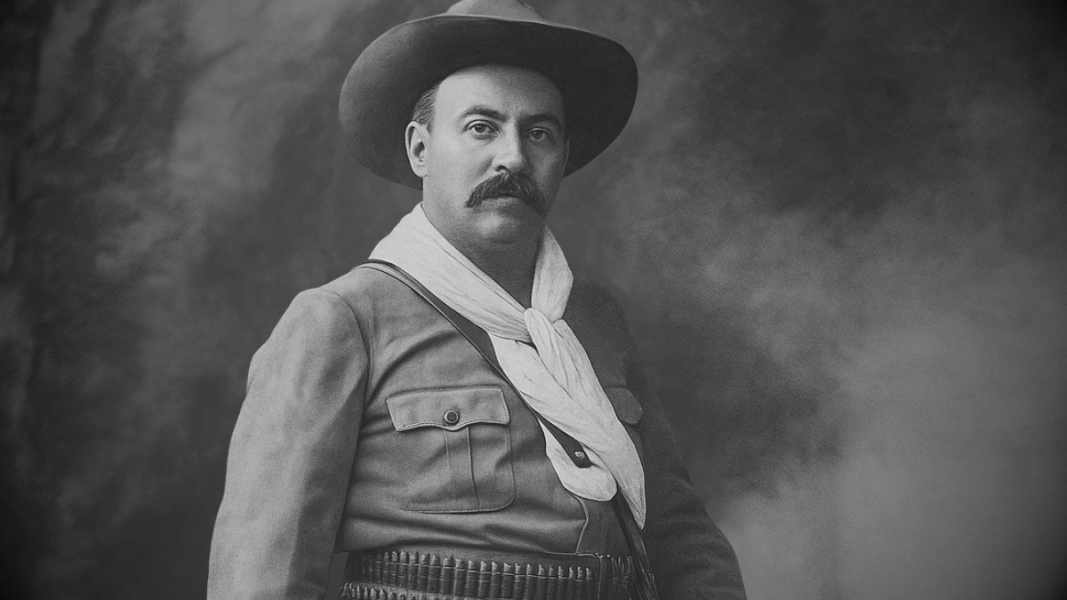
Letter from General Enrique Gorostieta to the Mexican Bishops
Since our struggle began, the national press, and even the foreign press, has periodically been occupied with possible arrangements between the so-called government and some prominent member of the Mexican Episcopate to end the religious problem. Whenever such news has appeared, the men in the fight have felt a shiver of death invade them, worse a thousand times than all the dangers they have decided to face, worse, much worse than all the bitterness they have had to endure. Every time the press tells us of a bishop possibly negotiating with callism, we feel like a slap in the face, all the more painful because it comes from someone from whom we might expect comfort, a word of encouragement in our struggle; encouragement and comfort that, with a single most honorable exception, we have received from no one […]. Those news items have always been like cold showers on our warm enthusiasm […]. Now that those of us who lead in the field need moral support from the directing forces, especially the spiritual ones, the press spreads the rumor again of possible talks between the current President and Mr. Archbishop Ruiz y Flores […].
I don’t know how much truth there is in the matter, but, as the National Guard is an institution interested in it, I want once and for all, and through the worthy channel of Yours, to express the feelings of those of us who fight in the field so that it reaches the knowledge of the Mexican Episcopate, and so that you may also be served in taking the necessary measures so that, reaching Rome, we obtain from our Holy Vicar a remedy for our ills; a remedy that is none other than obtaining the appointment of a nuncio or a primate, who comes to put an end to the existing chaos and unify the political-social work of our bishops, independent princes.
We who fight in the field believe that the bishops, when entering into talks with the government, cannot present themselves except by approving the attitude assumed without any doubt by more than four million Mexicans, and from whose attitude the National Guard is a product, which currently has more than twenty thousand armed men and as many more who, without arms, can surely be considered in right as belligerents […]. If the bishops, in dealing with the government, disapprove of our attitude; if they do not take the National Guard into account and try to solve the conflict independently of what we desire, and without giving ear to the clamor of the enormous multitude that has all its interests and ideals at stake in the struggle; if they forget our dead, if they do not take into consideration our thousands of widows and orphans, then we will raise our voices in anger and, in a new message to the civilized world, reject such an attitude as unworthy and as traitorous, and we will prove our assertion.
Personally, I will bring charges against those who now appear as possible mediators […]. The bishops, away from the country for any reason, have lived these years disconnected from national life, ignorant of the transformations that the people have undergone in this stage of bitter struggle, and therefore incapable of representing them in an act of such transcendence […]. It is the people themselves who need representation; it is the popular will that must be consulted; it is the feeling of the people that must be taken into consideration; of this poorest of our people who fight in their own homeland against a handful of bastards who shield themselves with a mountain of elements of destruction and torture.
It is not truly the bishops who can justly bear that representation. If they had lived among the faithful, if they had felt together with their compatriots the constant threat of their death for simply confessing their faith; if they had run, as good shepherds, the fate of their sheep; if they had at least adopted a firm, decisive, and frank attitude in each case, by now they would truly be most worthy representatives of our people. But it was not so, either because it should not have been or because they did not want it to be […].
What we lack in material force we do not ask of the Episcopate; we will obtain it through our own effort. Yes, we do ask the Episcopate for moral force that would make us omnipotent and it is in their hands to give it to us, simply by unifying their criterion and guiding our people to fulfill a duty, advising them of a dignified and virile attitude, proper to Christians and not to slaves […].
I believe it is my duty to declare emphatically and categorically that the main problem that we directors of this movement have had to face is not that of supplies. The main problem has been and continues to be to evade the harmful and fatal action that the constant acts of our bishops provoke in the spirit of the people and the more direct and disoriented one that some priests and presbyters carry out, following the guidelines that their prelates indicate to them. We would have had abundant supplies and contingents if, instead of five states of the Republic, thirty or more dioceses responded to the cry of death launched by the homeland. The boasted power of the tyrant […] would have fallen to pieces at the first blow of the hammer, perhaps with which he would have managed that for the first and only time in the history of our national martyrdoms the Princes of our Church had agreed solely to declare that defense is licit and, in its case, obligatory… […]
Let the bishops have patience, let them not despair; the day will come when we can proudly call them, together with our priests, to come back among us to carry out their sacred mission, then yes in a country of free men. An entire army of the dead commands us to act thus! […]