


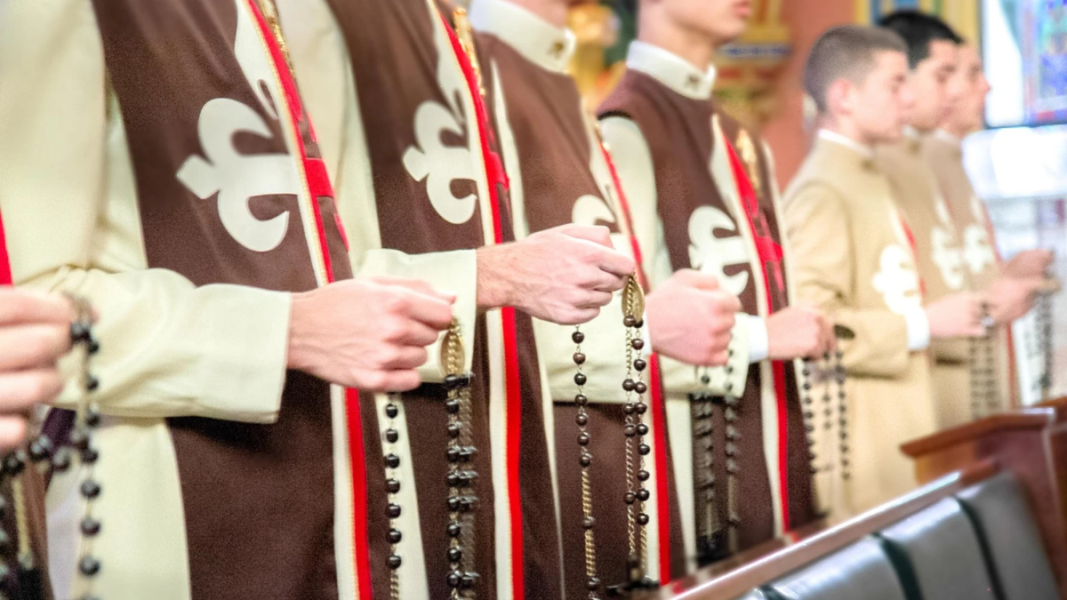
The so-called “Heralds of the Gospel case” has become, over the years, an emblematic example of the shadows left by the previous pontificate in matters of ecclesial governance. The prolonged Vatican intervention on this international association—a reality present in 78 countries and erected by John Paul II as the first of the new millennium—continues without a convincing explanation and without a single proven accusation in civil or canonical proceedings.
During Pope Francis’s tenure, the internal life of the Church—especially in Latin America—was caught in growing polarization between progressive and conservative sectors. That dynamic tainted decisions that should have been strictly legal and pastoral. In that climate of suspicion, the Heralds were subjected to a forced administration initiated in 2019 following an apostolic visitation opened in 2017. What is troubling is that, as the two sources emphasize, it has never been officially explained why the investigation was initiated, nor what the objective reasons were that led to imposing this exceptional regime on them.
According to Vatican Reporting, more than thirty civil and canonical complaints filed against the Heralds of the Gospel were resolved in their entirety with dismissal or acquittal. This means that, in practice, there is no demonstrated serious fault. No abuses, no crimes, no doctrinal irregularities. Nothing that justifies the harshness of the measures adopted.
And yet, since 2019, the Heralds cannot ordain deacons or priests, cannot open new houses, cannot receive new members, and live with severe restrictions even for carrying out ordinary activities. A complete blockade that, as Specola points out, contradicts the usual practice of the dicastery itself, which historically has sought to reform and accompany—rather than paralyze—institutions that have real difficulties.
One of the most disconcerting aspects of the case is that the Heralds insist that they were never formally informed of the reasons for the apostolic visitation or the subsequent intervention. This claim, if true, raises a serious problem of internal justice: in any minimally serious ecclesial process, the right to defense requires that the accused know the charges. Here, not even that.
Vatican Reporting’s text also includes a significant detail: some of the most repeated media accusations—such as the alleged disobedience in not withdrawing minors from their religious houses—collapse when the facts are examined. It was the families themselves, indignant at what they considered an unjustified measure, who decided to keep their children in an environment they judged healthy and deeply Catholic. Other allegations, such as the so-called “irregular exorcisms,” were clarified by local bishops as simple prayers of deliverance, something common in charismatic contexts.
This entire situation has led many to compare the Heralds’ process to the climate surrounding other recent Vatican trials, where the weight of media narrative preceded any serious investigation. Specola expresses it with an apt image: a scenario reminiscent of The Trial by Kafka, with people forced to defend themselves without knowing exactly what they are accused of.
Today, the question that arises is inevitable: Will Leo XIV be able to address this situation and give it a just closure?
The Heralds of the Gospel case places the Pope before a decision that cannot be postponed indefinitely. He has two paths: restore justice or prolong the wear and tear, as has happened in other Latin American episodes—just remember the “Lute” case in Peru, where slowness, silence, and the weight of the years ended up imposing a kind of tacit condemnation that was never declared.
The Church does not need more endless processes that wear out in silence. It needs truth, light, and courageous decisions. The Heralds of the Gospel case offers Leo XIV the opportunity to break with a form of governance based on opacity and to inaugurate a stage where justice is not a rhetorical word, but a real act.