


By: Víctor Lenore
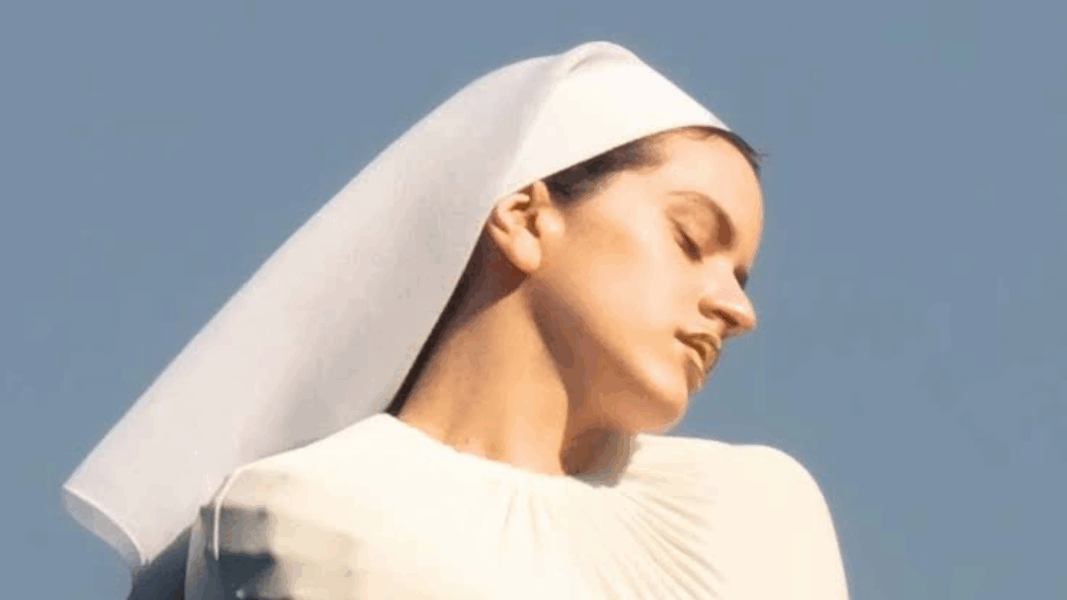
Rosalía is the most important Spanish singer of our time, the absolute dominator of the last decade, and she has also achieved a high international profile. Her new album, the most talked-about release of 2025, is striking for several reasons: for that cover where she appears in a nun’s habit, for the title that alludes to the word that inaugurates Creation—Lux—and for the decision to sing in fourteen different languages. Also for an abandonment of commercial pop in favor of more lyrical and solemn forms.
In several statements, she explains that she is now experiencing an approach to God, perhaps a conversion: “As an artist, there is a connection between emptiness and divinity. If you make space, perhaps Someone who is above you can come and pass through you. I have a desire that I know this world cannot satisfy,” she confessed on the Radio Noia podcast from Radio Primavera. “God is the only one who can fill the spaces if you have the predisposition, the attitude, and the way to open yourself so that it can happen,” she added. It is a reasoning with echoes of Simone Weil, the 20th-century Catholic philosopher whom the singer admires, but Rosalía goes even further. «I like the idea of living in seclusion, like a nun,» she concluded.
The controversy is inevitable, with the most delirious effects, such as anticatholics embracing this religious turn more than Catholics. The PSOE, for example, rushed to appropriate the phenomenon, with President Sánchez launching a viral tweet that exceeded five million interactions and was shared by several ministers. Many believers, on the other hand, received the album with suspicion, although with less hostility than when it was announced a few months ago that the Colombian reggaeton singer Karol G would participate in a massive concert in St. Peter’s Square at the Vatican. Some feared uncomfortable scenes and found a modest diva who brought love, emotion, and elegance to the show. Pop stars shouldn’t always be distrusted. Let’s remember that the provocative Madonna also had moments of great courage, like releasing an anti-abortion anthem (“Papa Don’t Preach”) in the nihilistic eighties. In Lux, no one will be able to say that there are any lacks of respect for Christianity in favor of spectacle.
The album places God at the center of the sociocultural debate. Both in substance and form, it imposes a change of register where sexual exhibitionism and nightclub adventures that reigned in Motomami (2022) evaporate, and the focus is placed on reflective and detailed atmospheres, wrapped in string arrangements. Rosalía reinforces her most intimate vein to seek nuances that elevate her. She conceives Lux as a conceptual work in four movements, rather than as a collection of pop anthems. The first movement deals with excesses, devotion, and human fragility; the second, with the duality between desire and redemption; the third, with vulnerability in the digital age; finally, it addresses forgiveness and redemption.
Amid so much spirituality, the bitterness of the ranchera “La perla” jars a bit, an anthem of heartbreak to her ex-partner Rauw Alejandro, whom she describes—with little desire to forgive—as “A playboy, a champion/ He spends the money he has and also what he doesn’t/ He is so charming, star of unreason/ A mirage, Olympic gold medal for the biggest jerk/ You have the podium of great disillusion,” she reproaches. More cryptic are the final verses of ‘La rumba del perdón’, a murky story of weapons, family abandonment, and drug trafficking that ends with an unsettling image: “To knot and unknot, to undress and undress/ To do it as it should be done, you will need three things/ Fire in the hands, tenderness in the eyes/ And me present in the place/ Technically, that would be a threesome/ But if I only watch, it won’t count,” she recites. It sounds like libertine degradation, but it is surely a reference to the fact that sex is empty without surrender and trust.
The most intense of the batch is “Berghain”, named after the great European temple of techno, but which does not bet on electronics and instead relies on an ostinato bass from the string section to create an intense atmosphere, with support from the experimental pop artists Björk and Yves Tumor. The album is not innovative at all; what it tries to achieve was already reached in the effervescence of the nineties, but it shows a desire for seriousness, both in the classical passages and in the approach to classical fado or that transcendental flamenco of the seventies, of which Lole y Manuel were emblems. The nun styling is not so groundbreaking either, which Rocío Dúrcal already used in the 1972 movie La novicia rebelde.
Another standout song from the album is “Reliquias”, where religious love merges again with the carnal. The protagonist of the story talks about traveling through the coolest cities on the planet and suffering all kinds of emotional ups and downs in them. “But my heart has never been mine/ I always give it/ Take a piece of me, keep it for when I’m not there/ I will be your relic, I am your relic,” she sings amid pop swirls in the style of Nelly Furtado. Here we find her most Lorca-like verses: “We are dolphins jumping/ entering and exiting/ In the scarlet and shiny hoop of time/ It’s just a moment/ It’s just a moment,” she sings.
The risk of the album, long and dense, is in wanting to reach many places and getting halfway to all of them. After several days of listening, the sensation is that Lux impacts more by saturation than by intensity or great songs. The closing seeks to be monumental with “Magnolias”, where she fantasizes about her own funeral, accompanied by the Escolania de Montserrat choir. In the end, it remains in simple grandiloquence, without great poetic or musical punch. It is a song that is too egocentric in the lyrics, where she boasts of being a semi-divine being (“God descends and I ascend/ we meet in the middle”) and revels in a lavish burial, where she assures that even her enemies will attend. The general atmosphere, as in many sections of the album, is more pompous than vibrant.
Despite everything, we must not take away an iota of her courage, since declaring her devotion to God brings her no advantages of any kind. The problem is that Rosalía seems to be a victim of a dense and indigestible spiritual mishmash, as shown by some of her latest statements: “I am attracted to the idea of post-religion, that there can be a more inclusive and open way of understanding faith and spirituality. (…) I resonate with Buddhism, Islam, Christianity, Hinduism,” she declared in El País, evidencing a certain disorientation. It is as if the strong postmodern and globalist framework of her music prevents her from a clean approach to Catholicism.
It is not an isolated statement, but she has also said that “this album helped me reconcile with myself from curiosity and love for understanding the other. Being in a world like the current one is confusing, you don’t really know what is true and what is not. Perhaps a faith or a certainty is more necessary than ever. Whatever it is, each person’s own,” she shared. Needless to say, Catholicism does not consider itself just another faith and that truth is only one and is not fragmented according to each person’s perspective.
Surely the best response to the media impact of the album came in an empathetic parish bulletin signed by the bishop of Baix Llobregat, Xavier Gómez. “Dear Rosalía: we are so far away… I write to you from this cover like someone throwing a message in a bottle into the sea. Who knows if it can reach you. I can’t manage to understand you, but I would like to. Your art, hypnotically eclectic and performative, and you yourself, generate questions in me. Perhaps it is not necessary to understand it. But I wonder what is inside you, in your inner world, in this stage or cycle of your life as a woman and artist,” he poses.
Then he delves deeper: “When you speak of a ‘thirst’ that the world cannot satisfy, that only God can fill that gap, the search for meaning that runs through the movie Andrei Rublev by Tarkovsky comes to mind. The Russian painter, in the midst of darkness and violence, seeks light, beauty, faith, despite not finding easy answers. Like him, you seem to live art as a spiritual journey, where creation is a form of pilgrimage toward what transcends. But you don’t quite do it… and without letting go of the moorings it won’t be easy to reach the port you long for. If you wanted to,” he expresses in a tone of doubt, but encouraging her to delve deeper.
According to the Agencia Flama, the parish administrator Luis Alfonso García has explained that Rosalía’s grandmother can be considered devout, and that the artist was reserved and attached to her family, but that the singer is not baptized. Lux can be the beginning of a new artistic and spiritual path, but so far only a first and timid step has been taken.