


The recent election of Archbishop Alexander K. Sample to the USCCB’s Committee on Religious Liberty is a move far more significant than it might appear at first glance. Unlike in other countries, in the USCCB the bishops who serve on committees are not appointed by the president or a small group: they are elected by direct vote of the entire episcopate. This detail turns Sample’s election into an unequivocal sign of the support he enjoys among his brother bishops.
And that support is not neutral.
Alexander Sample, Archbishop of Portland, has established himself in recent years as one of the most doctrinally steadfast pastors in the American episcopate. His teaching on faith, morals, liturgy, and Catholic identity has always been coherent, serene, and deeply rooted in the Tradition. His clarity, combined with a sober style, has earned him respect even among bishops who do not share all his sensitivities.
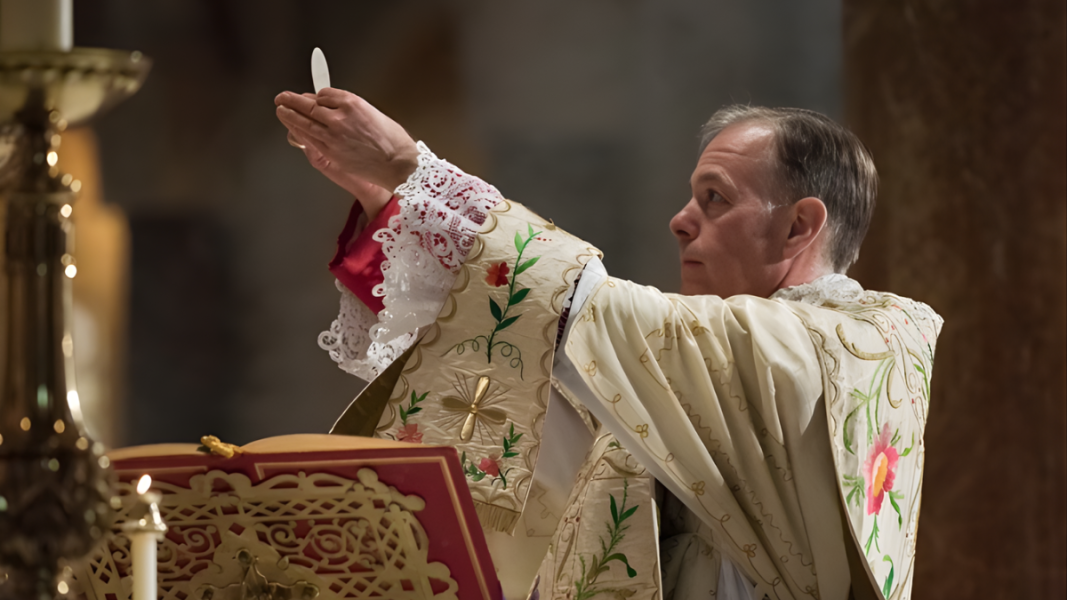
One of the most striking aspects of his profile is his open, public, and positive relationship with the Traditional Mass. Sample has not only defended the legitimacy and spiritual richness of the traditional rite, but he has celebrated the extraordinary form with pastoral normalcy and has ensured its development wherever the faithful live it in full communion.
This fact takes on special relevance in the United States, where Summorum Pontificum has been implemented since 2007 with breadth, stability, and very visible pastoral fruits: young communities, an increase in vocations, growth in parish life, and a considerable number of faithful who have found in the traditional rite a sure path to sacramental life.
That a bishop so identified with that reality has been elected by a majority vote of the episcopate for a strategic committee is, without a doubt, an internal message of great depth.
The USCCB’s Committee on Religious Liberty is not a decorative body. It deals with the most sensitive issues in the relationship between the Church and the State: freedom of conscience, medical objection, gender identity, ideological pressure on Catholic institutions, defense of confessional education, and protection of public worship.
In a country where religious freedom is litigated year after year in federal courts, choosing a bishop of Sample’s solidity is a conscious bet on a clear, articulated, and firm doctrinal line.
It is worth emphasizing that this election does not arise from a presidential appointment or internal maneuvers, but from the open vote of the bishops. The American episcopate—the largest in the world—has decided to entrust a critical area to a pastor with a profile unequivocally rooted in the Tradition and who maintains a transparent relationship with the development of the Traditional Mass.
At a time when the Church is experiencing tensions regarding liturgy, discipline, and doctrinal identity, this explicit support for Sample indicates that a very significant part of the American episcopate wishes to preserve liturgical and doctrinal continuity as essential elements of ecclesial life.
The presence of Archbishop Alexander Sample on the Committee on Religious Liberty is much more than a functional appointment: it is a gesture from the United States episcopate that reveals trust, clarity, and a horizon of doctrinal continuity. That a bishop known for his pastoral closeness to the Traditional Mass receives this support in such a strategic area is an eloquent sign of the direction that an important part of the North American Church wishes to maintain.