


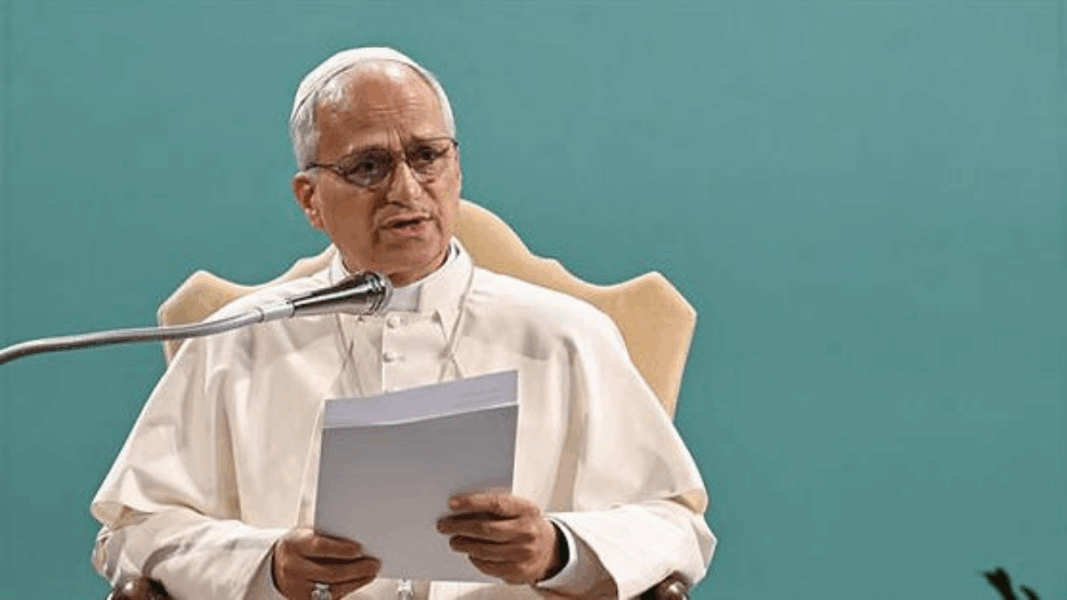
Leo XIV sent this November 10 message to the participants of the International Congress of the Pontifical Academy for Life, held in Rome under the title “Artificial Intelligence and Medicine: the challenge of human dignity”. In his text, the Pontiff exhorts scientists, doctors, and political leaders to uphold the primacy of the person and the inviolability of human dignity in the face of new technological developments.
El Papa reconoce los grandes beneficios que la tecnología y la investigación médica aportan a la humanidad, pero advierte sobre el peligro de ponerlas al servicio de “ideologías antihumanas”. La inteligencia artificial —subraya— puede contribuir al progreso solo si se coloca “al verdadero servicio de la persona”, evitando que las máquinas desplacen el contacto humano en la práctica médica.
We leave below the full message from His Holiness Leo XIV
I extend my best wishes and prayers to all those participating in the International Congress titled «AI and medicine: the challenge of human dignity». In particular, I would like to express my gratitude and appreciation for the theme you have chosen to address. The digital revolution is playing a fundamental role in shaping what Pope Francis called a «change of era». We are currently witnessing an era of new technological advances that, in some respects, is comparable to the Industrial Revolution, but which is more omnipresent. It profoundly influences our way of thinking, altering our understanding of situations and the way we perceive ourselves and others. We currently interact with machines as if they were interlocutors and, therefore, we almost become an extension of them. In this sense, we not only run the risk of losing sight of the faces of the people around us, but also of forgetting how to recognize and appreciate everything that is truly human.
There is no doubt that technological development has brought and continues to bring important benefits to humanity, especially in the fields of medicine and health. To ensure true progress, it is imperative that human dignity and the common good remain unwavering priorities for all, both for individuals and for public entities. It is easy to recognize the destructive potential of technology and even of medical research when they are put at the service of anti-human ideologies. In this sense, historical events serve as a warning: The instruments at our disposal today are even more powerful and can have an even more devastating effect on the lives of people and peoples. However, if they are harnessed and put at the true service of the human being, these effects can also be transformative and beneficial.
From this point of view, I consider your dedication to exploring the potential of artificial intelligence (AI) in medicine to be of great importance. The fragility of the human condition often manifests itself in the field of medicine, but we must never forget the «ontological dignity that belongs to the person as such, simply by the fact of existing and being wanted, created, and loved by God» (Declaration Dignitas Infinita, 7). For this same reason, «healthcare professionals have the vocation and responsibility to be guardians and servants of human life», especially in its most vulnerable stages (Note Antiqua et Nova, 71). The same can be said of those responsible for the use of AI in this field. In fact, the greater the fragility of human life, the greater the nobility required of those entrusted with its care.
The goal of providing care to people highlights the irreplaceable nature of human relationships in this context. In fact, medical professionalism requires not only the specific knowledge necessary, but also the ability to communicate and be close to others. It can never be reduced simply to solving a problem. Likewise, technological devices must never detract from the personal relationship between patients and healthcare professionals. In fact, for AI to serve human dignity and the effective provision of healthcare, we must ensure that it truly enhances both interpersonal relationships and the care provided.
Given the enormous economic interests that are often at stake in the fields of medicine and technology, and the consequent struggle for control, it is essential to promote broad collaboration among all those working in healthcare and politics, which extends far beyond national borders. For this reason, I am pleased to know that speakers from different continents and backgrounds are present at your conference.
With these sentiments, dear friends, I want to let you know that I pray that this conference will bear abundant fruits for you, your colleagues, and the many people who will benefit from your competent and generous commitment. I thank you all and invoke upon you and your families the blessing of Almighty God.
Signed on November 7, 2025
LEO PP. XIV