


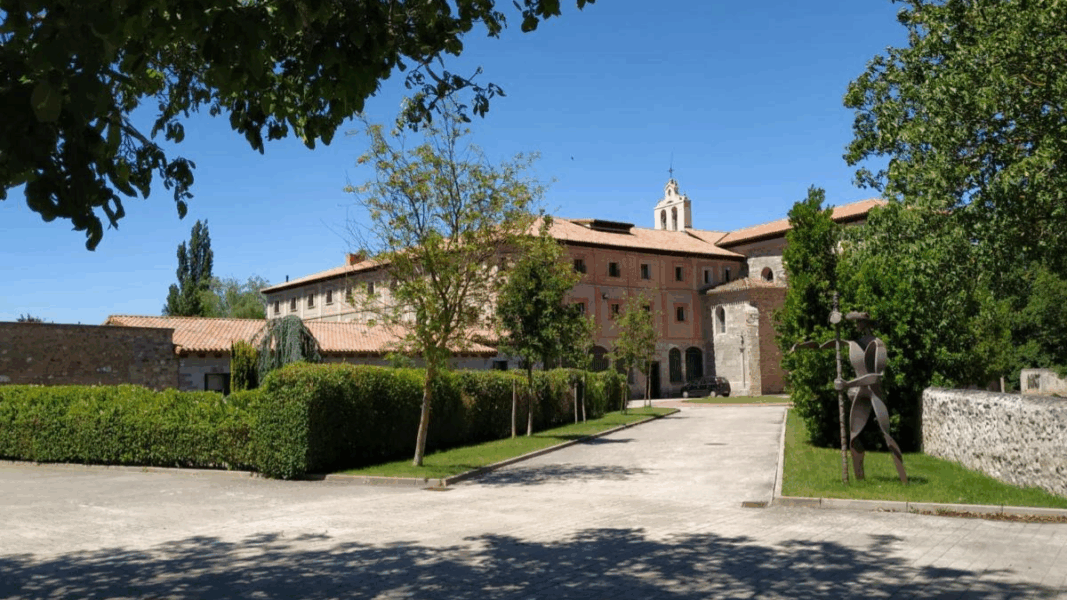
The Supreme Court has definitively closed the judicial process initiated by the former nuns from the monasteries of Santa Clara de Belorado (Burgos) and Derio (Vizcaya), by dismissing the cassation appeal filed by the former abbess Laura García de Viedma. With this decision, the High Court ratifies the impossibility of transforming Catholic monasteries into civil associations and confirms the full validity of the appointment of Mons. Mario Iceta Gavicagogeascoa, Archbishop of Burgos, as Pontifical Commissioner and legitimate administrator of both religious communities.
A conflict that began with the rejection of ecclesiastical authority
The origin of the case dates back to 2024, when a group of Poor Clares from Belorado, led by their abbess, announced their break with the Catholic Church and their adherence to the so-called “bishop” excommunicated Pablo de Rojas. After this act of schism, the former nuns attempted to register their monasteries as civil associations, under the names “Monasterio de Santa Clara de Belorado” and “Monasterio de Santa Clara de Derio”, with the aim of withdrawing the assets and properties from Church control and establishing themselves as “independent cultural entities”.
However, the National Registry of Associations of the Ministry of the Interior denied said registration in August 2024, considering that the applications violated the current legal and canonical order. In parallel, the former nuns challenged the appointment of the Pontifical Commissioner before the courts, who was designated by the Holy See to take over the management of the monasteries after the schism.
The courts confirm that there was no violation of rights
On June 11, 2025, the Superior Court of Justice of Madrid had already dismissed the appeal of the former nuns, stating that the ministerial resolutions were in accordance with the law and did not violate fundamental rights of religious freedom, association, privacy, or equality. Consequently, the decisions of the Ministry of the Interior and the Registry of Religious Entities were fully upheld.
Despite this, the former Clarisses filed a new appeal before the Supreme Court, which has now been dismissed by order of the Contentious-Administrative Chamber, putting an end to the judicial battle.
The Church hopes for the end of a “painful matter”
With this resolution, the contentious-administrative route is exhausted, and all previous decisions—from those of the Registry of Religious Entities to the ruling of the Superior Court of Justice of Madrid—acquire finality. In other words, the case is definitively closed, and ecclesiastical authority regains undisputed control of the monasteries.
From the Office of the Pontifical Commissioner, its spokesperson, Natxo de Gamón, expressed confidence that “the Administration of Justice will put an end to this painful matter in accordance with the law”. He also emphasized the Church’s concern for the elderly nuns who remain faithful and did not incur in the schism, assuring that their spiritual and material well-being will continue to be looked after.