



By Fr. Jerry J. Pokorsky
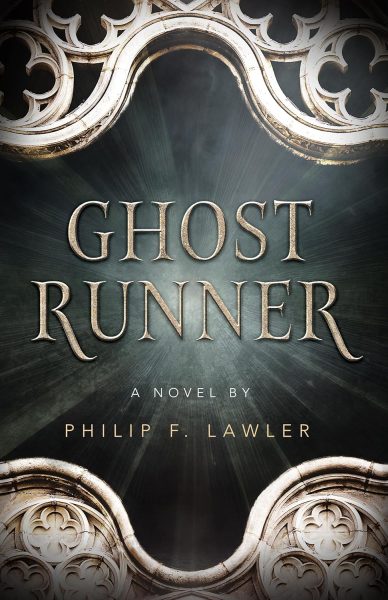
Many things remind —those who have eyes to see— of the persistent dangers of ideological confusion. In an attempt to clarify some of these confusions, the veteran Catholic journalist Phil Lawler reveals the spiritual disorientation of post-conciliar Catholic life in his latest novel, Ghost Runners, published this month.
A graduate of Harvard with studies in political philosophy at the University of Chicago, Lawler brought his analytical rigor first to Washington, where he was director of studies at the Heritage Foundation, and later to Catholic journalism, as editor of The Boston Pilot, of Catholic World Report and founder of Catholic World News, the first online Catholic news service in English.
He also ran in the year 2000 as a candidate for the United States Senate from Massachusetts, and —alas— was widely defeated by Senator Ted Kennedy. But it was a valuable lesson: too many pro-life Catholics fail to translate their convictions into ordinary life, even in how they vote. Since then, Catholic World News has transitioned (to use that now suspect term) to being integrated into the site CatholicCulture.org.
Books (and movies) about priests can be cloying, pious, brutally scandalous, caricatured, or frankly dishonest. Even the great Fulton Sheen wrote one, Those Mysterious Priests. True to his style, Bishop Sheen offered solid and orthodox doctrine, though he perhaps omitted some warts of the clerical brotherhood. But if Phil is not Fulton Sheen, neither is he Andrew Greeley (do you remember him?), that ecclesiastical muckraker par excellence.
In Ghost Runners, we find echoes of Flannery O’Connor’s Wise Blood, The Godfather III, and even a touch of Hitchcock’s Psycho, seasoned with a pinch of Ghostbusters. The protagonist cannot escape the graces of his priesthood, even surrounded by worldly and ambitious ecclesiastical officials. As he confronts evil —both clerical and secular—, he discovers mystical realities inside and outside the confessional.
And, to complete the picture, let’s add a PBS documentary about El Salvador. Lawler uses his extensive experience to show how priests navigate the turbulent waters of the Church and keep their faith alive.
Although it is a work of fiction, the types of characters are familiar to most priests, and most likely, especially to the priests of the Archdiocese of Boston.
Lawler sets his story in the Reagan years, a period that becomes clearer as the narrative progresses. The young priest protagonist recounts his story to a psychologist appointed by the diocesan chancery, revealing both his own personality and the profiles of his fellow priests.
The narration describes with realism and finesse the complex intricacies of the priesthood from within. Any priest alive today who survived the 80s will recognize those stories. Many religious writers —conservatives and liberals alike— have never managed to capture that reality. Lawler does.
The protagonist remains faithful despite having many reasons to succumb to infidelity or abandon the priesthood. He identifies several routine vices among the clergy, which are normally not considered scandalous, but which —like all sin— can lead to greater evil. Catechists like me can write pedantically about the distinction between moral principle and prudential judgment; Lawler illustrates that distinction with a story about the priest’s visit to 1980s El Salvador, during the civil war. Perhaps unwittingly, he portrays the unhealthy and caste-like ecclesiastical system that begins in the seminary.
Lawler presents that same ecclesiastical anxiety in his treatment of the alleged mystical phenomena. The scene evokes an old joke from the pontificate of St. John Paul II: what are the two things a bishop fears most in his diocese? First, an alleged apparition of the Virgin Mary. Second, a papal visit.
But in this case, Lawler’s characters face a third equally problematic possibility: the accusation that some little old ladies are experiencing mystical and miraculous events.
Many years ago, in my diocese, stories circulated about statues of the Virgin Mary weeping tears of blood. Despite the efforts of diocesan authorities to find natural explanations, the facts remain enigmatic after decades. Many priests, for their part, discreetly admit the possibility of such extraordinary phenomena.
Phil Lawler is one of the best Catholic journalists of our time. His writing is careful, well-documented, guided by Catholic orthodoxy and the desire for truth, even when that truth is uncomfortable.
He reminds readers that precision, evidence, orthodoxy, and logic are essential for navigating with fidelity and integrity the minefields of the modern Church. Ghost Runners takes the reader to the heart of ecclesiastical bureaucracy and helps us understand the complex relationships between the saints and sinners of the clergy.
In the end, Ghost Runners triumphs because it is less a report than a meditation on fidelity amid failure, a vocation that many of us may be called to live today. Lawler shows that the drama of the priesthood lies not only in scandal or in holiness, but in the fragile space in between.
Perhaps the Archdiocese of Boston should commission a portrait of a gray-haired Phil Lawler, in the style of Caravaggio’s St. Jerome in Meditation by Caravaggio, to honor his tireless work of discerning amid post-conciliar confusion and rescuing authentic Catholic piety.
Ghost Runners could rest on his desk, next to the skull.
About the author
Fr. Jerry J. Pokorsky is a priest of the Diocese of Arlington (Virginia) and pastor of St. Catherine of Siena, in Great Falls.