


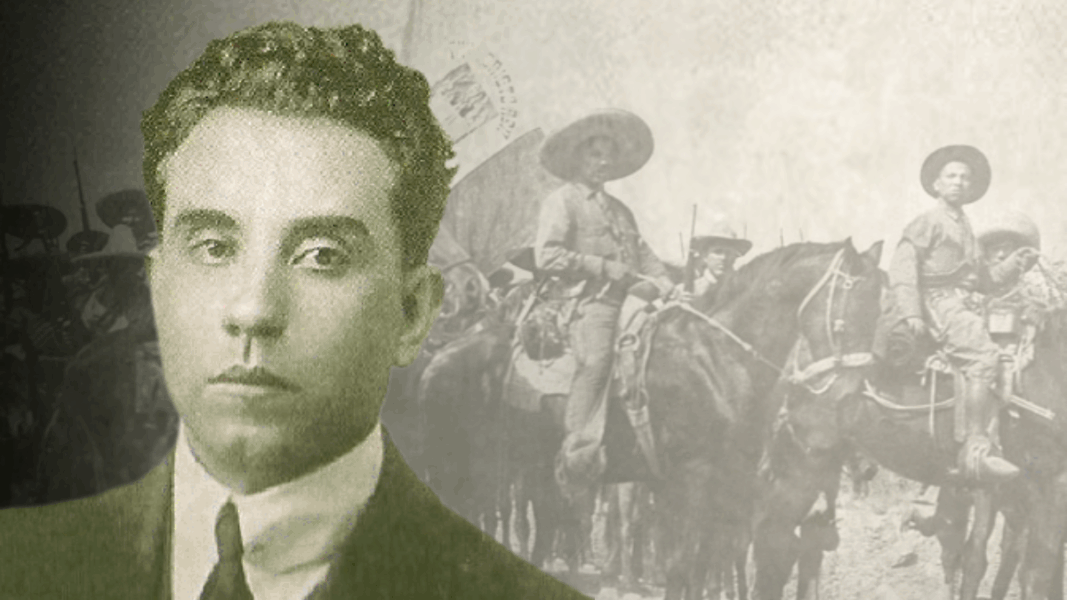
In La contrarrevolución cristera, de Javier Olivera Ravasi, one of the most revealing scenes of the moral temper of Mexican Catholicism during the religious persecution is reproduced.
The episode takes place in the most tense months of the Cristiada, when the organized lay movement—led by figures like Anacleto González Flores—had assumed an immense responsibility: to sustain the cause of Christ the King without losing fidelity to the Church. In a conversation recorded by Olivera Ravasi, a priest, Father Castro, seeks out Anacleto to ask him to remove the name of an alleged Mason, Alfonso Emparan, from the pages of the newspaper Gladium. The dialogue, brief and dense, shows the tension between clerical prudence and lay rigor, between diplomacy and truth.
The Dialogue
Fr. Castro: Sir, I’ve been looking for you.
Anacleto: At your service, Father.
Father: My matter is very simple. In your newspaper, Alfonso Emparan appears on the blacklist of Masons. I have promised him that you will remove him from it because Alfonso Emparan is not a Mason.
Anacleto: In the Secretariat of the Popular Union, there is reliable information, Father. Alfonso Emparan is a Mason. We are well aware of the grave responsibility we would have if we published his name lightly without evidence.
Father: Well, you are committing an injustice; because if he belonged to Freemasonry for some time, today he does not.
Anacleto: I am willing to remove his name and place a free announcement for him, if he makes a public retraction to our satisfaction.
Father: I don’t think it’s necessary. Alfonso Emparan confessed to me.
Anacleto: Forgive my frankness, Father: to confess with words, Alfonso Emparan, like any Mason, is only capable of confessing, not of receiving minor orders. Emparan will continue to appear on the blacklists.
An Ethics Without Compromises
The tone is firm, without insolence; the criterion, unyielding. There lies the line between Christian obedience and clerical servility.
Olivera Ravasi emphasizes that the Cristero movement was not only an armed reaction, but a spiritual revolution that awakened in the laity a sense of adult responsibility. It was not about replacing the pastors, but about reminding—with facts—that fidelity to the Gospel is not subordinated to convenience.
La contrarrevolución cristera. La historia de los católicos que se alzaron contra la persecución (México 1926–1929) —Homo Legens edition—combines historical rigor and vibrant prose.
If you want to understand why the Mexican laity came of age in the trial, this book by Javier Olivera Ravasi is essential.