


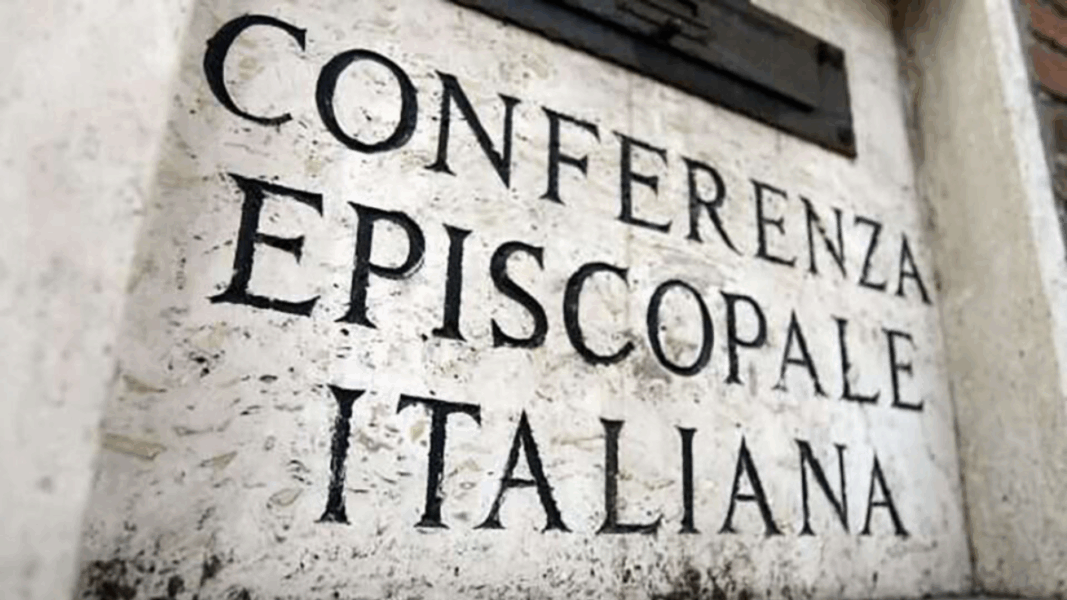
The Church in Italy has taken a step that many already consider risky. With 781 votes in favor and 28 against, the Italian Episcopal Conference (CEI) approved the final document of its synodal journey, titled “Fermento de paz y esperanza”. According to an analysis published by the National Catholic Register (NCR), the text—far from closing the process—opens a new stage of tensions between those seeking “a pastoral renewal” and those defending fidelity to the Magisterium.
A text that introduces demands from the world into the Church’s language
The synodal document does not limit itself to pastoral issues. According to the NCR, it urges Italian bishops to support protests against “homophobia” and “transphobia” and proposes studying the possibility of female diaconate, a topic that has already been the subject of two Vatican commissions without conclusive results. Although it is presented as a “pastoral” text, the medium emphasizes that “it seems to attempt to reverse the relationship between bishops and synodal structures” and, as we well exposed from Infovaticana, “it favors interpretations contrary to Catholic doctrine on the truth of human love.”
The fruit of a divided process
The document comes after months of internal disagreements. In April, the first draft was rejected by the more than a thousand synodal delegates due to its lack of consensus. For the first time in fifty years, the CEI postponed its general assembly to rewrite the text and seek a minimum agreement. Finally, on October 25, in a closed session, the new version was approved. Now, the CEI will form a group of bishops to develop priorities and resolutions that will serve as a basis for the 2025 general assembly.
The most controversial votes
Nearly two weeks after the document’s publication, the NCR specifies that the proposal to promote studies on the female diaconate was approved with 625 votes in favor and 188 against, while the point calling to “support civil days against violence, homophobia, and transphobia” obtained 637 favorable votes and 185 against. Although all motions were approved, the votes reveal a deep division among the delegates, but they also mark a strong progressive inclination.
Zuppi and Castellucci defend the text; several bishops warn of doctrinal risk
The president of the CEI, Cardinal Matteo Zuppi, described the process as “a courageous operation.” In the same vein, Msgr. Erio Castellucci called for “the CEI to adopt the text and begin implementing its proposals.” However, Msgr. Giovanni Paccosi, Bishop of San Miniato, warned about “the pressure to turn into general norms what is only the request of some.” For his part, Msgr. Antonio Suetta, of Ventimiglia-Sanremo, recalled that the assembly “is not a formal synod” and called to “rectify the text in light of the Catechism and the constant Magisterium.”
A path that moves away from the Catholic spirit
The final document introduces a logic of adaptation to social dynamics, even proposing to review Canon Law, transform parishes into “solidarity energy communities,” and give deliberative power to the laity. Under the guise of renewal, the text may lead to covert doctrinal changes.
The CEI will hold its next plenary session from November 17 to 20 in Assisi, where Pope Leo XIV is scheduled to meet with the Italian bishops at the close of the work.