


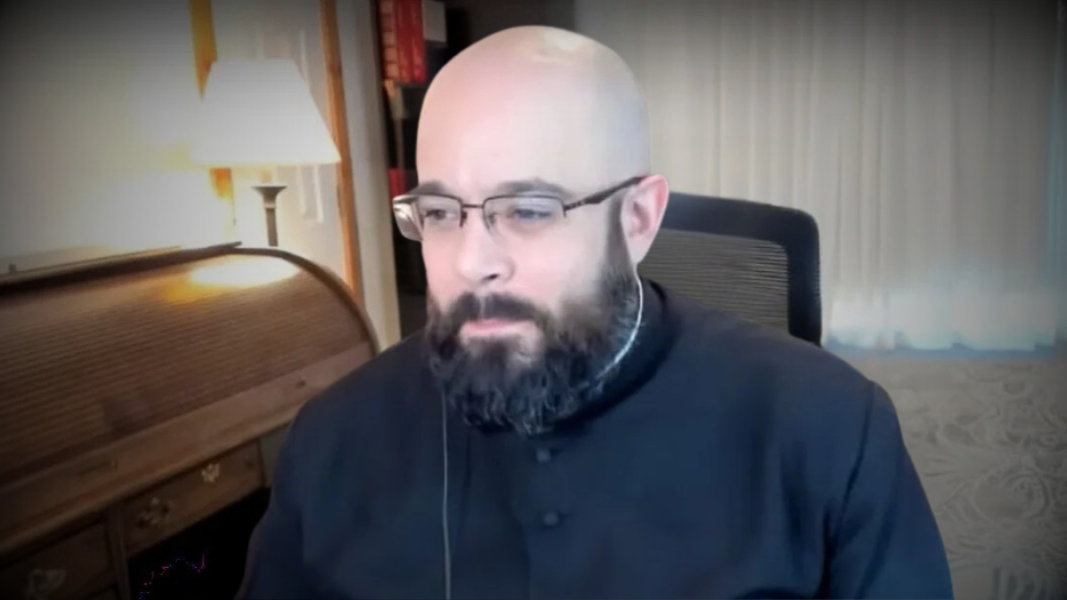
It all starts where too many recent ecclesiastical storms begin: in the opaque Dicastery for the Doctrine of the Faith. The canonical penal case against Francisco José Delgado Martín arises from a report that, under the baton of the Scicluna–Bertomeu duo, turned an innocuous spat on X into a penal process that shamelessly tried to end an impeccable priest. Thank God their ploy didn’t work out. In Rome, while Pope Francis accumulated years and his cognitive faculties waned, some Doctrine of the Faith officials gained ground and stepped on the accelerator. In the Vatican gossip mills, people are starting to talk fearlessly about the «legal fiasco» that the last three years have been. There’s still much to investigate, but their toy is already cracking. The methods and antics coming out of the Palazzo del Sant’Uffizio in this latest stage will not be studied in law schools, but in the comic-macabre anecdote books of Church history. The Toledo case is a prime example.
With that backdrop, we arrive at July 28, 2025: the Metropolitan Tribunal of Toledo absolves the priest Francisco José Delgado Martín and leaves more than a verdict. It leaves a mirror. What is seen is not only the innocence of the accused: it is the flimsy architecture of accusations that provoke embarrassment and second-hand shame. A year and a half later, the balance: a cleric sidelined and shredded in the digital square, and a sentence that certifies that such a case should never have been mounted here.
The list of charges already sounded like a catch-all: defamation of Mr. Escardó for some absolutely respectful messages on X, obstruction of the “Special Mission” on the Sodalicio – pardon?, and incitement to hatred against the Apostolic See for a pious joke. Three disparate pieces force-fitted into a penal process that no bishop in the world would have initiated if not for an order from the very top. To criminally prosecute such ridiculousness, you need to be asked from very high up. The Dispositive Part of the sentence leaves no room for doubt: “NO EVIDENCE” of any crime. But the judges do not limit themselves to absolving: they explain very well why it was impossible to convict with that material.
1) Defamation. There is no trace that Delgado damaged the reputation of the complainant; quite the opposite. The sentence points out that the one who damaged the reputation of the Church and priests was Mr. Escardó himself, with generic and serious accusations against the priesthood and the Church. An unproven “revictimization” and a public history of anti-Catholic hatred that explains itself. Defending oneself from defamation is not slandering.
2) Obstruction of authority. For there to be a crime, one must truly prevent the exercise of authority, not just inconvenience it. The facts: Delgado had no leverage over the Sodalicio or the investigation; his supposed influence is not only unproven, it is completely incoherent and absurd. What does a respectful spat on X have to do with the dissolution of a Institute of Consecrated Life?, what does the omnipresent wildcard of the Sodalicio (again) have to do with this case? The pontifical mission followed its course and was carried out. Where is the obstruction? Ridiculous.
3) Incitement to hatred against the Apostolic See. The “star evidence”: a joke that at most is in poor taste when said by another priest. Delgado stops it live, issues public apologies, and reiterates his communion with the Pope. This type of offense requires intent to incite hatred; it does not appear anywhere here.
Meanwhile, the harshest measures: a year and a half of media silence that operated as an anticipated penalty, the forced return to Spain from an exciting project in the United States, and damaged reputation. The new Book VI speaks of repairing, not fabricating guilt. Here, the damage to repair is the one others fabricated. And at the origin, it is worth emphasizing, there is a Roman climate where certain offices of the Dicastery for the Doctrine of the Faith have played judge and jury: they report, push, leak, and only when the files end up in independent and objective hands do they find, perhaps too late, a counterweight to their destructive agenda.
The lesson is clear and goes out to some sewer-dwellers who operated without a second thought in the last stage of the previous pontificate: canonical penal law exists to protect real goods, not to settle vendettas or to govern by means of scares when the Pope was less present in the day-to-day. If the sewers set the agenda based on whispers, dossiers, and campaigns, the judicial process degrades into theater and discredits the entire institution. This time a Tribunal saved the day. But no one returns to a priest his wounded ministry, his silenced voice, and his trampled honor for a year and a half.
The sentence for Francisco José Delgado Martín is not an anecdote: it is a warning. Not everything goes. Canonical justice fulfilled here. Now the difficult part remains: repairing and taking measures to prevent this type of arbitrary embarrassments from repeating themselves.