


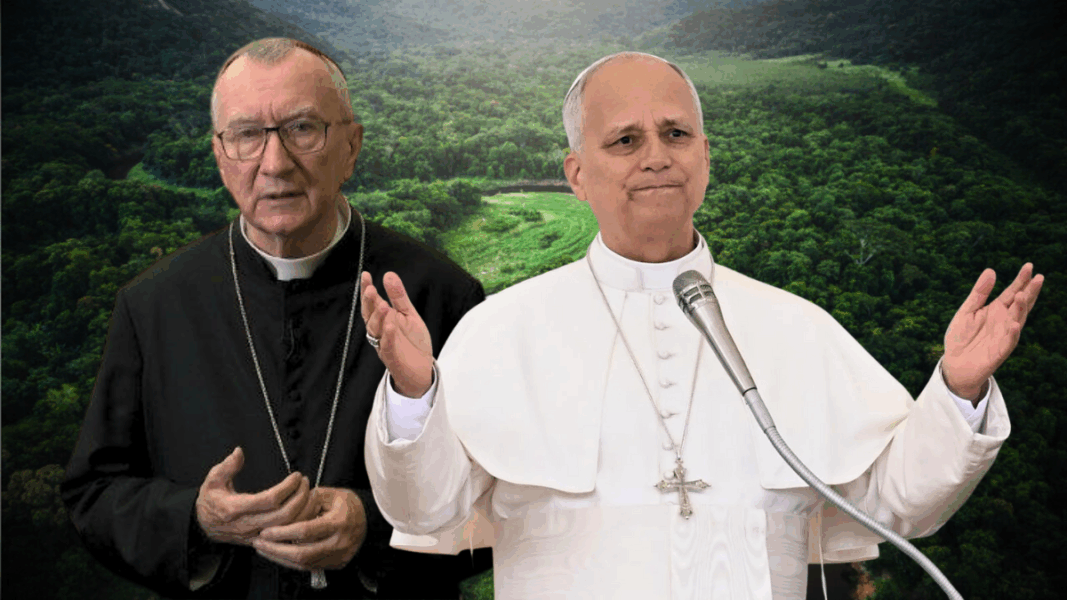
On the occasion of the United Nations Conference on Climate Change (COP30), held in the Brazilian city of Belém, Pope Leo XIV sent a message to the heads of State and Government worldwide. The text was read by Cardinal Pietro Parolin, Secretary of State of the Vatican, who represented the Holy Father at the event.
In his address, the Pontiff reiterated the inseparable connection between peace and respect for creation, warning that the ecological crisis is not only an environmental problem, but also moral and spiritual. Recalling the words of Benedict XVI at the celebration of the World Day of Peace (2010), he stated that:
«The search for peace by people of good will would undoubtedly be easier if all recognized the indivisible relationship between God, human beings, and all creation.»
Environmental degradation as a threat to peace
Through Parolin, the Pope lamented that global attention is almost exclusively focused on armed conflicts, while environmental degradation continues to exacerbate social and economic inequalities. “Peace is threatened by the lack of due respect for creation, by the plundering of natural resources, and by the progressive deterioration of quality of life due to climate change,” he affirmed.
Read also: Toward a «ecological humanism»: the Holy See prepares for the climate summit in Brazil
The Pontiff warned that these global challenges put the lives of all the planet’s inhabitants at risk and called for bold international cooperation, founded on the dignity of the human person and the common good. In contrast, he criticized the proliferation of political approaches “characterized by collective selfishness, disregard for others, and shortsightedness.”
The moral dimension of the ecological crisis
Recalling the teachings of Saint John Paul II, Leo XIV emphasized that the ecological crisis “is a moral problem,” which requires new solidarity between rich nations and the poorest ones.
“Caring for creation thus becomes an expression of humanity and solidarity,” he affirmed.
The Pope urged transforming words into concrete actions, based on responsibility, justice, and equity, as a path toward lasting peace that harmonizes care for the planet with fraternity among peoples.
The call for an ecological conversion
On the tenth anniversary of the Paris Agreement, the Holy Father acknowledged that the path to its goals “remains long and complex” and exhorted States to “accelerate boldly” their fulfillment.
Evoking the encyclical Laudato si’ of his predecessor Francis, Leo XIV recalled that “the climate is a common good, which belongs to all and is meant for all.” In that line, he called for a true ecological conversion, both personal and institutional, that inspires just policies and a new global economic order centered on the human person.
“May this ecological conversion —he said— inspire the development of a new international financial architecture centered on the human being, which ensures that all countries, especially the poorest and those most vulnerable to climate disasters, can reach their full potential and see the dignity of their citizens respected.”
The Pope invited recognition of the relationship between ecological debt and external debt, emphasizing that there can be no environmental justice without economic justice.
Educating for a change of mentality
The message also insisted on the importance of integral ecological education, which teaches how personal, family, and political decisions directly influence the common future.
“May all participants in this COP30 commit to protecting and caring for the creation that God has entrusted to us to build a peaceful world,” he concluded.
We leave below the full message from Leo XIV:
Mr. President,
Distinguished Heads of State and Government, Ladies and Gentlemen,
On behalf of Pope Leo XIV, I convey a cordial greeting to all participants in the thirtieth session of the Conference of the Parties to the United Nations Framework Convention on Climate Change, and I assure you of his closeness, support, and encouragement.
If you want to cultivate peace, care for creation. There is a clear link between building peace and safeguarding creation: “The search for peace by people of good will would undoubtedly be easier if all recognized the indivisible relationship between God, human beings, and all creation”[1].
While, on the one hand, in these difficult times, the attention and concern of the international community seem to focus mainly on conflicts between nations, on the other hand, there is also a growing awareness that peace is threatened by the lack of due respect for creation, by the plundering of natural resources, and by the progressive deterioration of quality of life due to climate change.
Due to their global nature, these challenges endanger the lives of all the planet’s inhabitants and therefore require international cooperation and cohesive, forward-looking multilateralism that places at the center the sacredness of life, the dignity that God has granted to every human being, and the common good. Unfortunately, we observe political approaches and human behaviors that go in the opposite direction, characterized by collective selfishness, disregard for others, and shortsightedness.
“In a world aflame, as a consequence of both global warming and armed conflicts”[2], this Conference should become a sign of hope, through the respect shown toward the opinions of others in the joint effort to seek a common language and consensus, setting aside selfish interests and keeping in mind the responsibility we have toward one another and toward future generations.
Mr. President:
Already in the 1990s, Pope Saint John Paul II emphasized that the ecological crisis “is a moral question” and, as such, “reveals the urgent moral need for a new solidarity, especially in relations between developing countries and highly industrialized ones. States must increasingly share responsibility, in a complementary manner, to promote a peaceful and healthy natural and social environment”[3]. Tragically, those in the most vulnerable situations are the first to suffer the devastating effects of climate change, deforestation, and pollution. Caring for creation thus becomes an expression of humanity and solidarity.
From this perspective, it is vital to turn words and reflections into choices and actions based on responsibility, justice, and equity to achieve lasting peace through the care of creation and of our neighbors.
Furthermore, since the climate crisis affects everyone, corrective measures must include local governments, mayors and governors, researchers, young people, business leaders, religious organizations, and NGOs.
Mr. President:
A decade ago, the international community adopted the Paris Agreement, recognizing the need for an effective and progressive response to the urgent threat of climate change.[4] Unfortunately, we must admit that the path to achieving the objectives set in that Agreement remains long and complex. In this context, the Parties are urged to boldly accelerate the implementation of the Paris Agreement and the United Nations Framework Convention on Climate Change.
Ten years ago, Pope Francis signed the encyclical Laudato Si’, in which he advocated for an ecological conversion that includes everyone, since “the climate is a common good, which belongs to all and is meant for all. At the global level, it is a complex system linked to many of the essential conditions for human life.”
May all participants in this COP30, as well as those who actively follow its work, feel inspired to embrace this ecological conversion boldly in thought and action, keeping in mind the human face of the climate crisis.
May this ecological conversion inspire the development of a new international financial architecture centered on the human being, which ensures that all countries, especially the poorest and those most vulnerable to climate disasters, can reach their full potential and see the dignity of their citizens respected. This architecture should also take into account the link between ecological debt and external debt.
May integral ecological education be promoted that explains why decisions at the personal, family, community, and political levels shape our common future, while raising awareness of the climate crisis and fostering a mentality and lifestyle that better respect creation and safeguard the dignity of the person and the inviolability of human life[6].
May all participants in this COP30 commit to protecting and caring for the creation that God has entrusted to us to build a peaceful world.
I assure you of the Holy Father’s prayers as you make important decisions in this COP30 for the common good and for the future of humanity.
[1] Pope Benedict XVI, Message for the Celebration of the World Day of Peace, January 1, 2010.
[2] Pope Leo XIV, Homily for the Holy Mass for the Care of Creation, Borgo Laudato Si’, Castel Gandolfo, July 9, 2025.
[3] Saint John Paul II, Message for the Celebration of the World Day of Peace “Peace with God the Creator, Peace with All Creation,” January 1, 1990.
[4] Cf. Paris Agreement, Preamble.
[5] Pope Francis, Encyclical Letter Laudato Si’, 23.
[6] Cf. Pope Benedict XVI, Message for the Celebration of the World Day of Peace, January 1, 2010.