


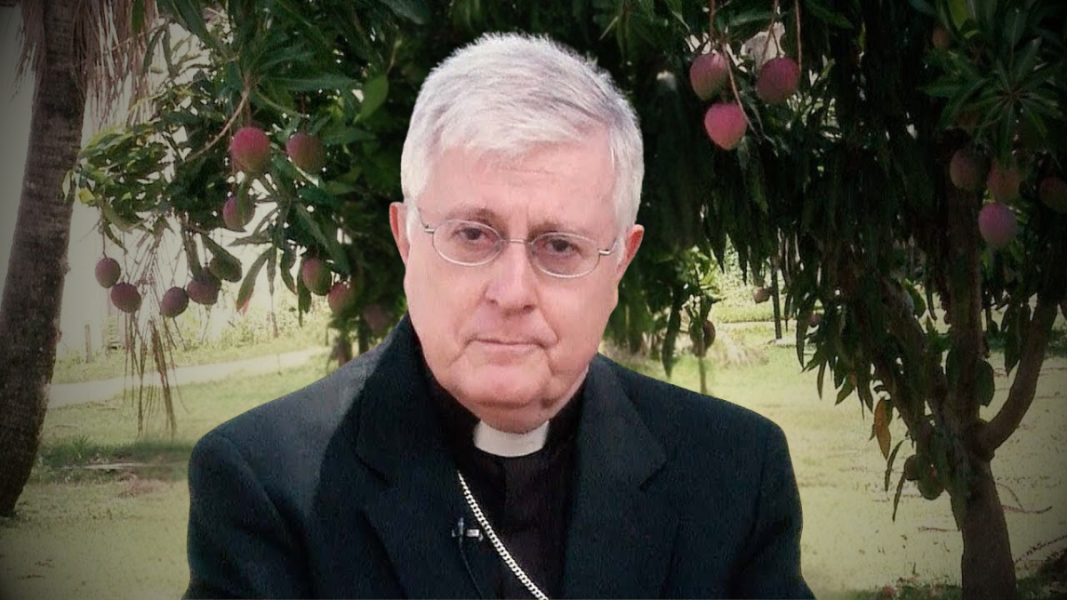
The apostolic nuncio in Brazil, Msgr. Giambattista Diquattro, arrived this week in Belém (Pará) as deputy head of the Holy See delegation participating in the COP30, the United Nations Conference of the Parties on climate change. The summit, which takes place from November 10 to 21, brings together more than 50 heads of state and government to discuss the future of global climate policies.
According to ACI Prensa, Diquattro highlighted that one of the main objectives of the Holy See in this edition is to promote education for integral ecology, considered by the Vatican “a decisive field to address the climate crisis”. In statements to Vatican Radio, the diplomat explained that “many countries are including the educational dimension in their nationally determined contributions (NDCs) up to 2035”, which, in his opinion, demonstrates the growing importance of this educational approach.
Vatican Delegation and Priorities at the Summit
The official Holy See delegation at COP30 consists of ten members and is headed by Cardinal Pietro Parolin, Secretary of State, who will represent Pope Leo XIV as the Church's highest authority at the conference. More than a hundred representatives from Catholic institutions are also in Belém to participate in activities related to the event.
Diquattro emphasized that, in addition to environmental education, the Holy See will promote other key issues at the summit: the reform of the global financial architecture and its connection with climate financing, as well as the so-called “just transition”, which—as he explained—“must include not only economic criteria, but also social and environmental ones”.
The nuncio also mentioned the Gender Action Plan (Gender Action Plan), which will provide the opportunity to “reaffirm the disproportionate weight that climate change exerts on women” and promote their active participation in the implementation of the Paris Agreement.
A Call to Action and Political Commitment
In statements reported by ACI Prensa, Diquattro stated that this conference should be “a turning point” and express “a clear and tangible political will” to accelerate the ecological transition. The Vatican representative called for the measures adopted to be “efficient, binding, and easily verifiable”, and to be concretized in four fundamental areas: energy efficiency, development of renewable sources, elimination of fossil fuels, and education for more sober lifestyles.
The nuncio recalled that the Paris Agreement, signed in 2015, sought to keep the global temperature increase below 1.5 °C compared to pre-industrial levels. However, that limit was exceeded in 2024, considered the hottest year ever recorded, according to international scientific data. For the Holy See, this fact shows that the time for declarations is over and that concrete political decisions are required.
The Church in Belém Accompanies the Summit
Meanwhile, the Archdiocese of Belém has organized an extensive parallel program to COP30, with training, reflection, and prayer activities focused on the care of creation. According to the archdiocese's official website, the sessions will take place from November 11 to 16, in line with the pope's magisterium expressed in the encyclicals Laudato si’ and Laudate Deum.
“The objective —states the communiqué— is to stimulate dialogue and commitment in the face of current socio-environmental challenges, strengthen the Pastoral Care of Integral Ecology, and promote an ecological conversion in communities”.
The events will be organized into four thematic poles: Social, at the Santa Catarina de Sena School; Education and Health, at the Catholic Faculty of Belém; Youth, at the Sanctuary of São João Batista and Our Lady of Grace; and Sustainability, at Santa Bárbara.
The Holy See's Ecological Priority
The Vatican's focus at COP30 responds to the pope's constant call to promote an integral ecological conversion, which is not limited to technical solutions, but transforms people's mindset and habits. “Education —said Diquattro— is not a complement, but the basis of a cultural transformation capable of moving from individual interest to the common good”.