


The ruling concludes that it was not proven that the priest damaged the good reputation of José Enrique Escardó, obstructed the Vatican mission regarding the Sodalicio de Vida Cristiana, or fomented hatred toward the Apostolic See.
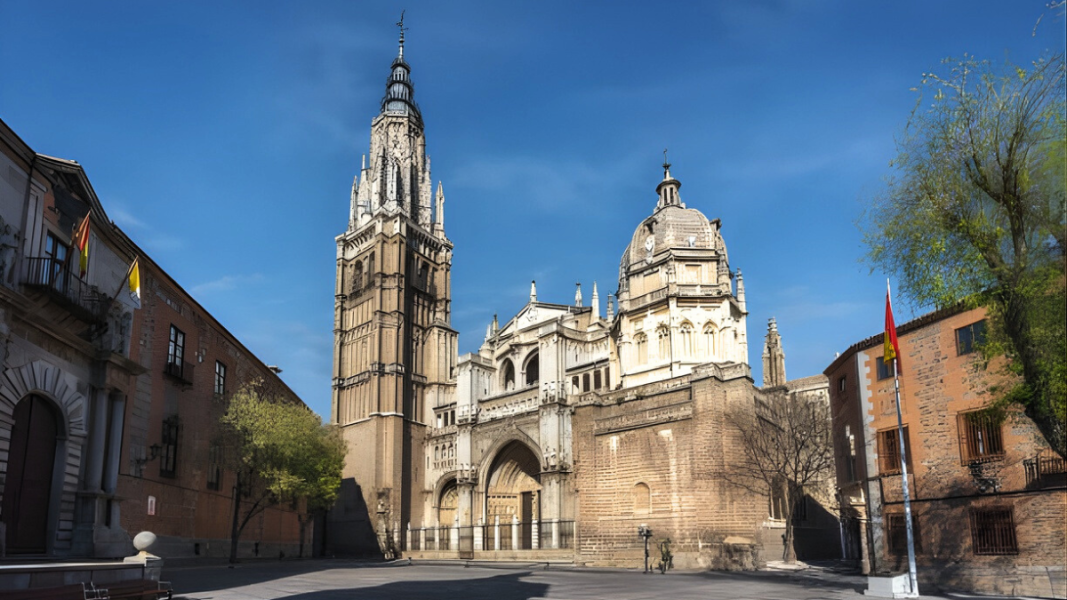
The Ecclesiastical Tribunal of Toledo issued an acquittal sentence in favor of the Rev. Fr. Francisco José Delgado Martín, after analyzing the accusations brought against him for alleged insults, obstruction of ecclesiastical authority, and promotion of aversion toward the Holy See.
In its resolution, the judges conclude unanimously that «it is not established» that the priest committed the offenses typified in canons 1390 §2, 1372, and 1373 of the Code of Canon Law.
The process originated from a complaint by Mr. José Enrique Escardó, who claimed that Fr. Delgado had damaged his reputation through comments on social media. However, the Tribunal considered that, according to the evidence and testimonies, it was Escardó himself who engaged in defamatory expressions against priests and against the Church, while Delgado acted in defense of them.
Regarding the alleged obstruction of the pontifical mission on the Sodalicio de Vida Cristiana, the sentence states that there are no indications that the priest’s statements interfered with the decisions of the Holy See, which in April ordered the suppression of said organization by decree of the Dicastery for Institutes of Consecrated Life and Societies of Apostolic Life.
Likewise, the Tribunal dismissed that in the YouTube program La Sacristía de la Vendée Fr. Delgado had incited hatred or aversion against the Pope or the Apostolic See. The judges highlighted that, during the broadcast of February 22, 2024, the priest attempted to correct the inappropriate expressions of another participant and subsequently issued a public apology, which demonstrates his intention contrary to any act of hostility.
Consequently, the sentence provides that Fr. Francisco José Delgado be acquitted of all charges and orders the official publication and notification of the ruling, in accordance with canons 1614 and 1615 of the Code of Canon Law. The judgment was signed at the seat of the Ecclesiastical Tribunal of Toledo on July 28, 2025, by the judges and the acting notary.
Full Sentence
(Below is reproduced the full text provided by the parties.)
corresponding votes and issue the sentence.
12. Assessment of the Evidence and Conclusions of the Tribunal:
1) Regarding the good reputation of Mr. Escardó damaged by the Rev. Mr. Francisco José Delgado: according to the statements of the accused and the proposed witnesses, the facts point to the opposite, that is, it is Mr. Escardó who has actually damaged the reputation, and no less than the reputation of the Church and of the priests, by making general and very serious accusations. Indeed, the discussion recorded in the file (which can be seen in the copies of the conversations on social media) began with a comment by Fr. Juan Razo about the lamentable and offensive Holy Week poster from Seville, which gave Mr. Escardó the opportunity to slander and defame this priest and, once Fr. Francisco José Delgado entered the conversation, him as well.
Fr. Francisco José defended Fr. Juan Razo from the very serious public accusations that Mr. Escardó made, thus becoming the center of this gentleman’s attack, which was even more incisive and slanderous, crossing all the limits presumed in correct and supposedly Christian conduct. Furthermore, Mr. Escardó presents himself as a «victim of abuses» and, as a result of Fr. Francisco José’s comments, considers himself «revictimized»; however, at no time has it been demonstrated that he is a victim of abuses—only that a superior forced him to eat rice pudding with ketchup, which in no way constitutes sexual abuse or anything similar—and neither is it proven at any time that he felt revictimized; in fact, he himself boasts on social media of his meeting with the late Pope Francis in relation to the victims of the Sodalicio de Vida Cristiana, this matter having been resolved by the Dicastery for Consecrated Life through the decree of April 14, 2025, signed by the Superior General of the Sodalicio, suppressing this organization in the same seat of the Dicastery for Institutes of Consecrated Life and Societies of Apostolic Life. Therefore, even though the reparation owed in justice to the victims of this organization is still ongoing, it cannot be affirmed that they are being revictimized, and much less Mr. Escardó who manifests himself publicly in this way; that is only an excuse to defame and slander the Church. Thus, the statements of Fr. Francisco José, and those who have made comments on social media about his confrontation with Mr. Escardó, have always been directed to defend the Church and its priests. It should not escape us that, in this exchange of slanders and defamations, it can be seen that Mr. Escardó defines himself as a Satanist, which is far from having felt defamed and slandered by Fr. Francisco José Delgado; indeed, these facts can easily be verified by attending to his public identification on social media. In this sense, we must add what was cited in the in iure of this sentence, namely, that «damage to a person’s good name can occur because of their own actions, as happens when someone is involved in publicly scandalous conduct,» which is plausible in Mr. Escardó’s behavior.
The witnesses who have testified are in agreement with the statements of Fr. Francisco José and corroborate his assertions and his way of perceiving the facts. We must emphasize that, when Mr. Escardó was required to testify in this case, he replied that he had nothing to say, referring to what he had already stated to the Dicastery for the Doctrine of the Faith, but this Tribunal is unaware of these statements. Thus, we consider that full credibility must be given to what Fr. Francisco José Delgado and the witnesses have declared and not to what Mr. Escardó supposedly says and accuses.
Consequently, it is not proven that Fr. Francisco José Delgado Martín has committed the offense contemplated in c. 1390 §2.
2) Regarding the Special Mission to the Sodalicio de Vida Cristiana, obstructed by the Rev. Mr. Francisco José Delgado: based on what was said above, it is not proven that the comments and actions of Fr. Francisco José Delgado obstructed the special mission that the Holy See carried out against the Sodalicio de Vida Cristiana. In the official media of the Holy See, it is stated that, on April 15, the Dicastery for Institutes of Consecrated Life and Societies of Apostolic Life issued a public note signed by the Prefect, Sister Simona Brambilla, which says: «Having concluded the investigation ordered by the Holy Father Francis on July 5, 2023, in order to verify the validity of the accusations of various natures of responsibilities attributed to Mr. Luis Fernando Figari and several other members of the Sodalicio de Vida Cristiana, it has been decided to suppress both the Societies of Apostolic Life of the Sodalicio de Vida Cristiana and of the Fraternidad Mariana de la Reconciliación, as well as the Associations of the Faithful of the Siervas del Plan de Dios and of the Movimiento de Vida Cristiana,» and it continues by saying: «the respective suppression decrees have been notified, issued by the Dicastery for Institutes of Consecrated Life and Societies of Apostolic Life and specifically confirmed by the Holy Father.» Consequently, nothing is proven that leads us to affirm that the accused’s behavior obstructed the power of ecclesiastical authority. Indeed, it must be noted that, for this offense to be typified according to canonical doctrine, it is necessary that there be a full impossibility to exercise the authoritative act of the authority, and in the present case, the resolution of the aforementioned Dicastery regarding the Sodalicio proves the opposite.
Therefore, it is not established that Fr. Francisco José Delgado obstructed the exercise of ecclesiastical power of the Special Mission to the Sodalicio with which he is charged under c. 1372.
3) Regarding the program La Sacristía de la Vendée, in which the Rev. Mr. Francisco José Delgado is imputed with stirring up aversion or hatred toward the Apostolic See: both from the statement of Fr. Francisco José Delgado and from those of the witnesses, it is concluded that he, as coordinator of this discussion on the YouTube platform, is not responsible for the comments made by the participants, but each one is responsible according to what they express and assert. On the day in question, February 22, when in the greetings Fr. Gabriel Calvo Zarraute makes a lamentable and untimely joke, Fr. Francisco José immediately tries again and again to divert the course of the discussion, being aware of the gravity of Fr. Gabriel Calvo Zarraute’s statements. Moreover, when these statements become public in other media, it is the Director of Vida Nueva who leads an entire campaign against the priests who participate in the program La Sacristía de la Vendée, taking phrases out of context and fostering defamation not only of these priests but also of third parties. Thus, seeing the course of events, Fr. Francisco José Delgado issues an apology note which he reiterates in one of the following broadcasts of this program, joining the other collaborating priests, except Fr. Gabriel Calvo Zarraute who neither apologizes nor corrects his conduct. This is recorded in the file and corroborated by the witnesses. What happened can be summarized as follows: Fr. Francisco José Delgado was immediately aware of what the supposed joke by Fr. Gabriel entailed, triggering an avalanche of accusations, and tried to correct what was said, but without the apology from the one who actually made the unfortunate statement.
Consequently, we cannot conclude by affirming that Fr. Francisco José Delgado fomented aversion and hatred toward the Holy Father, with the legal requirements contemplated for this offense in c. 1373. Indeed, as we have gathered in the legal part of this sentence, for this offense to be typified it is necessary that there be an express act of the will that incites hatred toward the Apostolic See, which is not proven here. Fr. Francisco José Delgado, in his role as coordinator of the discussion, tried to correct what Fr. Gabriel Calvo said, who was really the one who uttered the unfortunate phrase, being the only one of the participants who did not retract. Consequently, it is not proven that Fr. Francisco José Delgado Martín has committed the offense contemplated in c. 1373 and, consequently, he must be acquitted.
Therefore:
DISPOSITIVE PART
13. In merit of the foregoing, considering the reasons of law and the evidence of the facts, the undersigned judges, judging definitively, define and sentence that to the formula of doubts legitimately agreed upon we must respond and we respond unanimously that:
IT IS NOT ESTABLISHED that the Rev. Fr. Francisco José Delgado Martín has committed the following offenses:
- Against the good reputation of Mr. José Enrique Escardó, through some messages published on January 29, 2024, on a social network;
- Having obstructed the exercise of ecclesiastical power of the «Special Mission to the Sodalicio de Vida Cristiana,» due to the said interventions on social networks;
- Stirring up aversion or hatred against the Apostolic See, pursuant to c. 1373, in the program La Sacristía de la Vendée, dated February 22, 2024.
Let this sentence be published and notified, pursuant to canons 1614 and 1615 of the Code of Canon Law.
Thus, we pronounce and sign in Toledo, at the seat of our Tribunal, on the twenty-eighth day of the month of July of the year two thousand twenty-five.
Signature of the judges and the notary.