


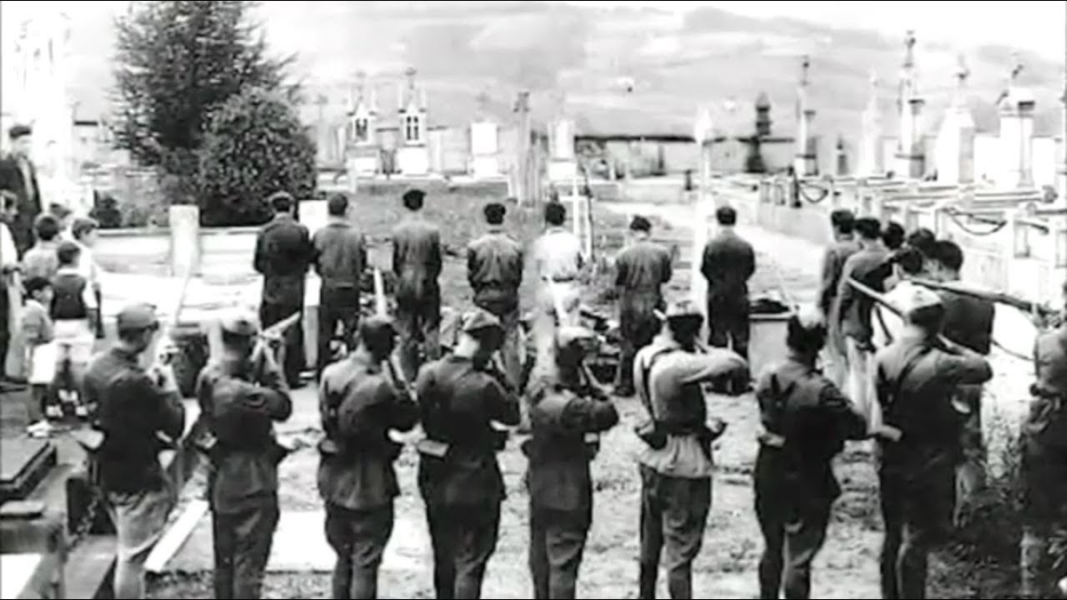
The Church in Spain celebrates this November 6 the Commemoration of the Martyrs of the Religious Persecution of the 20th Century, a liturgical day instituted to remember the thousands of Catholics who died for their faith during the years of violence and religious hatred in the 1930s.
Among them are bishops, priests, religious men, religious women, and laity who bore witness to their fidelity to Christ to the ultimate consequences. Many were murdered after refusing to renounce their faith or abandon their ministry.
The ecclesial recognition of their martyrdom began decades later, with a long and rigorous process that is still ongoing. According to the data collected by the Spanish Episcopal Conference, 2,053 men and women have already been declared martyrs: 12 canonized and 2,041 beatified in 11 ceremonies held since 1987.
A Time of Persecution and Faith
The religious persecution was not an isolated or spontaneous phenomenon. It spread across almost all of Spain and severely affected the life of the Church. During the years of the Second Republic and the Civil War, temples, convents, and religious schools were burned or destroyed. Thousands of priests and religious were arrested or executed simply for wearing the habit or exercising their ministry.
Despite this, the witness they left was not one of resentment, but of fidelity and forgiveness. In numerous letters and notes written shortly before their death, many martyrs expressed their desire to die forgiving their persecutors and offering their suffering for the reconciliation of Spain.
“I hold no hatred toward anyone. I die forgiving everyone,” wrote Bishop Salvio Huix Miralpeix of Lleida, before being shot in August 1936.
From the Graves to the Altar
The causes for beatification began to be organized systematically in the 1950s, after the war, although the first official recognition from the Holy See came later. Pope Saint John Paul II beatified three Carmelites of Guadalajara in 1987, thus opening a process that would accelerate in subsequent pontificates.
Among the most significant beatifications is that of the 498 Martyrs of Spain, proclaimed by Benedict XVI in 2007, in which delegations from all Spanish dioceses participated. In 2013, Pope Francis approved the beatification of 522 new martyrs, including numerous young seminarians, catechists, and religious.
The most recent one, held in 2022, raised to the altars a new group of 20 martyrs from Almería and Granada. In total, more than 40 Spanish dioceses have participated in beatification processes related to the religious persecution.
Dioceses and Communities Most Affected
The most hard-hit regions were Catalonia, Aragon, Valencia, and eastern Andalusia. In Barcelona, for example, more than 300 religious were murdered in the first months of the war. In Barbastro, 51 Claretian missionaries—mostly seminarians—were martyred in 1936 after weeks of captivity and prayer.
In Toledo, one of the largest seminaries in Europe at the time, nearly a hundred seminarians lost their lives. In the diocese of Madrid-Alcalá, more than 400 priests and religious were executed.
Despite regional differences, all Spanish dioceses preserve the names of local martyrs, whose memory is kept alive in plaques, relics, and liturgical acts.
A Witness that Transcends Time
The memory of the Spanish martyrs is not limited to local devotion. For the universal Church, their witness represents one of the clearest manifestations of fidelity to the Gospel in modern times. The Holy See has emphasized on various occasions that their sacrifice should not be interpreted in political terms, but as an act of radical faith and forgiveness.
Today, the example of these men and women continues to challenge believers: maintaining faith amid hostility, bearing witness to the truth without fear, and responding to hatred with charity.