


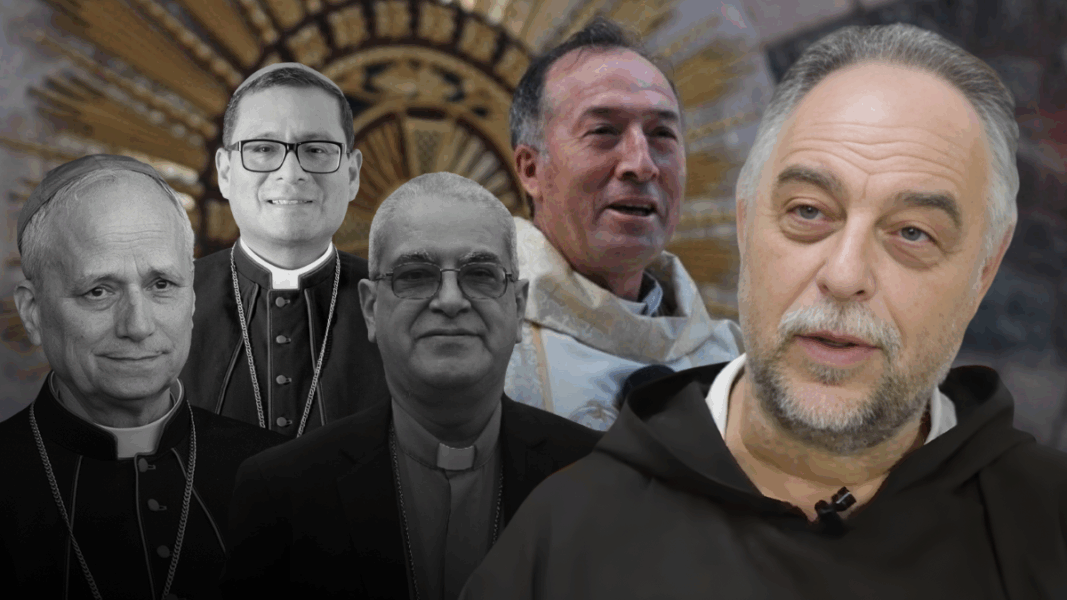
In a meeting with the victims of the abusive priest Eleuterio Vásquez Gonzáles, the official representative of the Church in the case of the pedophile priest from Chiclayo, Giampiero Gambaro, acknowledged on April 23, 2025, the serious irregularities in the ecclesiastical investigation conducted under the responsibility of the then bishop of Chiclayo, Robert Prevost, today Pope Leo XIV in the year 2022.
Gambaro, a canonist appointed by the current bishop of Chiclayo Edison Farfán as delegate to conduct the administrative penal process against Vásquez Gonzáles, openly admitted that the first investigation was very deficient, superficial, and full of formal errors, which constitutes the first official confirmation of negligence in the ecclesiastical management of the controversial Lute case.
“The previous investigation, a joke. Super… formally so, more or less well done, with formal errors even, but okay. And then the content of the investigation, super… very uh… practically, right? Practically with the complaints, they asked some similar questions, like the complaint you made, and to the father practically nothing. He answered nothing”.
The delegate himself emphasized that the lack of rigor and superficiality marked the entire process, going so far as to state that even in the Holy See, serious errors were made in handling the file.
“I found out about many things, and many errors, a lot of superficiality, in several figures even in the Holy See, uh… there are several complex situations here”.
An investigation without essential evidence
Beyond the formal deficiencies acknowledged by Gambaro, what is clear is that the Church investigated none of what it should have investigated. There were multiple pieces of evidence pending to be examined: eyewitness testimonies, review of agendas, statements from those who accompanied the priest on his trips with minors to the highlands, where he spent the night with them in the presence of a driver and several witnesses.
None of these proceedings were ordered or carried out. The canonical investigation—as Gambaro acknowledged—was limited to a formal procedure without substance, without questions to the victims or to the accused himself, who “answered nothing”.
The legal error that contradicts the Church’s own law
One of the most serious aspects revealed in Gambaro’s statements is the explanation about the closure of the case by the Dicastery for the Doctrine of the Faith, which closed it alleging prescription under Peruvian law. The delegate described this decision as “extremely strange,” acknowledging that the Church never applies civil prescription to canonical offenses, and that Pope Francis had repeatedly repealed prescription limits in abuse cases.
“This is the first time I’ve dealt with this type of situation… the first time they accept the prescription from civil law… Like that…? That’s an extremely strange thing”.
Sending the victims to a clearly prescribed civil route for more than seven years was not only pastorally inadequate but also legally contrary to canon law, which establishes its own penal system and its own rules on prescription. Closing the case under that argument—as the Church’s own delegate now acknowledges—was an act directly contrary to ecclesiastical law.
“The same person who signs this letter later signs another letter saying: ‘No need to do the process’,” he added, underscoring the inconsistency of the decisions made by ecclesiastical authorities.
“The victims’ anger is legitimate”
Gambaro not only acknowledged the procedural and legal errors but also admitted the legitimacy of the victims’ indignation.
“I agree with the anger they have. Now, how to repair all that?”.
His words confirm what the victims and their representatives have been denouncing for years: that the investigation promoted by Robert Prevost contained many serious errors, and that both the ecclesiastical authorities in Chiclayo and the Vatican acted, at minimum, with negligence, disinterest, and lack of commitment in the face of the abuses committed by Eleuterio Vásquez Gonzáles.
A confirmation of what Infovaticana has been upholding
Giampiero Gambaro’s statements—the Church’s official delegate for the Lute case and canonist in charge of the file—prove that the Church itself recognizes what Infovaticana has been denouncing from the beginning and for which it has been pointed out: that the process against the pedophile priest Lute, conducted under the authority of Bishop Robert Prevost, Monsignor Cornejo, and Edison Farfán, was an investigation without the rigor or minimum measures necessary to reach the truth.
And it is worth remembering: Infovaticana has not done so out of animosity toward anyone, but out of a conviction of justice. Because we believe that the Church must repair all the victims and acknowledge any errors committed in the processes. Only from that truth—painful but necessary—can it recover the moral credibility that the abuses themselves and their cover-up have compromised.