


Among the great Doctors of the Church, few spoke of the Virgin Mary with such spiritual depth and theological balance as St. Bernard of Clairvaux. The Cistercian abbot, a mystic of the 12th century, was a lover of the Mother of God, but he never fell into exaggerations or sentimentalisms. His Marian devotion sprang from the Word of God and was nourished by the contemplative silence of the monasteries.
For Bernard, Mary was not a distant figure or a poetic idea: she was the woman of the Gospel, the one in whom God made Himself small to draw near to man.
A faith born from Scripture
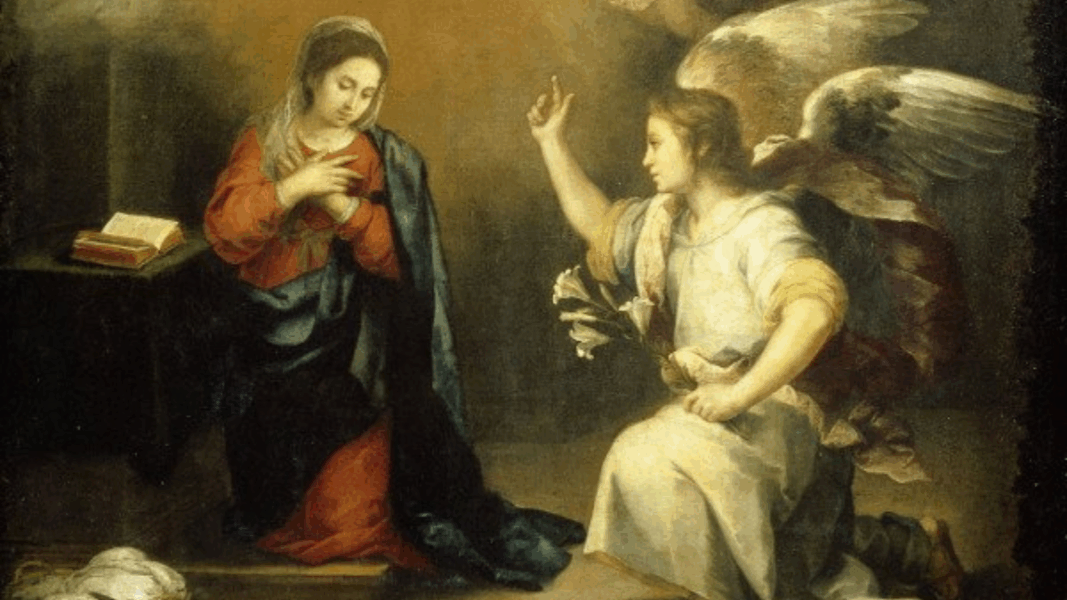
St. Bernard does not let himself be carried away by myths or legends. His gaze is fixed on the Gospel, especially in the account of the Annunciation. There, every word—the name of the angel, the city of Nazareth, Mary’s virginity, the lineage of David—reveals something of God’s mystery to him.
“The evangelist,” says Bernard, “does not utter a single word without cause, especially when narrating the story of the Incarnate Word.” In that attentive and loving reading, the monk finds the source of his Marian theology: Mary is the woman chosen, not for her human merits, but because her soul was empty of self and full of God.
In this way, St. Bernard demonstrates that true Mariology is not outside the Bible, but is its purest flower. What is admired in Mary—her faith, her docility, her divine motherhood—is precisely what Scripture teaches every Christian to live.
Humility, the key to the mystery
Bernard exalts Mary’s virginity, but he does not present it as her greatest glory. Her greatness, he says, lies in humility. “We can be saved without virginity, but not without humility,” he writes. The Virgin was chosen not for what she had, but for what she lacked: pride, resistance, self-love.
In a time when ambition dominated feudal society and even within the Church, St. Bernard offered a different mirror: Mary, the humble handmaid, becomes the throne where the King of heaven chose to rest. In her, faith does not rise with pride, but bows in reverence.
His message remains relevant today: only the simple soul makes room for God. Mary’s humility does not diminish her greatness; it elevates it, because in her all divine glory shines forth.
The dignity that comes from God
St. Bernard, with his vigorous and poetic style, also dwells on the mystery of the relationship between the Mother and the Son. He contemplates the scene of the child Jesus in the temple, submitting to his parents after three days of absence, and comments:
“That God obeys a woman is humility without example; that a woman commands the Son of God is dignity without equal.”
In this paradox, the monk discovers the essence of Christianity: God does not destroy human nature, He ennobles it. In Mary, humanity recovers its original nobility, that of being a collaborator with the Creator. She is a creature, but her divine motherhood makes her the point where the eternal touches the human.
Thus, St. Bernard teaches that honoring Mary is not taking glory away from Christ, but recognizing in her what God can do when He finds a heart totally available.
Queen by her motherhood
Although in his time the great Marian privileges were already being discussed, St. Bernard did not let himself be carried away by speculations. He rejected, for example, the exaggerations about the Immaculate Conception, not because he denied Mary’s holiness, but because he did not yet find a sufficient basis in Revelation. His prudence was, paradoxically, the ground where the future doctrine would germinate.
Even so, the abbot of Clairvaux recognizes in the Virgin a title that springs from Scripture: Queen, because she is the Mother of the King. “Only this mode of birth was worthy of God,” he wrote: “to be born of a virgin; and only this birth was worthy of a virgin: to give birth to God.”
Her royalty, therefore, is not one of power or dominion, but of service and love. Mary reigns because she gave herself totally, because she kept nothing for herself. Her throne is the heart of Christ, and her scepter, the prayer that intercedes for men.
From Eve to Mary: the contrast of two freedoms
Bernard contemplates Mary as the new Eve. The first woman reached out her hand to the forbidden fruit, and with her disobedience she brought death; the second offers the world the blessed fruit of her womb, Christ, the source of life.
In this parallelism, the monk sees reflected the entire history of salvation: redemption does not begin with a sword, but with a ‘yes’. In the garden of Eden, the doors of Paradise were closed; in Nazareth, they were opened again by the voice of a maiden.
Mary’s obedience was not a passive act, but the greatest free cooperation ever given to God. In her “let it be done,” St. Bernard hears the echo of all creation, as if the entire universe held its breath, waiting for her response.
The ‘yes’ that changed history
When the angel announces the divine plan, Bernard imagines the entire heaven waiting in silence. Then, he addresses these ardent words to the Virgin:
“Answer quickly, O Mary. Give your consent to the angel, through him to the Lord. Say your word and receive the Word; utter the fleeting voice and conceive the eternal Word.”
In this instant, says the saint, eternity enters time. The Word of God is clothed in human flesh, and Mary’s “fiat” becomes the beginning of redemption. For Bernard, that obedience summarizes the entire Christian faith: God calls, man responds; God proposes, the soul consents.
Mary, teacher of contemplation
For St. Bernard, Mary is not only an object of veneration; she is a model of prayer. Her entire life is a lived lectio divina: she hears the Word, meditates it in her heart, prays from silence, and contemplates it made flesh.
The abbot saw in her the perfect figure of the monk who lives Scripture. In fact, his own sermons were exercises in collective prayer. The Cistercians listened, meditated, and contemplated together what the Word said through the Virgin. In that atmosphere of silence and song, Bernard made his homilies true schools of contemplation.
That is why it would later be said: “Devotion to Our Lady is Cistercian”. In Mary, the monk found not only the Mother of the Lord, but also the mirror of the soul seeking to unite with God.
The Mother of the Word and the soul of the believer
St. Bernard teaches that every Christian is called to imitate Mary’s interior attitude: to hear the Word, let oneself be filled by it, and give it to the world. In the believing soul, as in the Virgin, the Word also wants to become incarnate.
The Virgin of Clairvaux is not a distant figure, but the face of living, humble, and active faith. In times when devotion runs the risk of becoming routine or spectacle, her example reminds us that true faith is born from silence, nourished by the Word, and expressed in obedience.