


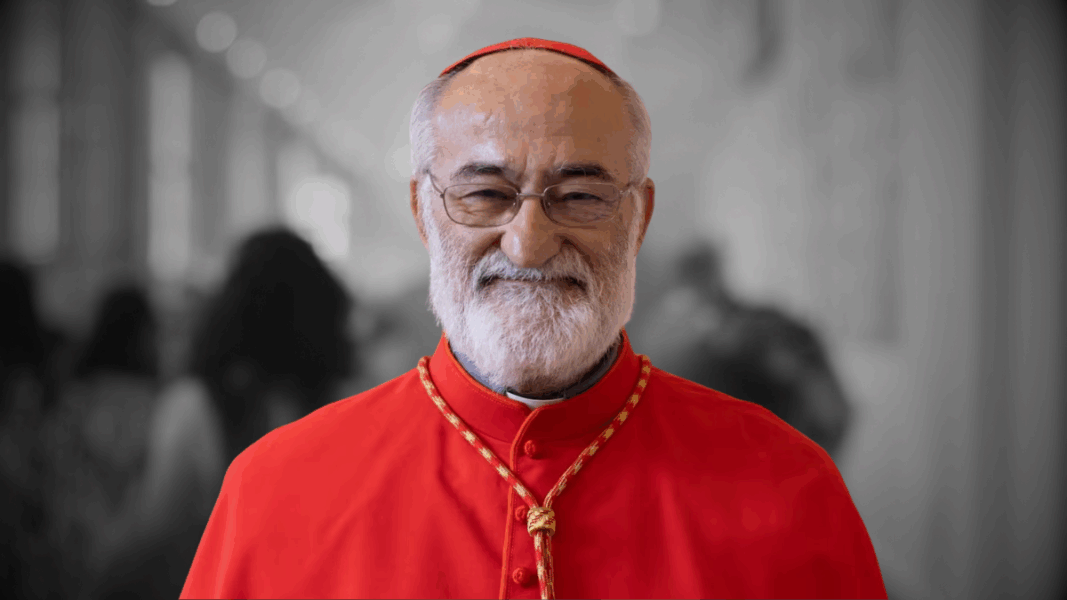
On the 60th anniversary of the conciliar declaration Nostra Aetate, Cardinal Cristóbal López Romero, Archbishop of Rabat, spoke regarding interreligious dialogue and the truth of the Gospel. From Morocco, the Salesian cardinal states that Christians must “abandon the false scheme of true religion and false religion”, because —according to his words— “no religion can appropriate the truth; it is the truth that possesses us all”.
A statement that, under the appearance of openness, implies a break with the constant teaching of the Catholic Magisterium: Christ is not “a” truth among others, but “the Truth” (Jn 14:6). And the Church, according to the Second Vatican Council, remains “the unique means of salvation” instituted by Christ himself.
From “Nostra Aetate” to the new language of pluralism
The text by Cardinal López Romero is framed within the commemoration of Nostra Aetate, the declaration promulgated by Saint Paul VI on October 28, 1965, which marked a turning point in the Church’s relations with non-Christian religions. The conciliar document, brief and prudent, exhorted Catholics to recognize the “seeds of the Word” present in other traditions, without renouncing the evangelizing mission.
However, six decades later, what was born as a pastoral openness seems to have become a theological reinterpretation that blurs the boundaries between faith and relativism. The idea that “all religions are equally valid” —although not stated openly— has infiltrated certain ecclesial discourses under the banner of “universal fraternity”.
The most controversial point: denying that there is a true religion
The most alarming aspect of Cardinal López Romero’s text is his assertion that “the false scheme of true religion and false religion must be abandoned”. According to the cardinal, “no religion can proclaim itself the owner of the truth”, because “it is the truth that possesses us all”.
At first glance, it may seem like a phrase of goodwill, but its content contradicts the Catholic faith in its essential core: “This is eternal life: that they may know you, the only true God, and Jesus Christ whom you have sent” (Jn 17:3).
The Church has never understood interreligious dialogue as a renunciation of revealed truth, but as a common search under the light of Christ, the only Savior. In fact, the declaration Dominus Iesus (2000), signed by Cardinal Ratzinger and approved by Saint John Paul II, expressly warned against this error: “It is not possible to place all religions on the same level, as if each were an equally valid path to salvation”.
“Universal fraternity” as the new world religion
The Archbishop of Rabat’s discourse goes beyond an invitation to dialogue: it proposes a horizontal vision of faith, where the essential is no longer Christ but human coexistence. Universal fraternity is presented as an end in itself, a kind of “planetary ethics”, destined to ensure peace and the survival of humanity.
But that vision —though it may seem noble— runs the risk of replacing the Gospel with a humanism without transcendence, where God dissolves into an ideal of collective harmony. The evangelizing mission ceases to be an announcement of salvation and becomes a sociological effort for global coexistence.
The Church cannot renounce Christ
In his reflection, Cardinal López Romero invites us to “accept a God who is of all”, a Father who “belongs to no religion”. But the Gospel does not teach an impersonal or diffuse God, but a God who has revealed himself concretely in Jesus Christ, who died and rose to save the world. That is the core of the faith that cannot be negotiated.
Charity does not consist in hiding the truth to avoid offending, but in proclaiming it with love and clarity. Dialoguing with other religions does not imply denying what Christ has revealed, but proclaiming it with respect and coherence. As the Second Vatican Council taught in Ad Gentes, “the Church is missionary by nature”, because “the love of Christ urges us on” (2 Cor 5:14).
Between diplomacy and fidelity
The voice of Cardinal López Romero reflects a growing trend in some sectors of the Church: replacing mission with conversation, and truth with sympathy. But fraternity without truth is not Christian; it is merely a spiritual version of modern relativism.
If Nostra Aetate sought to build bridges, today there is a risk of building them on shifting sands, where faith dissolves into a humanitarian language that no longer confesses Christ. True dialogue arises from identity, not from the abandonment of truth.
And while some propose “leaving behind the idea of a true religion”, millions of persecuted Christians around the world continue to die precisely for confessing it.
About Cardinal Cristóbal López Romero
Born in Vélez-Rubio (Almería) in 1952, Cardinal López Romero is a Salesian, with a long missionary career in Latin America and the Maghreb.
He was provincial of the Salesians in Bolivia and Paraguay, and in 2017 he was appointed by Pope Francis as Archbishop of Rabat, a tiny diocese in terms of the number of Catholics but with a symbolically significant role due to its location in the Muslim world.
In 2019 he was created cardinal, a gesture with which Francis wanted to emphasize his commitment to a Church of “dialogue and the periphery”.
His diocese has fewer than 30,000 Catholics in a country where 99% of the population is Muslim, and where the Church operates under strict state surveillance. In that context, López Romero has stood out for a discourse centered on interreligious coexistence and humanitarian cooperation, following the line of the human fraternity of Abu Dhabi.
However, his vision, by insisting on erasing the boundaries between religious truth and error, reignites the theological debate about how far dialogue can go without compromising the faith.