


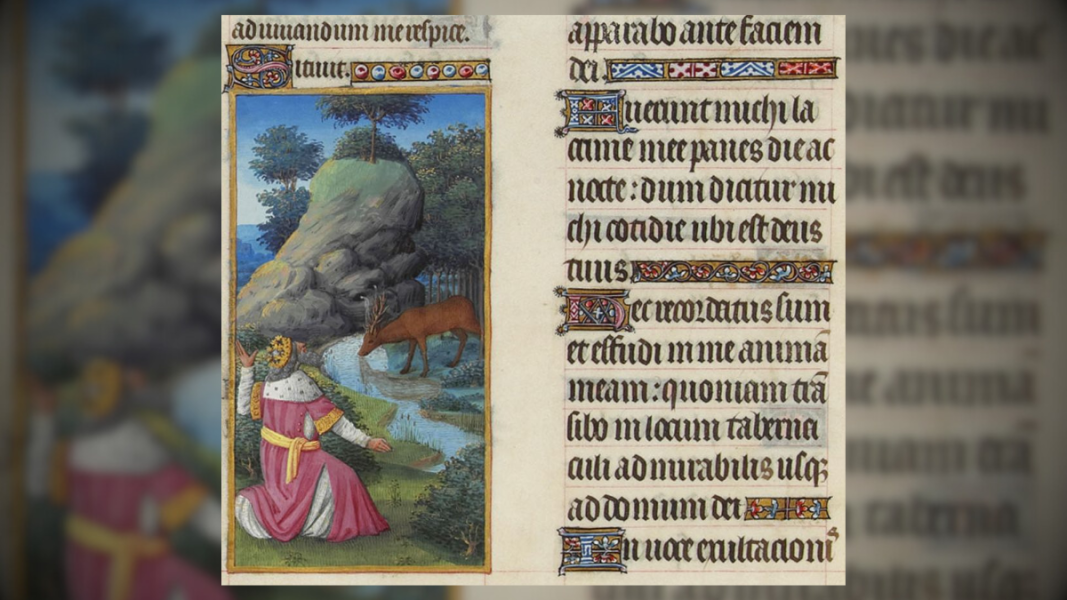
In the homily of this November 3rd, the Pope concluded with words that resonated with special force among those who know the traditional Roman liturgy. After evoking the eternal splendor of purified souls—»that they may shine like stars in the sky» (Dn 12:3)—the Pontiff closed his meditation with a verse from Psalm 42:
«Hope in God: I shall still praise him, he, the salvation of my face and my God» (Ps 42:6.12).
It is not just any psalm. It is precisely the psalm that priests recite at the foot of the altar in the traditional rite of the Mass, right before ascending to the altar for the Eucharistic sacrifice:
Judica me, Deus, et discerne causam meam de gente non sancta: ab homine iniquo et doloso erue me.
Quia tu es, Deus, fortitudo mea: quare me repulisti, et quare tristis incedo, dum affligit me inimicus?
Emitte lucem tuam et veritatem tuam: ipsa me deduxerunt et adduxerunt in montem sanctum tuum, et in tabernacula tua.
Et introibo ad altare Dei: ad Deum qui laetificat juventutem meam.
Confitebor tibi in cithara, Deus, Deus meus: quare tristis es, anima mea, et quare conturbas me?
Spera in Deo, quoniam adhuc confitebor illi: salutare vultus mei, et Deus meus.(Ps 42:1–5 in the Hebrew numbering; 42:1–6 in the Vulgate)
A Psalm with a Theology of Sacrificial Depth
This psalm—which begins with the famous «Introibo ad altare Dei, ad Deum qui laetificat juventutem meam»—expresses the tension between human misery and the longing for God. It is the cry of the soul that, amid persecutions and injustices, seeks to return to the altar, a symbol of lost communion and divine joy.
In the traditional Mass, the priest prays it with the acolyte, in a dialogue that interiorly prepares for the sacrifice. It is the spiritual ascent toward God’s presence, the passage from the valley of tears to the holy mountain. Each verse has immense theological depth: the soul that feels rejected («quare me repulisti?») implores light and truth («emitte lucem tuam et veritatem tuam»), in order to enter once again into the tabernacle of the Most High.
The final phrase—the same one quoted today by the Pope—is the ultimate response of faith: «Spera in Deo, quoniam adhuc confitebor illi: salutare vultus mei, et Deus meus.» To hope in God, even in the midst of exile, is already a form of praise.
An Echo That Did Not Go Unnoticed
That the Pope ended with this verse cannot go unnoticed, especially just days before the Ad Petri Sedem pilgrimage, in which Cardinal Raymond Burke celebrated the Solemn Mass in St. Peter’s Basilica according to the traditional Roman rite.
In that liturgy, this same psalm was recited by the faithful and ministers at the foot of the altar, before the great liturgical ascent to the Eucharistic sacrifice.
The fact that the Pope chose to close his homily with that verse, which belongs to the spiritual core of the Mass of the centuries, is, at the very least, significant. It is an echo of the oldest prayer of the Roman priest, a humble and trusting supplication before entering the mystery.
Beyond the Gesture: A Spiritual Reminder
Perhaps there is no need to seek an explicit intention, but the symbolism is there. In times of liturgical confusion and tensions within the Church, the call of the psalmist resounds: to hope in God, even when orientation seems lost, even when the soul feels «repulsed.»
The psalm of the altar—with its penitential structure, its invocation of divine light, and its promise of future praise—is, at its core, a perfect synthesis of the Christian life. That is why it has accompanied generations of priests and faithful.