


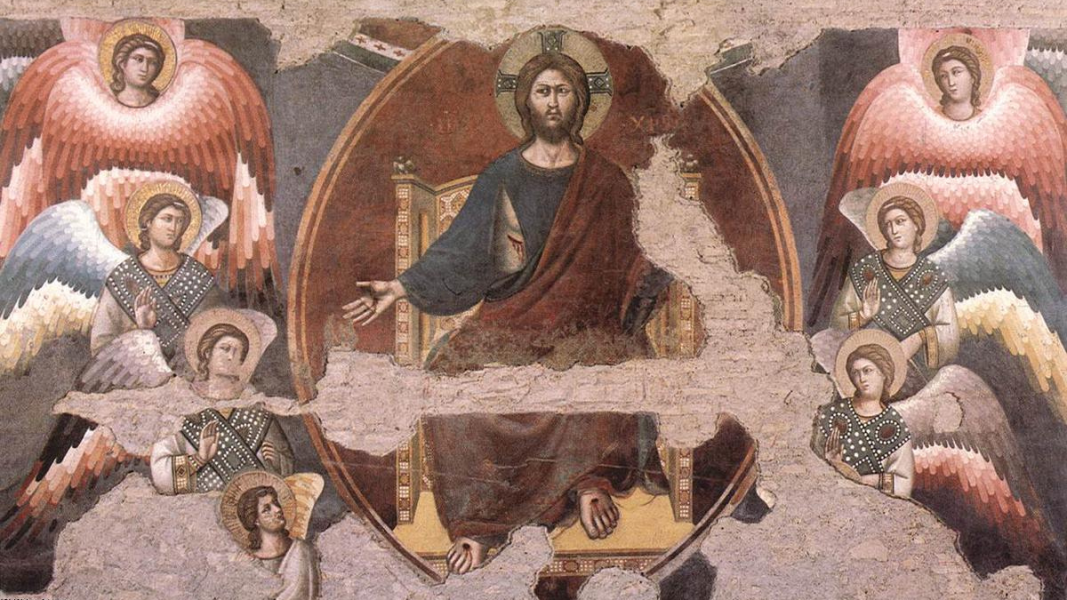
Among the treasures of Gregorian chant, few possess the theological force, the spiritual drama, and the poetic beauty of the Dies Irae, the hymn that for centuries accompanied the liturgy for the dead and reflection on the last things. Its name —“Day of Wrath”— evokes the final judgment described by the prophets and the Apocalypse, when Christ will return to judge the living and the dead.
A Jewel of Christian Medieval Times
The Dies Irae was born in the 13th century, traditionally attributed to Thomas of Celano, disciple and biographer of Saint Francis of Assisi. In an era of fervent faith and vivid awareness of eternal life, the Church sought to express in art and liturgy the seriousness of divine judgment. Each stanza of this Latin poem, brief and rhythmic, describes with sobriety and trembling the scene of the Judgment: the trumpets that awaken the dead, the book opened where everything is revealed, the soul appearing before its Creator.
It is not a song of terror, as some caricature it, but a meditation on justice and mercy. In its verses resounds the hope of the sinner who cries out: “Pie Jesu Domine, dona eis requiem” —“Merciful Lord Jesus, grant them eternal rest”.
The Soul of the Liturgy for the Dead
For centuries, the Dies Irae was part of the Roman rite in the Requiem Mass, intoned between the gradual and the Gospel. It was the heart of the Christian funeral: the reminder that death is not the end, but the passage to a just and merciful judgment. Its music, with a grave and repetitive melody, was etched in the memory as a call to conversion.
In the Middle Ages and the Baroque, it inspired poets, theologians, and musicians. Mozart, Verdi, and other great composers incorporated it into their famous Requiems, recognizing in its text a universal truth: the greatness of God and the fragility of man before the eternal mystery.
From Modern Oblivion to Spiritual Rediscovery
After the liturgical reform following the Second Vatican Council, the Dies Irae was removed from the ordinary liturgy for the dead, preserved only in the Liturgy of the Hours of the Office of Readings on the last Sunday of Ordinary Time. Many consider this omission a spiritual loss: one of the most sublime expressions of Christian realism about death, judgment, and the need for redemption was silenced.
However, in recent years, the Dies Irae has been reborn among those seeking to recover the Gregorian tradition and the sacred sense of worship. Its text is prayed and sung in communities that celebrate the Traditional Mass, and its meditation once again moves young people and faithful who discover in it an echo of the Catholic soul that does not fear the truth of judgment, because it trusts in divine mercy.
A Lesson for Modern Man
In a world that avoids talking about sin and the afterlife, the Dies Irae recalls a forgotten truth: life is serious because it has an eternal end. It is not about fear, but wisdom. He who contemplates judgment with faith learns to live with responsibility, with love for God and hope in His forgiveness.
This chant is not a threat, but a plea: that the Lord, on the day of wrath, remember us with mercy. That is why, in the Catholic tradition, the Dies Irae is not just poetry: it is a prayer that prepares the soul for the encounter with its Creator.
Full Text of the Dies Irae:
| Latin | English |
|---|---|
| Dies irae, dies illa, Solvet saeclum in favilla, Teste David cum Sibylla. |
Day of wrath, that day will dissolve the world in ashes, as announced by David and the Sibyl. |
| Quantus tremor est futurus, Quando judex est venturus, Cuncta stricte discussurus! |
What great trembling there will be when the judge comes to examine everything rigorously! |
| Tuba mirum spargens sonum, Per sepulcra regionum, Coget omnes ante thronum. |
The trumpet, scattering its sound through the tombs of all regions, will gather all before the throne. |
| Mors stupebit et natura, Cum resurget creatura, Judicanti responsura. |
Death and nature will be astonished when the creature rises to respond to the Judge. |
| Liber scriptus proferetur, In quo totum continetur, Unde mundus judicetur. |
The written book will be brought forth, in which everything is contained, by which the world will be judged. |
| Judex ergo cum sedebit, Quidquid latet apparebit, Nil inultum remanebit. |
When the Judge sits, whatever is hidden will appear, nothing will remain unpunished. |
| Quid sum miser tunc dicturus? Quem patronum rogaturus, Cum vix justus sit securus? |
What shall I say, wretch? Whom shall I ask as patron, when scarcely the just will be secure? |
| Rex tremendae majestatis, Qui salvandos salvas gratis, Salva me, fons pietatis. |
King of tremendous majesty, who saves the saved freely, save me, fount of piety. |
| Recordare, Jesu pie, Quod sum causa tuae viae, Ne me perdas illa die. |
Remember, merciful Jesus, that I am the cause of your journey; do not destroy me on that day. |
| Quaerens me sedisti lassus, Redemisti crucem passus, Tantus labor non sit cassus. |
Seeking me, you sat weary, you redeemed me suffering on the cross; let not such labor be in vain. |
| Juste judex ultionis, Donum fac remissionis, Ante diem rationis. |
Just judge of vengeance, grant the gift of remission before the day of reckoning. |
| Ingemisco, tamquam reus, Culpa rubet vultus meus, Supplicanti parce, Deus. |
I groan as a guilty one, my face blushes with guilt, spare the suppliant, O God. |
| Qui Mariam absolvisti, Et latronem exaudisti, Mihi quoque spem dedisti. |
You who absolved Mary and heard the thief, you also gave hope to me. |
| Preces meae non sunt dignae, Sed tu bonus fac benigne, Ne perenni cremer igne. |
My prayers are not worthy, but you, being good, deal kindly with me so that I do not burn in eternal fire. |
| Inter oves locum praesta, Et ab haedis me sequestra, Statuens in parte dextra. |
Place me among the sheep and separate me from the goats, setting me at your right hand. |
| Confutatis maledictis, Flammis acribus addictis, Voca me cum benedictis. |
When the accursed are confounded and given to bitter flames, call me with the blessed. |
| Oro supplex et acclinis, Cor contritum quasi cinis, Gere curam mei finis. |
I pray suppliant and kneeling, with a contrite heart like ashes: care for my end. |
| Lacrimosa dies illa, Qua resurget ex favilla, Judicandus homo reus. |
Tearful will be that day when from the ashes rises the guilty man to be judged. |
| Huic ergo parce, Deus: Pie Jesu Domine, Dona eis requiem. Amen. |
Spare him therefore, O God: Merciful Lord Jesus, grant them eternal rest. Amen. |