


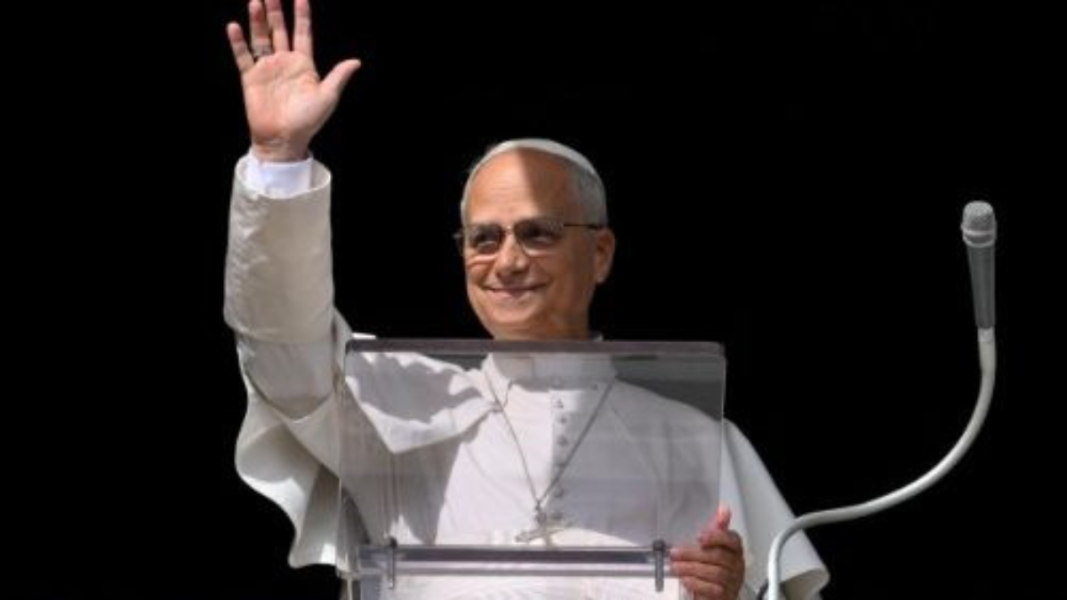
This Sunday, November 2, Commemoration of All the Faithful Departed, Pope Leo XIV appeared at the window of the Apostolic Palace to pray the Angelus with the pilgrims gathered in St. Peter’s Square. In his introductory words, the Pontiff offered a profound reflection on Christian hope in the face of death, the memory of the departed, and the certainty of resurrection in Christ.
“The resurrection of the dead by Jesus, the Crucified One, illuminates the destiny of each one of us”, affirmed the Holy Father, emphasizing that God’s desire is that “no one be lost forever, but that all have their place and shine in their singularity”.
A gaze of faith and hope
Leo XIV recalled that this hope is rooted in Christ’s promise: “This is the will of the one who sent me: that I lose nothing of what he has given me, but that I raise it up on the last day” (Jn 6,39). Eternal life, the Pope explained, does not consist in an endless succession of time, but in “immersing oneself in the ocean of infinite love”, as taught by Benedict XVI in the encyclical Spe Salvi.
The Pontiff linked the Commemoration of the Faithful Departed with the solemnity of All Saints celebrated the day before, showing the continuity between the glorious Church and the pilgrim Church. “The communion of saints is a communion of differences that expands God’s life to all those who have wished to be part of it”, he explained.
The living memory of Christ overcomes forgetfulness
During his reflection, the Pope pointed out that the pain for the departed expresses God’s concern for every human life. “We know it from within— he said— every time death seems to make us lose forever a voice, a face, an entire world”.
In the face of the risk of a fragile or nostalgic memory, Leo XIV warned: “Without the memory of Jesus, the immense treasure of each life is exposed to forgetfulness. In the living memory of Christ, even those whom no one remembers appear in their infinite dignity”.
For this reason, he added, Christians have always remembered the departed in every Eucharist, asking that they be mentioned in the prayer. From that paschal proclamation “arises the hope that no one will be lost”.
“Not with nostalgia, but with hope”
The Pope invited the faithful to live this day not as a look to the past, but as a celebration of the future. “Visiting the cemeteries, where silence interrupts the rush, we rediscover the expectation of resurrection”, he said. And he added: “We commemorate the future. We are not enclosed in the past, nor sealed in the present as in a tomb”.
With hopeful words, Leo XIV exhorted: “May the familiar voice of Jesus reach us, because it is the only one that comes from the future. It calls us by name, prepares a place for us, and frees us from the sense of impotence with which we sometimes renounce living”.
Finally, he entrusted to the intercession of the Virgin Mary—“woman of Holy Saturday”— the gift of keeping alive the hope of resurrection and the communion of saints.
Full Message of Pope Leo XIV during the Angelus (November 2, 2025)
Dear brothers and sisters, good Sunday!
The resurrection of the dead by Jesus, the Crucified One, illuminates in these early November days the destiny of each one of us. He himself told us: “This is the will of the one who sent me: that I lose nothing of what he has given me, but that I raise it up on the last day” (Jn 6,39). Thus is manifested the center of God’s concern: that no one be lost forever, that each one have their place and shine in their singularity.
It is the mystery that we celebrated yesterday in the Solemnity of All Saints: a communion of differences that, so to speak, expands God’s life to all the sons and daughters who have desired to be part of it. It is the desire inscribed in the heart of every human being, who longs for recognition, attention, and joy. As Benedict XVI wrote, the expression “eternal life” seeks to give a name to this insuppressible longing: not an endless succession, but immersion in the ocean of infinite love, where time, before and after, cease to exist. A fullness of life and joy: that is what we hope for and long for in our being with Christ (cf. enc. Spe salvi, 12).
Thus, the Commemoration of All the Faithful Departed brings us even closer to the mystery. We know God’s concern not to lose anyone from within, every time death seems to make us lose forever a voice, a face, an entire world. Every person is, in fact, an entire world. Today’s day challenges human memory, so precious and so fragile. Without the memory of Jesus—of his life, death, and resurrection—the immense treasure of each life is exposed to forgetfulness. In the living memory of Jesus, on the other hand, even those whom no one remembers, even those whom history seems to have erased, appear in their infinite dignity. Jesus, the stone rejected by the builders, has become the cornerstone (cf. Acts 4,11). This is the paschal proclamation. That is why Christians have always remembered the departed in every Eucharist, and to this day ask that their loved ones be mentioned in the Eucharistic prayer. From that proclamation is born the hope that no one will be lost.
The visit to the cemetery, where silence interrupts the rush of doing, be for all of us an invitation to memory and waiting. “I look for the resurrection of the dead and the life of the world to come,” we say in the Creed. We commemorate, therefore, the future. We are not enclosed in the past, in the tears of nostalgia. Nor are we sealed in the present, as in a tomb. May the familiar voice of Jesus reach us—and reach everyone—because it is the only one that comes from the future. It calls us by our name, prepares a place for us, frees us from the feeling of impotence with which we risk renouncing life. Mary, woman of Holy Saturday, teach us once again to wait.