


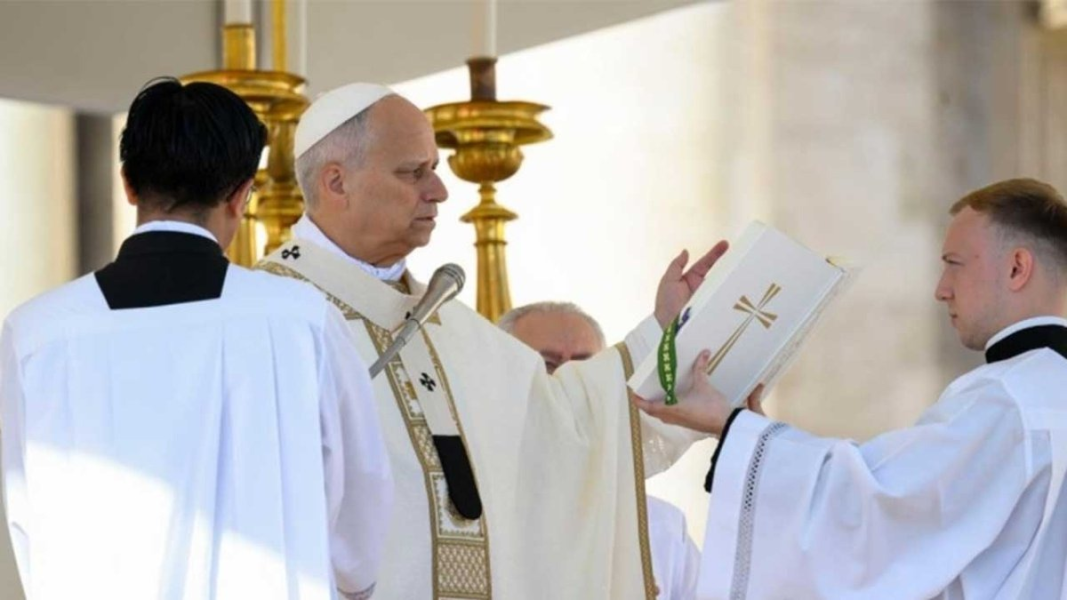
On the solemnity of All Saints, Pope Leo XIV once again employed the Roman Canon —the Eucharistic Prayer I— during the celebration in which he proclaimed Saint John Henry Newman a Doctor of the Church. The prayer was recited entirely in Italian.
On other solemnities and in most recent celebrations, the Pontiff had more frequently resorted to the Eucharistic Prayers II or III, drafted in the 1960s and now in common use, even pronouncing them in Latin. On this occasion, he chose the oldest prayer of the Roman rite, linked by tradition to the Church of Rome and to the liturgical transmission that Peter brought from Jerusalem.
In addition to its profound theological meaning, the Canon highlights the references to the sacrifices of Abel, Abraham, and Melchizedek, Old Testament figures who prefigure the perfect sacrifice of Christ: Abel for the purity of his offering, Abraham for the obedience of faith, and Melchizedek for the oblation of bread and wine in thanksgiving. These mentions link the Old and New Testaments, underscoring the continuity of the plan of salvation that culminates in the Eucharist.
The Roman Canon —the core of the Latin Mass for nearly two millennia— is characterized by its sacrificial tone, its biblical language, and the enumeration of the communion of saints, with invocations to the Virgin Mary, Saint Joseph, the Apostles, and a list of martyrs of the Church of Rome that transports us to the harshness of a demanding faith in the witness of blood. Its fixed structure and depth have made this prayer for centuries the heart of Roman liturgy.
With the choice of the Canon on this solemnity, Leo XIV united the memory of all the saints with the prayer that, for centuries, centered the Eucharistic celebration in the West.