


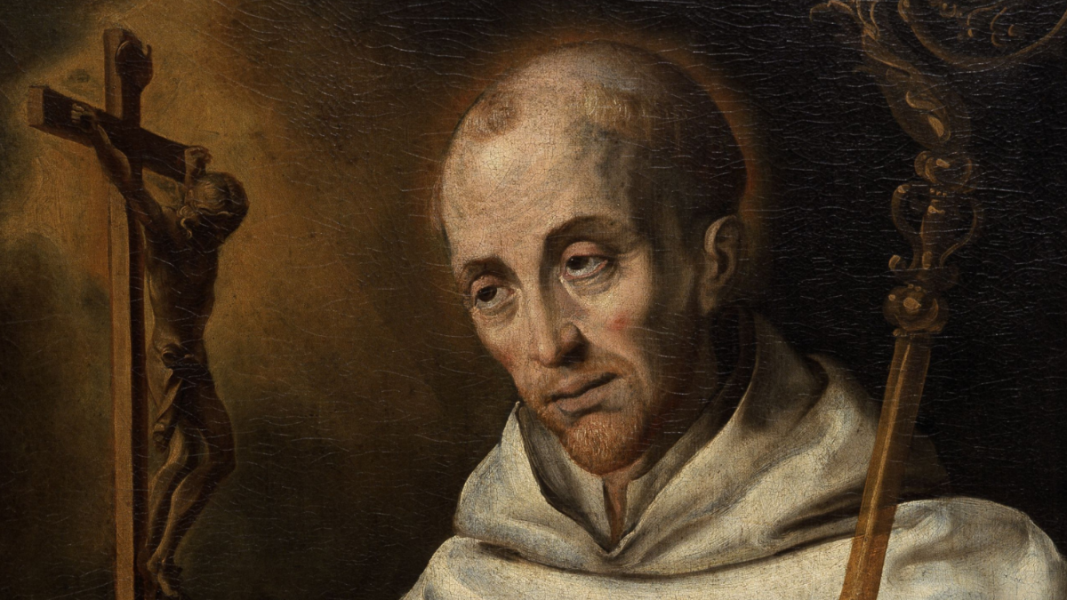
San Bernardo de Claraval (1090–1153), canonized in 1174 and proclaimed Doctor of the Church, is one of the most luminous masters of medieval spirituality. In a recent article, the International Association of Exorcists has recalled his teaching on the demon and spiritual struggle, a doctrine deeply rooted in the patristic tradition, which retains impressive relevance for the contemporary Christian.
Bernardo does not seek to theorize about evil or elaborate a theology of terror. His reflection starts from monastic life, where spiritual combat is a daily reality. In that context, the Cistercian saint describes temptations, deceptions, and strategies of the evil one with a lively language, full of biblical images and pastoral strength. The goal: to teach believers to discern the traps of the demon and to overcome them with the weapons of grace.
The Fall of the Rebellious Angel
For San Bernardo, the sin of Satan was pride: he wanted to equal the Most High and was cast out of heaven into the abyss. The devil—explains the saint—remained suspended “between heaven and earth,” unable to participate in the glory of the angels or the humility of men. In this condition of emptiness and frustration, the demons live “like madmen and disoriented, perpetually fleeing from themselves,” the ultimate expression of the dispersal of being.
This image summarizes the tragedy of evil: the creature who wanted to be free from God ended up enslaved by his own denial. The demons, upon seeing the splendor of the saints and angels, die of envy. In the end, their punishment is to contemplate the happiness that they themselves rejected.
Against Universal Redemption: There Is No Salvation for Demons
The holy abbot of Claraval clearly rejects the idea that demons could one day be redeemed, a doctrine known as apocatástasis and upheld by Origen. Bernardo teaches that redemption has already been accomplished “once and for all” in Christ, and there will be no second redemptive act for the fallen angels. Not because God does not will it, but because they themselves, in their eternal rebellion, have closed themselves off forever to divine mercy.
The Power and Action of the Demon
San Bernardo compares the Christian’s spiritual struggle to the liberation of Israel from Pharaoh. Just as Moses, with God’s help, freed the people from Egypt, the believer—sustained by Christ—overcomes the power of the evil one. The devil, writes the saint, is a powerful enemy, “because a large part of humanity lies under his dominion.” However, his power is limited: he cannot triumph without man’s free consent.
The demons, says Bernardo, move restlessly between heaven and earth, unable to find peace. They try to ascend to challenge God, but are rejected; they then descend to tempt and deceive men. This perpetual movement, full of frustration and hatred, is the sign of their condemnation.
Temptations and Vices: The Disguises of Evil
San Bernardo warns that the devil disguises himself as virtue to deceive even the most devout. As in the temptations of Christ in the desert, Satan mixes lies with the appearance of good. Thus, he can even use the Scriptures “with ulterior motives,” to twist God’s truth and sow confusion.
The saint identifies vices with symbolic figures taken from Psalm 90: the viper represents the obstinate one who closes himself to the divine voice; the basilisk, the envious and covetous; the dragon, the wrathful; and the lion, the proud and cruel. All of them are masks of the demon, who attacks where he finds an open wound in the soul.
A Theology of Hope and Combat
Despite the strength of the enemy, San Bernardo never leaves room for fear. The Christian has at his side the Paraclete, the Holy Spirit, defender and comforter, whose presence makes the evil one tremble. Victory belongs to Christ, and those who follow him share in his triumph. The saint’s teaching does not invite terror, but rather constant vigilance, humility, and trust in the Savior.
The monk of Claraval insists that temptation is not a defeat, but an opportunity to demonstrate love for God. Every victory over evil, no matter how small, is a participation in the cross and in the glory of Christ.
Marian Devotion: Refuge Against the Evil One
San Bernardo was a great devotee of the Virgin Mary. To her he attributes the most effective protection against the snares of the demon. His famous prayer “Remember” (Memorare) expresses the filial confidence that should animate every Christian in the face of evil: “It has never been heard that any of those who have recourse to your protection have been abandoned by you.” In spiritual combat, Mary is the Mother and Lady of Victory.
A Lesson for Our Time
In a world that denies sin and trivializes evil, San Bernardo’s teaching resonates like an echo of forgotten wisdom. The demon is not a myth or a psychological metaphor: he is a real presence that acts in history and in the human heart. But his power is not absolute. Christ has already defeated him, and the faithful soul—armed with prayer, humility, and trust in the Virgin—can resist and triumph.
The spirituality of Claraval remains a sure compass: to remember that evil exists, but it does not have the last word. God does, who with his infinite love rescues, purifies, and sanctifies those who persevere in faith.