


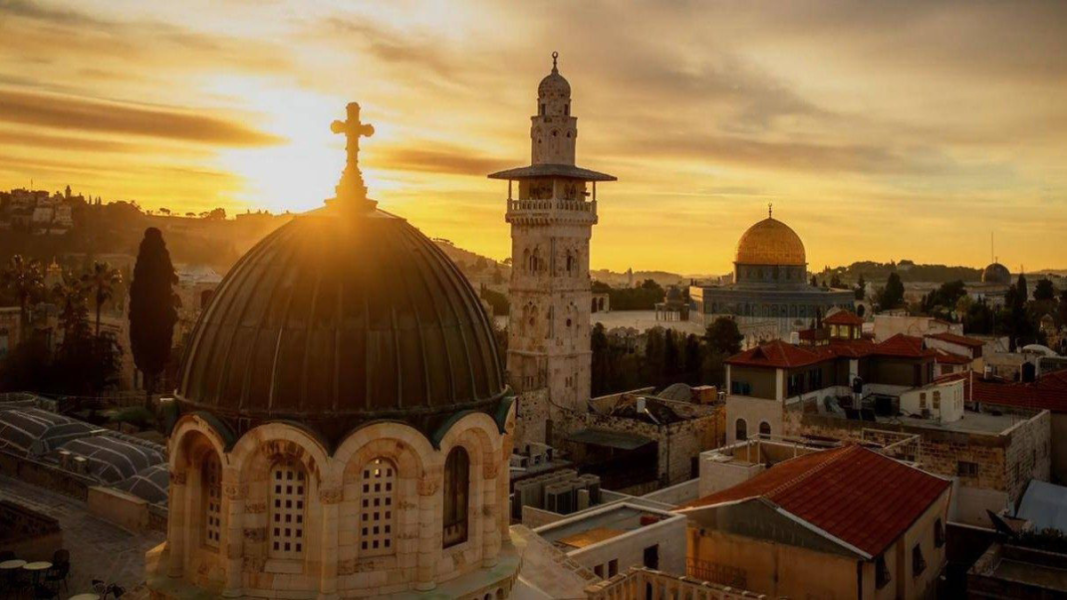
Six decades ago, on October 28, 1965, the Second Vatican Council promulgated the declaration Nostra Aetate, on the Catholic Church’s relationship with non-Christian religions. Although brief in length, this document marked a before and after in the way the Church approached different cultures and beliefs, recognizing the spiritual realities that find their origin in God.
Context and Purpose
In an increasingly interconnected world, the Council warned that humanity shares a common origin —“God made the whole human race dwell on the face of the earth” (Preamble 1). The Church, in its mission of unity and charity among men, decided to reflect carefully on its own relationship with non-Christian religions, not as mere tolerance, but as a duty of truth and love.
Essential Contents
The document affirms that the Church “rejects nothing that is true and holy in these religions” and recognizes that although they differ from its own teaching, “they often reflect a ray of that truth which enlightens all men”.
Regarding Judaism, Nostra Aetate states clearly: “God does not reject his people, the one who in past times welcomed his words”, and teaches that “the death of Christ should not be attributed to all Jews, without distinction”. It also addresses Islam, recognizing it as a religion that worships the one God, and calls for mutual respect and dialogue. Finally, it condemns every form of discrimination based on race, condition of life, or religion.
Current Relevance and Challenges
Sixty years later, the value of Nostra Aetate persists, although it faces challenges. In a world dominated by relativism, pluralism, and identity claims, the Church is called to maintain a balance: to promote dialogue without losing its own identity; to recognize the values present in other beliefs without abdicating the Truth revealed in Christ.
This means forming in the faith but also dialoguing with the contemporary world with clarity: not reducing the message of Christ to mere goodism, nor turning the Church into an ecumenical club without content, but announcing with courage that “Jesus Christ is the Way, the Truth, and the Life” (Jn 14:6) and that at the same time “everything that is true and holy” in cultures and religions can have its origin in God.
An Invitation for the Future
The anniversary of Nostra Aetate is an opportunity to reaffirm that the Church’s mission is not limited to the baptized, but embraces the universality of human fraternity. But that mission demands coherence: welcoming the other must be accompanied by the transmission of the Gospel; respect for religions must be integrated with the proclamation of salvation in Christ.