


By: Víctor Lenore
Alauda Ruiz de Azúa masterfully portrays the thirst for God of a teenager and the conflicts it provokes in a decaying bourgeois world
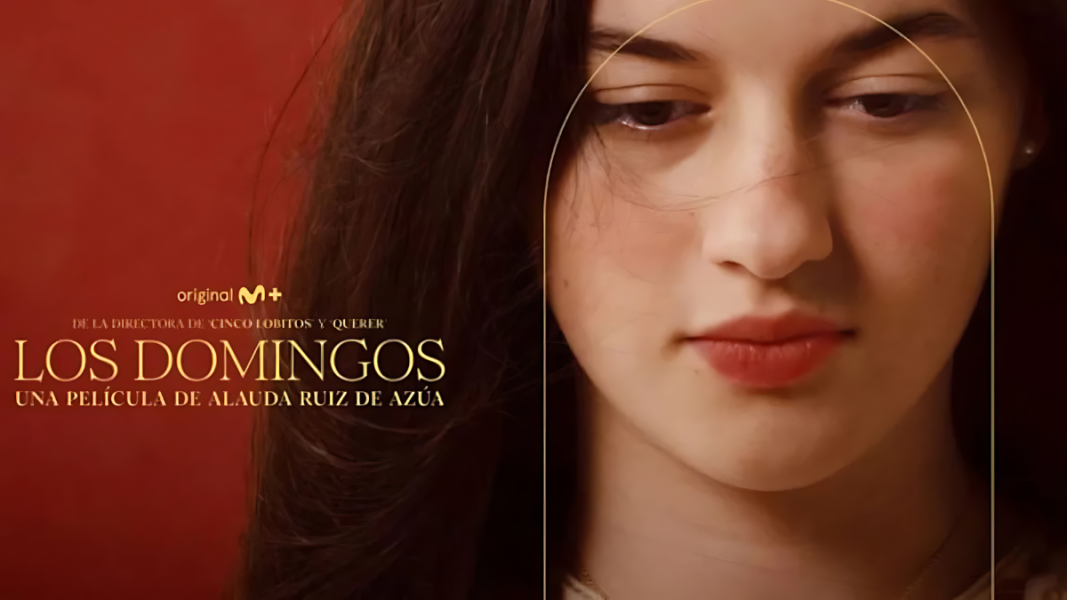
Some intellectual of stature, I don’t remember if Chesterton or Carl Schmitt, once pointed out that a Pope is someone who retains the ability to say “no”. It is a paradoxical superpower, since that rejection of what the contemporary world offers is the path to giving a huge “yes” to higher, eternal aspirations. This is the spiritual clash that director Alauda Ruiz de Azúa presents to us in Los domingos, a luminous and vulnerable film, tremendously alive, that consecrates her as a master in the decadent Spanish audiovisual landscape. Along with Carla Simón and some flashes from Sorogoyen, it seems that the sector is awakening again and approaching the great level of the seventies
Moreover, Ruiz de Azúa has managed to seduce part of the ‘progressive’ cultural elite, as evidenced by the fact that they awarded her the Golden Shell at the last San Sebastián Film Festival. The protagonist of the film is a Basque teenager (Ainara) who feels the call to religious life, to the dismay of her progressive aunt and the astonishment of her father, a hotelier who has fallen on hard times. Ainara’s mother has died and is the great absence that hovers over the entire film. While the family faces a harsh process of downward mobility, Aunt Maite—a successful cultural manager—gradually loses her composure in the face of her niece’s silent firmness in her surrender to God. This reflects that Spanish society has mutated at a dizzying pace: what less than a century ago was a joy in many homes is now experienced as a tragedy.

Apart from the spiritual voltage of the plot, a tremendous aesthetic capacity stands out, demonstrated already from the first minutes of the film, where the director incorporates reggaeton pop hits that can be read in a Catholic key. The song “Quédate” by Quevedo shifts from being a sentimental hook anthem to a song that explains that life without the Lord is painful, while “Callaíta” by Bad Bunny becomes a praise of the inner strength of strong, few-words women, whose processions go inside (often, wrapped in flames). Ruiz de Azúa dazzles with her ability to integrate the sober beauty of convents, scenes of adolescent sensuality, and postcards of the economic decay of the upper class.
The film also does not forget religious music, as Ainara’s timid carnal temptations occur with a choir companion, amid majestic compositions, including a classic by the rocker Nick Cave (“Into my arms”), where human and divine love merge. The film’s cast is impeccable throughout, to the point that during the screening you lose the notion of being in the cinema and feel like an invisible intruder in the family conflicts of the neighbors. The dialogues also stand out, especially when there are subtle clashes between the atheist characters and the devout ones. A few brief exchanges of words show the enormous gap between one and the other conception of existence, where at times the fanaticism of those who defend that there is no more life than the material one emerges in all its crudeness.

At the risk of spoiling, I have to say that for me the best scene is one where the father and aunt of the aspirant suffer a hyperventilated anxiety attack upon entering their car after a conversation with the nuns. They suddenly realize that all their rationalism is useless in the face of the serene firmness of the aspirant and her future sisters. The progressive aunt tries to characterize the nuns as just another sect, but the explanation of the order’s rules makes it clear that it is a voluntary and revocable enclosure at any time. Ainara’s discernment process confirms that there is no intention to capture or retain anyone who stops feeling their vocation.
Last Sunday morning I had the opportunity to attend a colloquium between the director and the audience at the Verdi cinemas in Madrid. She has declared herself a non-believer in various interviews, and that adds intensity to the film, as we see the force of love for Christ through the eyes of someone who does not participate in it. The audience was also mostly non-religious. Ruiz de Azúa stated in the talk that “you have to be made of cork” not to have spiritual concerns and that this encouraged her with the film, having lived a similar case in her environment. The brilliant Catholic philosopher Simone Weil wrote that “in the void that (the existence of God) leaves is where its existence can best be explained”. This gem titled Los domingos presents a harsh battle, neither militant nor Manichean, between empty characters and others determined to fill themselves.