


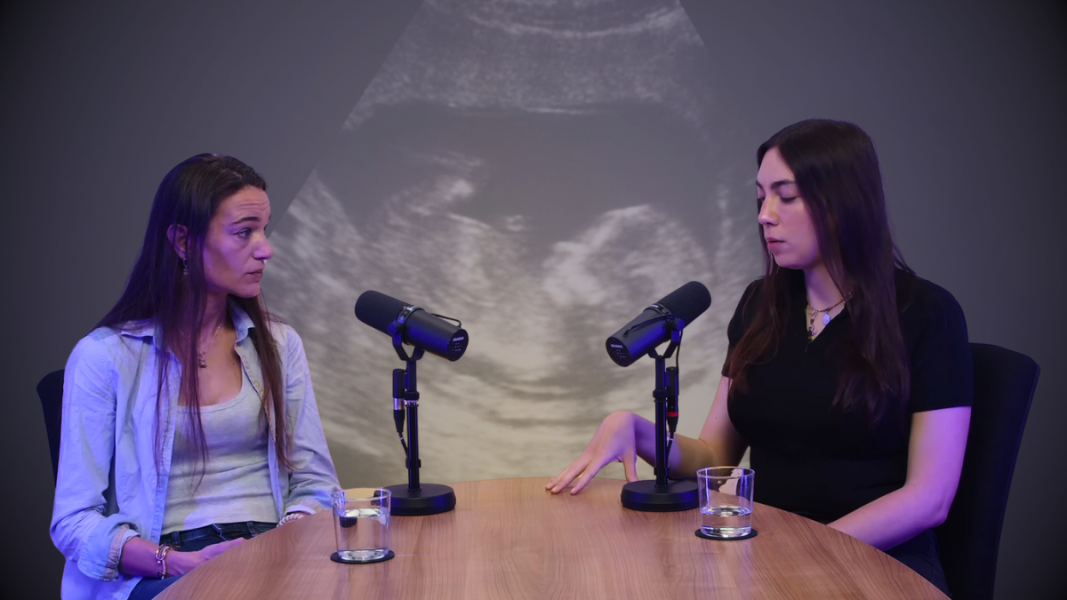
In a recent interview on the Historias sin censura channel, Silvia Charro—known for the viral video she starred in with Simón Pérez in 2017—recounted for the first time the background of her life before that media episode. She did so with a serenity that contrasted with the pain of her story: the decision to interrupt an advanced pregnancy after receiving a devastating medical diagnosis.
Charro explained that, six months pregnant, the doctors informed her that her son suffered from a severe heart malformation. “The baby was fine because I was giving him my heart, my heartbeat—she recounted—, but as soon as he came out, he would need an urgent transplant that couldn’t be done until two days after birth.” The prognosis was desperate, and under pressure, she agreed to an induced birth. “You go to the delivery room with ladies carrying balloons, with people who are happy—she recalled—. And it was really tough.”
A grief that was never processed
After that experience, Silvia and her partner tried to move forward without confronting the trauma. “We spent two weeks in bed crying and then I said: let’s go to Madrid, I’ll start working, it wasn’t God’s will, it’s nothing,” she recalls. But it did happen. “We started taking drugs, not to have a good time, but to evade the situation a bit.”
Years later, her life was marked by addiction, media exposure, and self-destruction. “We should have gone to a psychologist, we should have worked through it properly, and we didn’t,” she acknowledges today.
Symptoms of an ignored syndrome
Charro’s account fits point by point with what specialists call post-abortion syndrome, a set of emotional, physical, and spiritual symptoms that appear in many women after an abortion, even when it is performed for medical reasons.
Persistent sadness, insomnia, irritability, substance use, feelings of guilt, relationship breakdowns, loss of vital sense… are manifestations of the same void: the denial of the maternal bond and the grief for the loss of the child.
Although this syndrome does not appear as an official diagnosis in psychiatric manuals, clinical evidence and thousands of documented testimonies from various countries show a repeated pattern: abortion, far from “closing a chapter,” leaves an emotional wound that only begins to heal when the lost child is recognized and mourned.
From denial to recognition
In the interview, Silvia Charro speaks from that process of recognition. “I believe in God and I don’t want my father, who is in heaven, to see me like this,” she says when explaining her desire to rebuild herself, to forgive herself, and to start anew. Today she receives psychological and psychiatric care, exercises, and seeks to resume a stable life. “I want to go back to work, take care of my mother, and be well,” she affirms.
Her testimony, beyond the personal case, has social value: it shows that behind every abortion there is a story of pain, often silent and solitary. And that women who experience it do not need applause or ideological slogans, but understanding, accompaniment, and hope.
The silence that sickens
Silvia Charro’s case reminds us that post-abortion trauma is not a religious invention or a moralistic discourse, but a human and psychological reality that affects many women. In her voice, one recognizes the mix of guilt, emptiness, and self-destruction that so often accompanies those who have lost a child without being able to say goodbye.
Talking about post-abortion syndrome is breaking the silence that sickens. And listening to testimonies like Silvia Charro’s is remembering that compassion, not denial, is the first step toward true healing.