


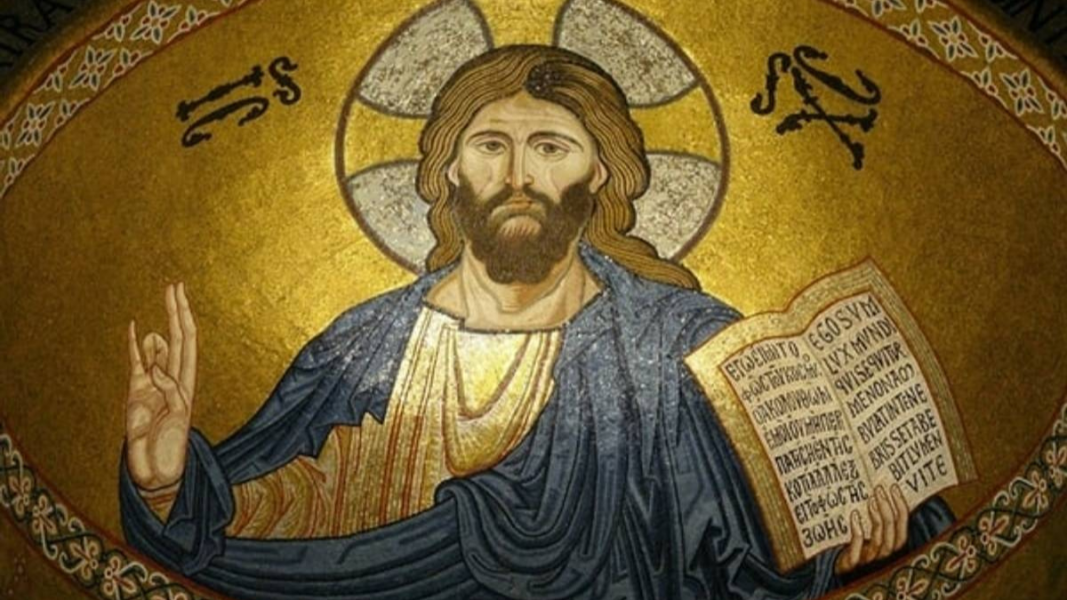
A Perplexed (Ex-)Catholic
This year 2025 marks the centenary of the encyclical Quas Primas of Pius XI on the feast of Christ the King, a feast that with the reformed liturgical calendar after the Second Vatican Council not only changed its date but also its meaning.
With the author’s permission, I will summarize here two articles by Dr. Peter Kwasniewski, whose originals can be read here and here, attempting to explain the implications and depth of the changes.
The last Sunday of the liturgical year in Paul VI’s calendar, the Church celebrates the solemnity of Our Lord Jesus Christ, King of the Universe. This year the date will be November 23, since the following Sunday, November 30, is the first Sunday of Advent, the beginning of the new liturgical year. However, this has not always been the case; prior to the liturgical reform of Paul VI and the consequent change in the liturgical calendar, the solemnity of Our Lord Christ the King was celebrated on the last weekend of October. And it continues to be celebrated that way in communities that, thanks to God, today celebrate the Mass in the vetus ordo, maintaining its original Catholic meaning.
The first question that Peter K. addresses is the date: whether the feast of Christ the King should be celebrated in October or in November. To understand this, one must see why it was changed, in a feast of such recent origin: Pope Pius XI instituted the feast in 1925, and already in 1970 it had been moved. And to answer this question, it is necessary first to see the reasons given by Pope Pius XI himself for choosing the last Sunday of October.
In the encyclical letter Quas Primas of the year 1925, by which Pius XI instituted this feast, the pope said: “By Our Apostolic Authority we institute the Feast of the Kingship of Our Lord Jesus Christ to be observed annually throughout the world on the last Sunday of the month of October, that is, the Sunday immediately preceding the Feast of All Saints.” The last Sunday of October seemed the most suitable of all for this purpose, because the feast of the Kingship of Christ crowns the mysteries of the life of Christ already commemorated during the year, and, before celebrating the triumph of all the Saints, we proclaim and exalt the glory of Him who triumphs in all the Saints and in all the Elect. “You have the duty and the task, Venerable Brothers, to ensure that sermons are preached to the people in all parishes to teach them the meaning and importance of this feast, so that they may order their lives in such a way as to be worthy subjects, faithful and obedient to the divine King” (Encyclical Letter Quas Primas, 28-29).
Pius XI’s intention – reflects Peter K. – as gleaned from the quote, is to “emphasize the glory of Christ as the term of his earthly mission, glory and mission visible and perpetuated in history by the saints. Hence the feast falls shortly before the feast of All Saints, to emphasize that what Christ inaugurated in his own person before ascending in glory, the saints instantiate and carry forward in society, culture, and human nations. It is a feast in which is primarily celebrated the permanent kingship of Christ over all reality, including this present world, in which the Church must strive for the recognition of his rights, the real extension of his dominion to all spheres, individual and social”.
Kwasniewski mentions an important fact to keep in mind, which is that, although it is not mentioned in Quas Primas, the last Sunday of October has been celebrated for centuries as the Sunday of the Reformation / Lutheran heresy. Therefore, it is the institution of a “counter-feast” Catholic, which would remind the world not only of the integral kingship of Jesus Christ – so often denied socially and culturally by various teachings of Protestantism – but also the worldwide royal authority of his Church, would undoubtedly be a reasonable application of the principle lex orandi, lex credendi.
However, disregarding this explicit reference to the solemnity of Christ the King being celebrated just before All Saints, in the liturgical reforms that followed the Second Vatican Council, its place was changed to the last Sunday of the ecclesiastical year. This new position rather emphasizes the eschatological dimension of Christ’s kingship: the Kingdom of Jesus Christ, although begun in time, is present here “as in a mystery” (according to the expression of Lumen Gentium) and in a “crucified” way. This Kingdom only will be perfected and fully manifested at the end of time, with the Second Coming. Therefore, in the new calendar, the feast is placed at the end of the ecclesiastical year, as a summary of the entire history of salvation and a symbol of what we await: expectantes … adventum salvatoris nostri Jesu Christi, as the liturgy proclaims in the Ordinary Form after the Our Father.
Professor Kwasniewski comments that, “although both placements are defensible, it seems that Pius XI’s intention, consistent with the whole of the encyclical, was rather to insist on the rights of Jesus Christ here and now, and the corresponding duties of men and nations on earth”. As Pius XI explains, “the empire of our Redeemer encompasses all men. Using the words of our immortal predecessor, Pope Leo XIII: ‘His empire comprises not only Catholic nations, not only the baptized who, though belonging by right to the Church, have been led astray by error, or have been separated from her by schism, but also all who are outside the Christian faith; so that truly the whole of humanity is subject to the power of Jesus Christ.’ There is no difference in this matter between the individual and the family or the State; for all men, collectively or individually, are under the dominion of Christ. In Him is the salvation of the individual, in Him is the salvation of society. … Therefore, if the rulers of nations wish to preserve their authority, promote and increase the prosperity of their countries, they will not neglect the public duty of reverence and obedience to the dominion of Christ. … When men recognize, both in private and in public life, that Christ is King, society will at last receive the great blessings of true freedom, well-ordered discipline, peace and harmony” (Quas Primas 18-19).
From this point of view, which certainly does not sound like the language of Dignitatis Humanae or the post-conciliar diplomacy of the Church, it is hard to resist thinking that the eschatological perspective is a capitulation to the challenge of modern secularization, as well as a hesitation regarding the perceived “triumphalism” of previous papal social teaching. In other words, the kingship of Christ is acceptable and proclaimable as long as its realization takes place at the end of time, and does not affect too much the current political and social order, nor the Church’s responsibility to convert nations, invigorate their cultures, and transform their laws in the light of faith. This suspicion is confirmed by examining the changes introduced in the liturgy for this feast, in which direct references to the kingship of Christ over States and rulers have been suppressed, as documented by Michael Davies in The Second Vatican Council and Religious Liberty (Long Prairie, MN: The Neumann Press, 1992, pp. 243-51). In particular, the hymn of First Vespers of the feast was significantly modified. The following verses (here literally translated) were simply eliminated:
The wicked crowd shouts:
“We do not want Christ as king!,”
While we, with shouts of joy, acclaim you
as supreme king of the world.
May the rulers of the world honor and publicly exalt you;
May teachers and judges revere you;
May the laws express your order
And the arts reflect your beauty.
May kings find renown
In their submission and dedication to you.
Place under your gentle dominion
Our country and our homes.
Gloria to you, oh Jesus,
Supreme over all secular authorities;
And glory to the Father and to the loving Spirit
For ages of ages. Amen.
As Michael Foley shows in a brilliant article in the magazine The Latin Mass, it can be concluded that the feast was not only moved, but transmuted. It was given a new name, a new date, and new propers, all of which detracted from the social reign of Christ and put in its place a “cosmic and eschatological Christ”. And Foley can show it because it was affirmed by none other than Pope Paul VI: the feast of Christ the King was not only changed or moved, but replaced. In the Calendarium Romanum, the document that announces and explains the new calendar, the Pope writes: “The solemnity of Our Lord Jesus Christ, King of the Universe, takes place on the last Sunday of the liturgical year in place of the feast instituted by Pope Pius XI in 1925 and assigned to the last Sunday of October.” The key word is loco, which means “in place of”. The Pope could have simply said that the feast is celebrated on another date (as he did with the feast of the Holy Family) or that it is transferred (transfertur) as he did with Corpus Christi, but he did not. The Solemnity of Christ the King of the Novus Ordo, he writes, is the substitution of Pius XI’s feast (Foley, op. cit., pp. 38 – 42).
What happened then was that Paul VI abolished Pius XI’s feast and replaced it with a new feast devised by the Consilium. There is common material, but it is not at all the same feast on a different Sunday (as Dylan Schrader claims, “The Revision of the Feast of Christ the King”, Antiphon 18 (2014): 227-53).
Why? The simplest explanation, in fact the only one that fits the evidence, according to Kwasniewski, is that the apparent “integrism” of Pope Pius XI had become an embarrassment for Montini, Bugnini, and other progressives of the sixties and seventies. They had bought into the philosophy of secularism and wanted to ensure that the liturgy did not celebrate Christ’s authority over the socio-political order or the regent position of His Church within it. The modernized feast has to deal with “spiritual” or “cosmic” or “eschatological” things, with a dash of “social justice”. As Foley writes: “The new feast strips the original of its meaning. … The liturgical innovators threw Christ’s reign until the end of time so that it no longer interferes with a carefree accommodation to secularism» (Foley, “Reflection on the fate”, 41-42).
Everything shows that the original feast of Christ the King represents the Catholic vision of society as a hierarchy in which the lower is subordinated to the higher, with the private sphere and the public sphere united in their recognition of the rights of God and of His Church. This vision was set aside in 1969 to make way for a vision in which Christ is king of my heart and king of the cosmos – of the most micro level and the most macro level – but not king of anything in between: not king of culture, of society, of industry and commerce, of education, of civil government. It is liberalism, which Gregory XVI already condemned in 1832 in the encyclical Vehementer Nos, infiltrated into the hierarchy and ecclesiastical way of reasoning: we have swallowed the Enlightenment myth of the separation of Church and State, which, as Leo XIII says, “amounts to the separation of human legislation from Christian and divine legislation” (Encyclical Au Milieu des Sollicitudes to the Church in France, 1892). The result cannot be other than catastrophic, by detaching us from the very aids that God has provided for our human weakness. If we see a world sinking around us into unimaginable deviation and seek the cause, let us not be afraid to go back to the rebellion of the modern revolutions – from the Protestant Revolt to the French Revolution and the Bolshevik Revolution – against the social order of Christendom, argues Kwasniewski.
The solution would be the construction of a new version of Christendom. Not medieval Christendom, which has already passed, but a “civilization in which the philosophy of the Gospel governs the States,” in the words of Leo XIII. It might take several centuries to build a new version of Christendom, but, Peter K. indicates, “the only way to reach it is to see the ideal as it is, long for it, and pray that the kingdom of Christ the King descends among us with all the realism of the Incarnation, so that it sanctifies the world again that he came to save (…). It belongs to the soldiers of Christ to recognize their King and fight for His recognition. Whatever happens, that is how each of us will win an imperishable crown in the eternal kingdom of heaven”.
In the words of Msgr. Marcel Lefebvre, the ecclesiastical hierarchy dethroned Christ from his social reign. The high prelates no longer thought like St. Pius X when he denounced that “that the State must be separated from the Church is an absolutely false thesis, a pernicious error. Based, as it is, on the principle that the State must not recognize any religious worship, it is first of all guilty of a great injustice toward God; for the Creator of man is also the Founder of human societies, and preserves their existence as he preserves ours. We owe him, therefore, not only a private worship, but a public and social worship to honor him. Moreover, this thesis is an evident denial of the supernatural order. It limits the action of the State to the pursuit of public prosperity only during this life, which is only the proximate object of political societies; and it does not concern itself in any way (on the pretext that this is foreign to it) with their ultimate object, which is man’s eternal happiness after this short life has run its course. But as the present order of things is temporal and subordinate to the conquest of man’s supreme and absolute well-being, it follows that civil power not only must not put any obstacle in the way of this conquest, but must help us to achieve it. … Hence the Roman Pontiffs have never ceased, according to circumstances, to refute and condemn the doctrine of the separation of Church and State (Encyclical Vehementer nos, 1906)”.
The problem is evidently that the ecclesiastical hierarchy and the majority of the faithful have assumed as their own the liberal principles not only of the separation between Church and State, but also of “progress” and “democracy” as something positive per se, while monarchy, by its intrinsically anti-democratic character, would be something negative per se. However, Peter K. affirms, “in a fallen world in which all our efforts are pursued by evil and condemned (ultimately) to failure, Christian monarchy is the best political system that has ever been devised or could be devised: as we can deduce from its much greater antiquity and universality, it is the most natural system for human beings as political animals; it is the system most akin to the supernatural government of the Church; it is the system that lends itself most easily to collaboration and cooperation with the Church in the salvation of men’s souls”. That does not mean that there have not been many tensions throughout history between the Church and the State, but today, with the assent of the Church’s hierarchy and the majority of the baptized, we face the disastrous situation of the degradation of the Church as subordinate to political power and to the category of one among other equally valid, legitimate, and “true” options.
The usual defense of religious freedom today is based on the concepts of the Enlightenment on which it depends, and these concepts were already branded as falsehoods by a series of popes from the time of the French Revolution to Pius XI.