


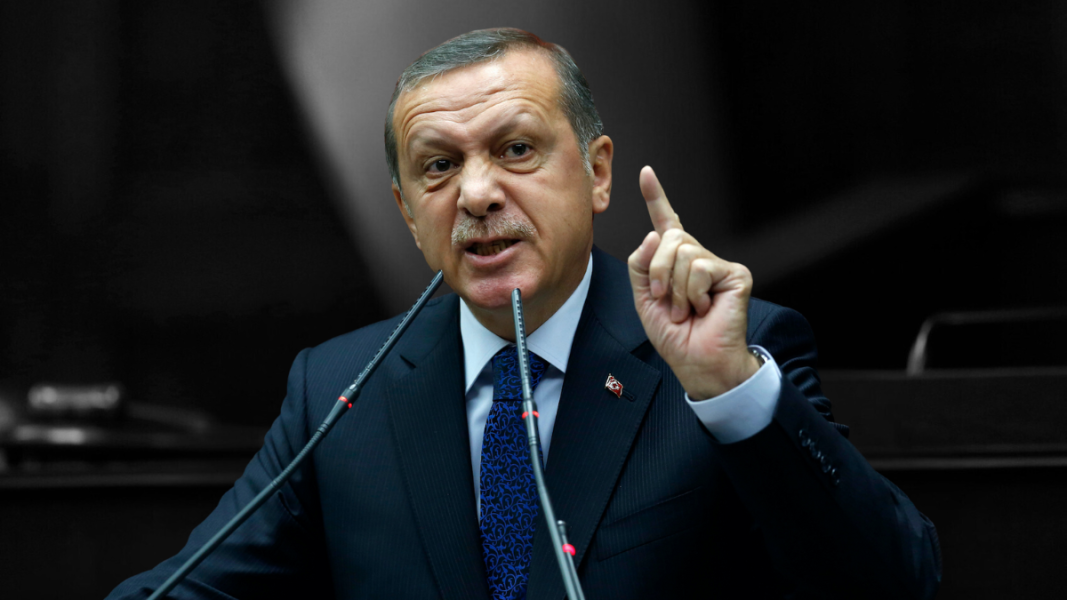
The government of Turkey, under the administration of Recep Tayyip Erdoğan, has expelled more than 200 foreign Christians since 2020, mostly missionaries and workers from Protestant communities, along with their families. The authorities label them as “threats to national security”, an accusation that has not been accompanied by evidence or formal judicial processes.
The affected individuals have received notifications through secret administrative codes—known as N-82 and G-87—that not only order their departure from the country but also prohibit their re-entry indefinitely. According to the organization Alliance Defending Freedom International (ADF), behind these measures lies a silent religious persecution, carried out through bureaucratic decisions that evade judicial scrutiny.
“These Christians have served peacefully for years in their local communities,” ADF denounced. “The government labels them as a security risk simply for living their faith”.
Religion under State Control
Although the Turkish Constitution guarantees freedom of worship, in practice the State controls all religious life through the Diyanet, the Presidency of Religious Affairs, which only promotes Sunni Islam. According to the 2025 report from Aid to the Church in Need (ACN), the Turkish government restricts the training of Christian clergy, has kept the Halki Theological Seminary closed since 1971, and limits the ownership and management of temples through discriminatory regulations.
These policies, combined with surveillance of non-Muslim communities, create an environment of institutional hostility that leaves minority churches in a state of permanent vulnerability.
A Persecution Without Prisons, But With Codes
The expulsion of missionaries reflects a type of modern persecution that does not present itself with physical violence, but through administrative tools and opaque judicial decisions. In June 2024, the Turkish Constitutional Court upheld the deportations, holding that missionary activity could pose “risks to public order”.
From a Christian perspective, this policy contradicts the fundamental principles of religious freedom and criminalizes evangelistic mission, reducing it to a matter of state security.
“The Christian faith does not threaten the nation; it threatens the power of those who do not tolerate the truth,” states an observer quoted by LifeSiteNews.
Loneliness and Risk of Disappearing
Various Christian organizations have asked the European Union and the UN to intervene to guarantee the rights of the expelled and to demand that Turkey respect international treaties. Meanwhile, local Christian communities—Catholic, Orthodox, and Protestant—face loneliness and the risk of slowly disappearing.
The bureaucratic repression that believers in Turkey suffer today is not an isolated phenomenon, but part of a global trend where faith becomes suspicious and truth, subversive.