


According to The Pillar‘s analysis, the Anglican Communion—the worldwide network of more than 40 autonomous churches born from the Church of England—is going through one of the deepest crises in its history. What for centuries was presented as a model of Christian communion “without Roman centralism or Protestant fragmentation” now appears divided by moral, theological, and authority issues.
The most recent turning point is the distancing of several Anglican provinces from the Global South from the authority of the Archbishop of Canterbury, Justin Welby, traditionally considered “primus inter pares”—the first among equals—within Anglicanism.
“The dream of a communion united under the same leadership no longer holds. Doctrinal differences have become irreconcilable,” summarizes The Pillar‘s analysis.
A global body divided by morals and doctrine
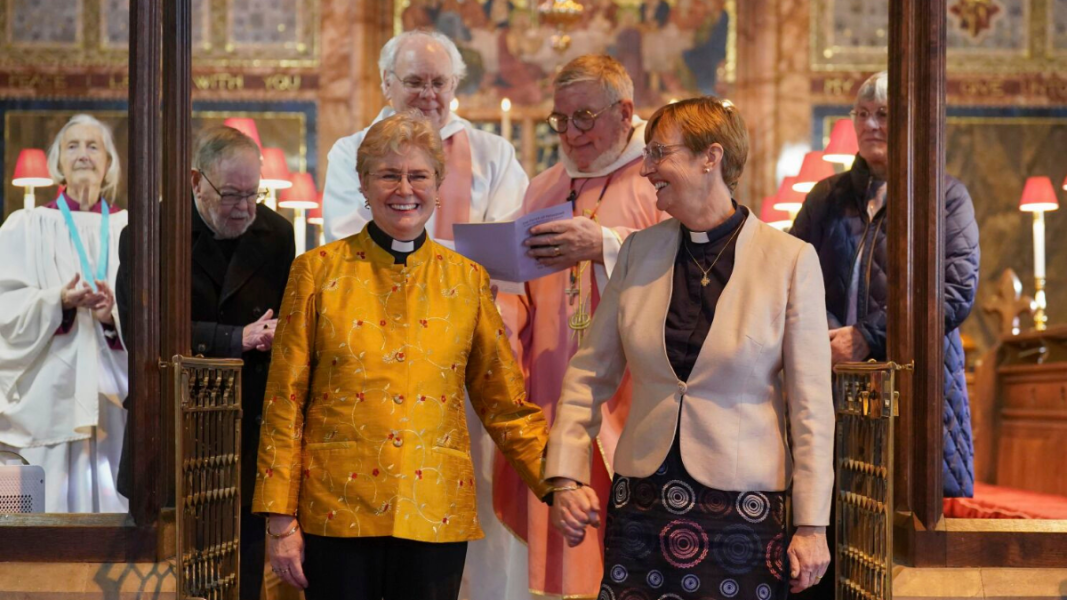
The roots of the conflict date back to the last decades of the 20th century, when some provinces—especially in the United States, Canada, and Europe—began ordaining women priests and bishops, and later blessing same-sex unions. These decisions, adopted unilaterally, broke doctrinal communion with Anglican churches in Africa, Asia, and Latin America, where theological consensus remains much more conservative.
The result has been a functional division within the Anglican Communion: while northern provinces adopt progressive morals and reinterpret biblical authority, southern ones claim fidelity to Scripture and traditional Christian teaching.
In practice, there are now two irreconcilable visions of what it means to be Anglican: one liberal ecclesiology culturally adapted, and another centered on classical orthodoxy and continuity with historical faith.
Canterbury’s leadership loses legitimacy
Traditionally, the Archbishop of Canterbury exercised a symbolic role of unity. However, that leadership is in crisis. The provinces grouped in the Global South Fellowship of Anglican Churches (GSFA) and the GAFCON movement have openly questioned its authority, even going so far as to stop recognizing him as the spiritual head of the communion.
In a joint statement, several African primates declared in 2023 that Archbishop Welby “has abandoned biblical teaching on marriage” and that, therefore, he can no longer be considered the moral leader of the worldwide communion. These provinces represent more than 75% of the world’s practicing Anglicans, especially in Nigeria, Uganda, Kenya, and South Sudan.
The debate is no longer just theological, but institutional: many of these churches propose a rotating leadership system that would allow sharing authority among regions and break with the colonial model that placed the United Kingdom at the spiritual center of Anglicanism for centuries.
“The Archbishop of Canterbury no longer represents the majority of the Anglican world. The communion has in fact decentralized, though not yet de jure,” notes The Pillar.
A communion that can no longer sustain unity
The main coordinating bodies—such as the Anglican Consultative Council (ACC), the Lambeth Conference, and the Primates’ Meetings—have lost credibility. The resolutions they issue lack practical authority, and their influence is increasingly symbolic. In the words of The Pillar‘s analysis, “the communion no longer functions as a coherent ecclesial body, but as a loose network of churches with historical ties.”
Experts point out that this “soft disintegration”—without formal rupture but with effective separation—could lead to a federation of independent churches, united only by their common historical origin. The phenomenon resembles the silent collapse of a structure that still retains its name but has lost its substance.
The future of the Anglican Communion
In this context, The Pillar outlines four possible scenarios for the future of the Anglican Communion:
- A profound structural reform that establishes a decentralized and cooperative model of communion.
- A formal schism, in which conservative provinces form a new internationally recognized communion.
- A tense coexistence, where the nominal bond is maintained, but without shared moral or doctrinal authority.
- An improbable reunification, which would require a theological consensus that does not exist today.
Whatever the outcome, the reality is clear: the Anglican Communion has ceased to be a united family. Its internal crisis, more than an administrative issue, is a spiritual battle over truth, morals, and the authority of the Word of God.
A mirror for Western Christianity
From a Catholic perspective, what is happening in the Anglican Communion is a warning about the consequences of substituting doctrine for cultural consensus. When moral decisions are subordinated to public opinion rather than the deposit of faith, ecclesial unity becomes an empty notion.
“Every time a church renounces a revealed truth to adapt to the spirit of the age, it signs its own division,” reflects an observer quoted by The Pillar.
The Anglican case illustrates how the lack of a common magisterium inevitably leads to fragmentation: without binding doctrinal authority, faith is reduced to a local and subjective matter.