


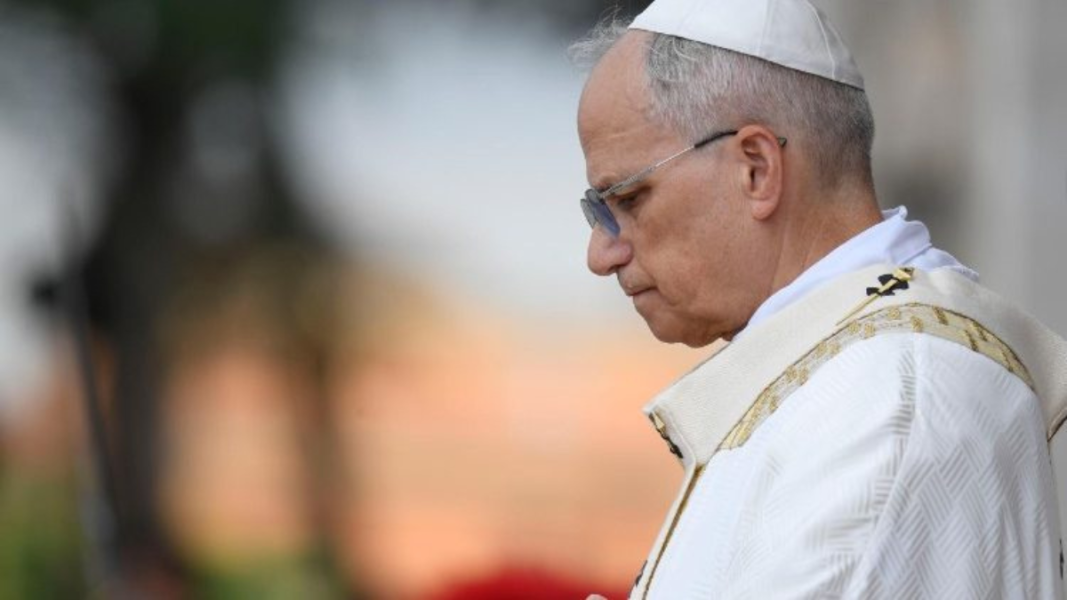
In St. Peter’s Square, Pope Leo XIV continued the cycle of catechesis for the 2025 Jubilee Year, “Jesus Christ, our hope.” Addressing pilgrims from various countries, he centered his reflection on “The Resurrection of Christ, response to human sadness”, proposing the account of Emmaus as the key to understanding how the Risen One heals sadness and restores meaning to life. After the summary in several languages, the audience concluded with the Our Father and the Apostolic Blessing.
Catechesis of Pope Leo XIV
Cycle of Catechesis – Jubilee 2025. “Jesus Christ, our hope.” IV. The Resurrection of Christ and the Challenges of the Modern World. 2. The Resurrection of Christ, response to human sadness.
Dear brothers and sisters, good morning! And welcome to all!
The resurrection of Jesus Christ is an event that we never finish contemplating or meditating upon, and the more we delve into it, the more it fills us with wonder; it draws us in, like an unbearable yet fascinating light. It was an explosion of life and joy that changed the meaning of all reality, from negative to positive. However, it did not occur in a spectacular way, much less a violent one, but in a gentle, hidden manner—we might say, humble.
Today we will reflect on how the resurrection of Christ can heal one of the illnesses of our time: sadness. Invasive and widespread, sadness accompanies the days of many people. It is a feeling of precariousness, sometimes of deep despair, that invades the inner space and seems to prevail over every impulse of joy.
Sadness robs life of meaning and vigor, turning it into a journey without direction or purpose. This very current experience leads us to the famous account in the Gospel of Luke (24:13-29) about the two disciples on the road to Emmaus. They, disillusioned and discouraged, walk away from Jerusalem, leaving behind the hopes they had placed in Jesus, who was crucified and buried.
At its beginning, this episode presents a paradigm of human sadness: the end of a goal in which so much energy had been invested, the destruction of what seemed essential in one’s own life. Hope has faded, desolation has taken hold of the heart. Everything collapsed in a very short time, between Friday and Saturday, in a dramatic succession of events.
The contrast is emblematic: that sad journey of defeat and return to ordinary life occurs on the very day of the victory of light, the day of the fulfilled Easter. The two men turn their backs on Golgotha, on the terrible scene of the cross still etched in their eyes and hearts. Everything seems lost. They must return to life as before, keeping a low profile, hoping not to be recognized.
At one point, a traveler joins them, perhaps one of the many pilgrims who had been in Jerusalem for the Passover. It is the risen Jesus, but they do not recognize him. Sadness clouds their gaze, erasing the promise that the Master had made to them so many times: that he would be handed over and that on the third day he would rise again. The stranger draws near and shows interest in what they are discussing. The text says that the two “stood still, with sad faces” (Lk 24:17). The Greek adjective used by the evangelist describes a total sadness: on their faces is reflected the paralysis of the soul.
Jesus listens to them and allows them to vent their disappointment. Then, with great frankness, he rebukes them for being “foolish and slow of heart to believe all that the prophets have spoken” (v. 25), and through the Scriptures he shows them that the Christ should suffer, die, and rise again. In the hearts of the two disciples, the warmth of hope is rekindled once more, and then, as evening falls and they reach their destination, they invite the mysterious companion to stay with them.
Jesus accepts and sits at the table. Then he takes the bread, breaks it, and offers it. At that moment the disciples recognize him… but he vanishes from their sight (vv. 30-31). The gesture of the broken bread opens the eyes of their hearts, illuminates their sight once again, previously clouded by despair. Then everything becomes clear: the shared journey, the tender and strong word, the light of truth. Joy is reignited, energy courses through their weary limbs, memory becomes grateful. And the two hurry back to Jerusalem to tell the others everything.
“The Lord has truly risen” (cf. v. 34). In that adverb, “truly,” the certain destiny of our human history is fulfilled. It is no coincidence that it is the greeting Christians exchange on Easter day. Jesus has not risen “in word,” but in fact, with his body that bears the marks of the passion, the eternal seal of his love for us. The victory of life is not an empty word, but a real and concrete fact.
May the unexpected joy of the disciples of Emmaus be for us a sweet reminder when the path becomes difficult. It is the Risen One who radically changes the perspective, infusing a hope that fills the void of sadness. On the paths of the heart, the Risen One walks with us and for us. He testifies to the defeat of death, affirms the victory of life, despite the darkness of Calvary. History still has much to hope for in the good.
To recognize the Resurrection means to change one’s gaze upon the world: to return to the light to recognize the Truth that has saved us and continues to save us. Brothers and sisters, let us remain vigilant every day in the wonder of the Easter of the risen Jesus. Only he makes the impossible possible!