


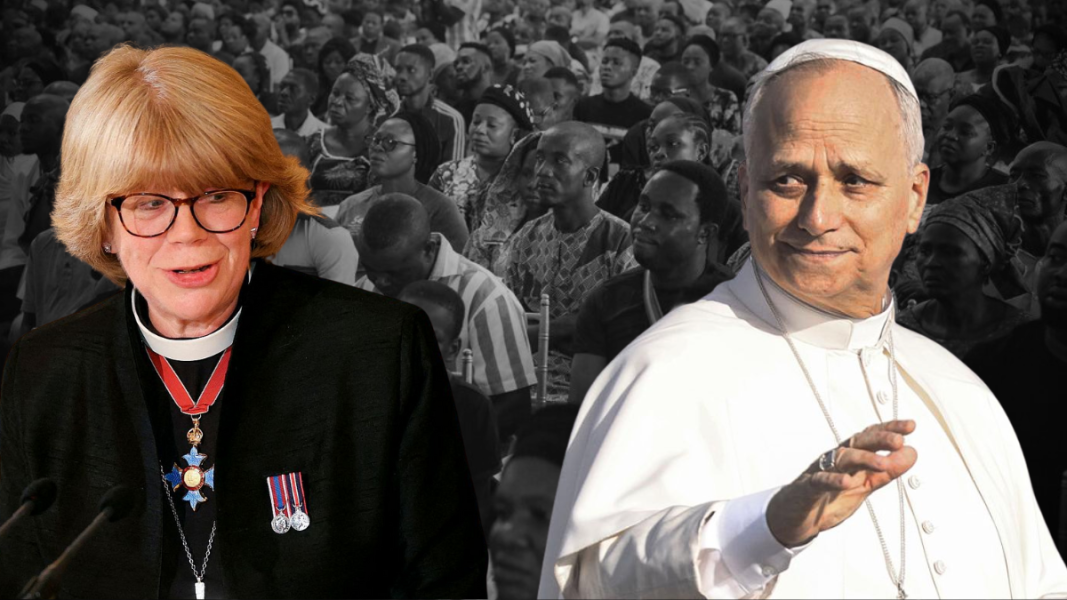
The earthquake shaking the Anglican Church today confirms what many have been warning for years: when faith is subordinated to ideology, the result is schism. The recent election of Sarah Mullally as the new Archbishop of Canterbury—the first woman to hold that position and a symbol of British ecclesiastical progressivism—has provoked the definitive rupture within the Anglican Communion. Her stance is not one of rebellion, but of fidelity. In the words of a Ugandan archbishop, “we prefer communion with Christ over an institution that has forgotten its soul”.
The Parallel with Rome: the Wound of Fiducia supplicans
What happened among the Anglicans inevitably resonates in the Catholic world. The echo of the declaration Fiducia supplicans, which opened the door to blessings of homosexual couples under certain conditions, generated an immediate reaction of resistance on the African continent, led by episcopal conferences that rejected implementing the measure.
The coincidence is not casual. In both cases, the doctrinal axis fractures between a North that relativizes revealed truth and a South that defends evangelical morality without complexes. While in Europe they seek to adapt Christianity to the dominant ideological discourse, Africa reminds us that the Gospel does not need cultural approval.
It is ironic that those who boast of “synodality” and “listening to the People of God” prove incapable of listening to the peoples that are growing the most in faith, vocations, and hope.
Africa, the Last Bastion of Christendom?
The African continent, so often belittled by ecclesiastical power centers, has become the main defender of Christian orthodoxy, both in the Anglican world and in the Catholic one. In the face of theological relativism and the cultural colonization of Western progressivism, Africa has maintained firm fidelity to the Gospel and to the natural order.
Its stance is not political, but moral. And that is precisely what bothers those who want to reduce religion to an exercise in social inclusion. Africa does not negotiate truth, nor does it downgrade the Gospel to slogans.
The Lesson for Rome
The Anglican drama offers the Catholic Church a warning that it should not ignore. When doctrine is replaced by ideology, when mercy is confused with condescension, the result is the same: division, loss of credibility, and spiritual emptiness.
If Rome wishes to avoid the fate of Canterbury, it must listen to those who still believe in the full truth of the Gospel. Because what Africa has demonstrated is that faith without concessions does not divide: it purifies.