


Among the millions of molecules that shape our body, there is one that seems to have been designed to remind us of the mystery that sustains everything. It is called laminin, and without it, no multicellular organism could exist.
Scientists describe it as an adhesion protein, responsible for joining cells together and keeping tissues cohesive. It is the invisible “scaffold” that gives consistency to the skin, organs, and muscles. Wherever there is organized life, there is laminin.
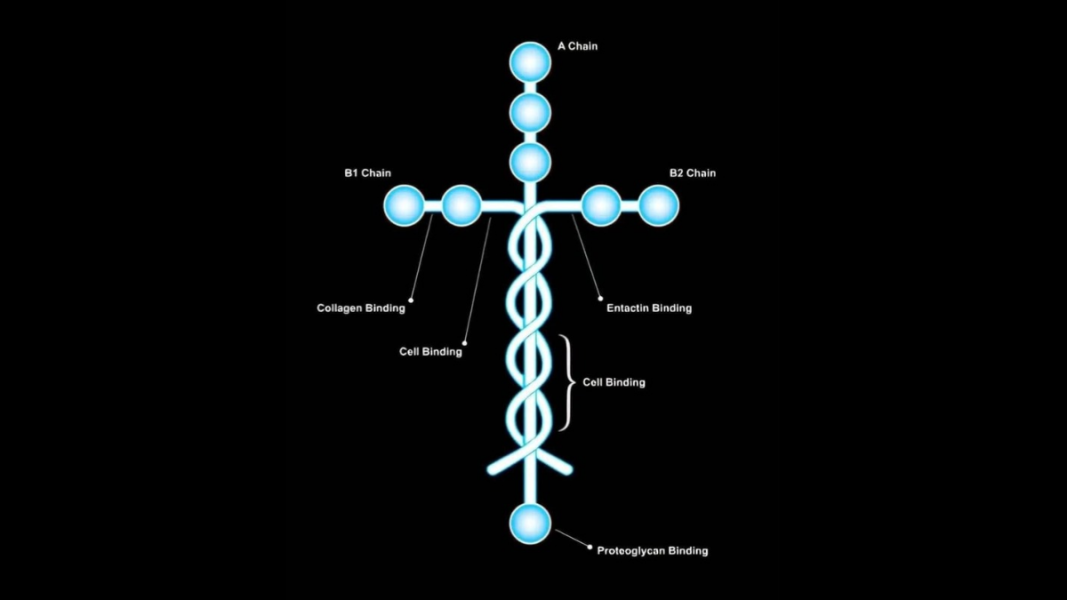
And its shape—as if nature had wanted to leave a signature—is that of a cross. Three short arms and one long one, intertwined at the center, supporting the fabric of creation.
It is not a metaphor or pious devotion: that’s how it looks under the electron microscope. The cross of laminin literally holds our cells together, makes breathing, nutrition, and embryonic development possible. If it disappeared, bodies would dissolve into biological dust.
It is hard not to see a sign there. Saint Paul wrote that “in Him we live, move, and exist,” and that “everything subsists in Christ.” Science, without intending to, seems to repeat it in its own way: the cross is inscribed in the very fabric of life.