


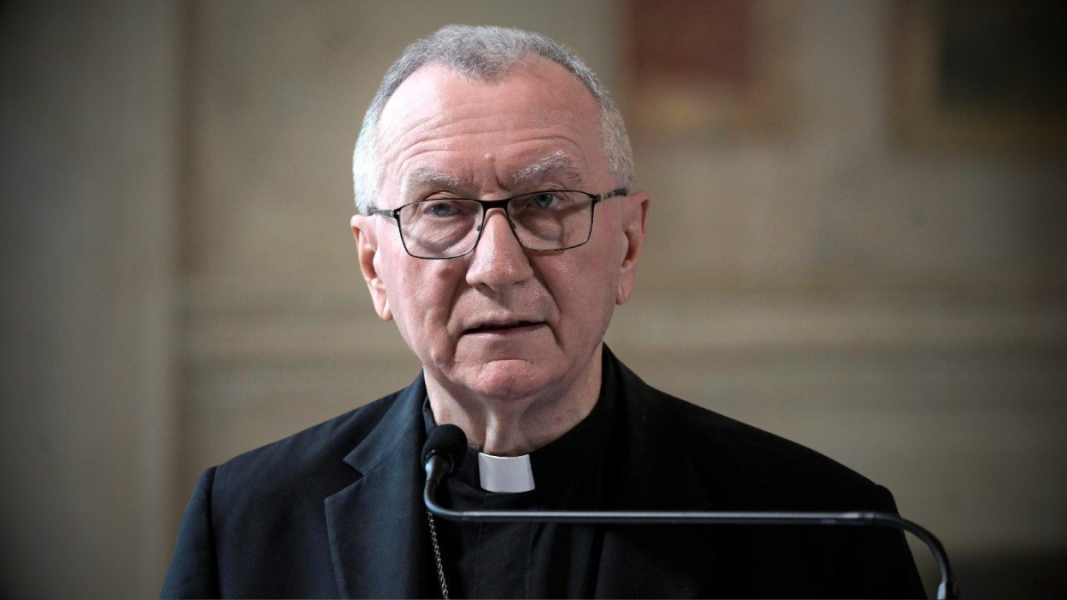
In the presentation of the Report on Religious Freedom by Aid to the Church in Need, Cardinal Pietro Parolin, Vatican Secretary of State, stated that the violence in Nigeria “is not a religious conflict [of Muslims against Christians], but rather social, for example, disputes between herders and farmers”. And he added: “we must recognize that many Muslims in Nigeria are also victims of this same intolerance. They are extremist groups that make no distinctions in the pursuit of their objectives”.
These words, cloaked in diplomatic prudence, are in reality an open wound for Nigerian Christians, who see how the martyrdom of thousands of faithful killed for their faith is diluted and relativized.
Boko Haram is not a “social problem”
Reducing Boko Haram and its satellites (Islamic State in West Africa) to a mere “social” phenomenon of farmers against herders is distorting reality. Boko Haram was born explicitly as a jihadist movement, first linked to Al Qaeda and then to ISIS, with a declared objective: to impose sharia and eradicate Christianity from northern Nigeria.
We are not talking about livestock conflicts or water wells, but about suicide bombings in churches during Mass, Christian villages razed, seminarians and nuns kidnapped, girls forced to convert to Islam under threat of death. How can that be called a “social” problem?
The truth shouted by the Nigerian bishops
In the face of Parolin’s sweetened words, the Nigerian bishops themselves have denounced a systematic religious persecution against Christians. They, who bury their faithful, do not speak of tribal conflicts, but of martyrdom.
The Vatican, on the other hand, prefers diplomatic ambiguity, as if naming the executioner—radical Islamism—were an obstacle to interreligious dialogue.
When diplomacy forgets the martyrs
It is not about blaming Islam in general, since millions of Muslims are also victims of extremism. But denying the religious motivation of Boko Haram is to cover the blood of the martyrs with a veil.
Christ did not die for a “social” conflict, nor do Nigerian Christians die today for land disputes: they die because they confess the Name of Jesus.
Vatican diplomacy may win smiles in chancelleries, but it runs the risk of losing the prophetic voice that must remind the world that, in Nigeria, there is a true Church of martyrs.