


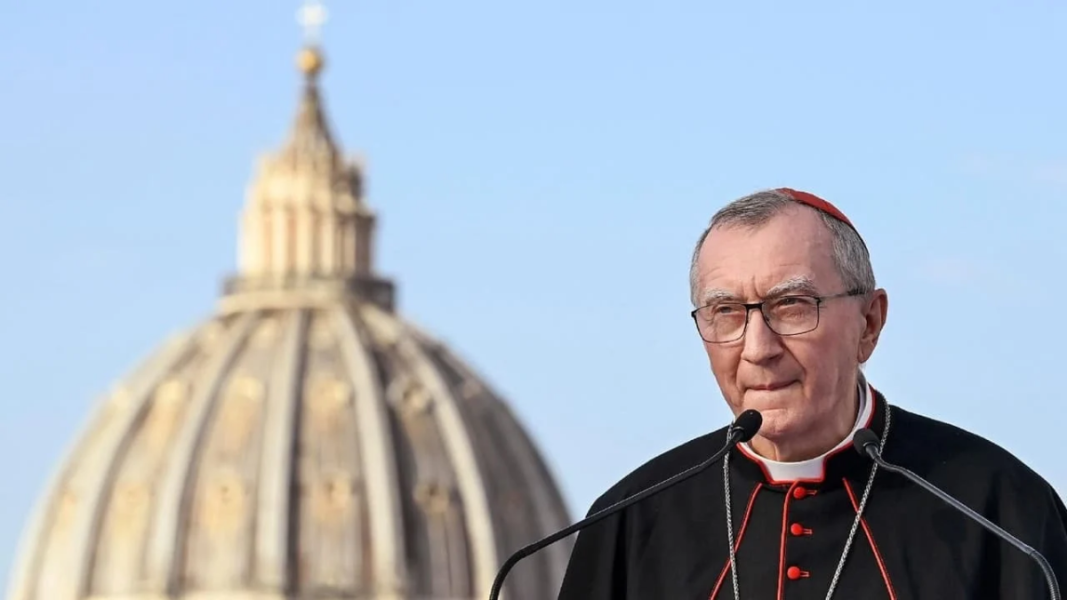
The recent words of Cardinal Pietro Parolin, Vatican Secretary of State, constitute an intolerable counter-witness against the Church of the Martyrs. Presenting the Report on Religious Freedom by Aid to the Church in Need, Parolin stated that the violence in Nigeria “is not a religious conflict [of Muslims against Christians], but rather social, for example, disputes between herders and farmers.” And he hammered: “we must recognize that many Muslims in Nigeria are also victims of this same intolerance. They are extremist groups that make no distinctions in the pursuit of their objectives.” This carefully aseptic formulation is a slap in the face to those who bury their faithful after Mass, to those who see their parishes burned and their villages razed by jihadist ferocity. Calling that “social issues” is to dishonor the dead and confuse the living.
In Nigeria, we are not faced with a rural misunderstanding: we are faced with raw religious persecution. Boko Haram and its splinter ISWAP are not the inevitable byproduct of subsistence tensions; they are jihadist organizations with explicit ideology, terrorist genealogy, and confessed objective: to impose sharia and eradicate the Christian presence from northern Nigeria. The toll is unequivocal: suicide bombings in churches on Sundays, cold-blooded executions of priests, kidnappings of seminarians and nuns, Christian girls abducted and forced to “convert” under threat of death. Presenting this reality as a problem of fences, wells, or pastures is to whitewash the executioners and deny the victims the sacred name of their martyrdom.
Reducing the jihadist carnage to that level is a rhetorical alibi that morally disarms the Church. The Nigerian bishops—who do not theorize from a diplomatic lectern, but who watch over corpses and console orphans—have clearly denounced systematic religious persecution. Minimizing it, diluting it, rebaptizing it as “social” is not prudence: it is unwitting complicity with the lie.
Worse still: it is not the first time that Parolin’s line leads to capitulations that humiliate the faithful. In China, under his diplomatic baton, an agreement was signed with the Communist Party that has meant the practical capitulation of the Church to a regime that monitors, infiltrates, coerces, and detains Catholics. Confessors were asked to trust an apparatus that persecutes them, and leeway was handed over on episcopal appointments to a power that does not recognize religious freedom. The result is predictable: “official” bishops aligned, underground communities pressured, temples surveilled. That is not evangelical realism: it is a concession that wounds those who have sustained the faith under the night of totalitarianism.
In Spain, the Valley of the Fallen—a place of worship and prayer for all the fallen—has been abandoned to a governmental strategy that seeks to turn it into an ideological device. The diplomacy led by Parolin that should have clearly defended the religious nature of the place opted for accommodation, consenting to the symbolic handover of a pontifical basilica to a political project that instrumentalizes memory and suffocates the Catholic meaning of the precinct.
All this composes a pattern: relativization of martyrdom, transactions with regimes that persecute the faithful, concessions in the face of radical secularist governments. We are not faced with rhetorical slips, but with a strategy that empties the Christian denunciation of evil of content and disorients Catholics who expect moral clarity from Rome. Diplomacy is useful when it serves the truth; it is harmful when it dissolves it. The Church does not need euphemisms that offend the persecuted; it needs the integrity to call the executioner by name and to sustain, without trembling, those who confess Christ at the risk of their lives.
Parolin may have been a skilled negotiator in salons, but today he lacks the indispensable moral authority to represent the universal Church. He who relativizes the blood shed by Nigerian Christians, who appeases a party-State that throttles Chinese Catholics, who consents to the disaffection of a sacred place in the hands of ideological projects, is not the guardian the Church needs in this hour of trial. Out of respect for the martyrs of Nigeria, out of loyalty to the confessors of China, out of fidelity to the sacred nature of our temples, and out of pure coherence with the Gospel, it is time for Pietro Parolin to step down. If he cannot, or does not want, to speak the truth with the forcefulness that the suffering of the faithful demands, let him make way for someone who does not fear proclaiming it.