


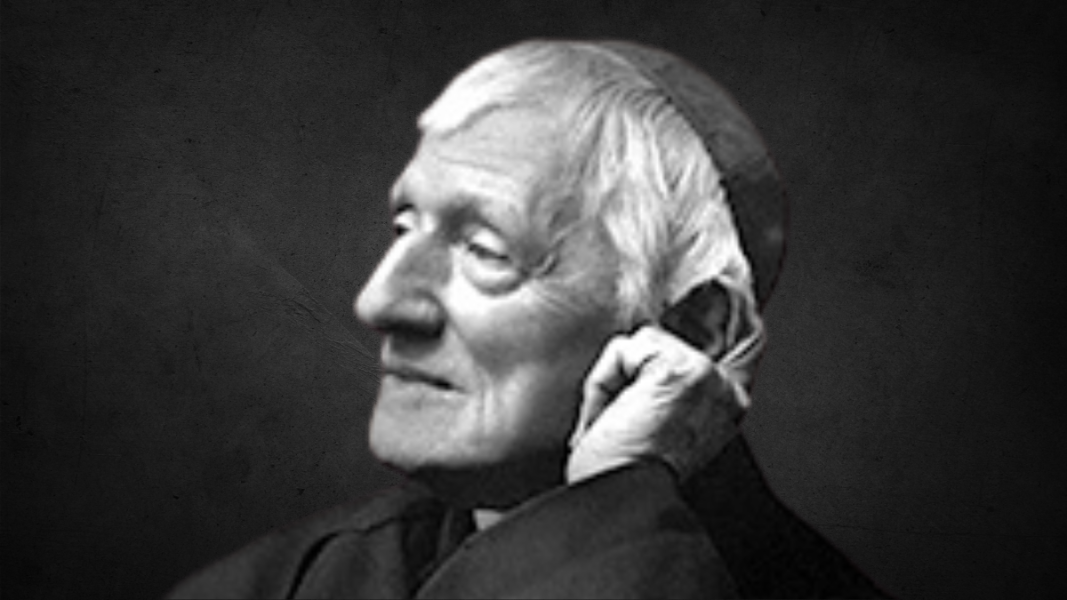
The imminent proclamation of St. John Henry Newman as a Doctor of the Church offers a privileged occasion to reread, guided by Fr. Zarraute, his work Los arrianos del siglo IV and the great lesson he draws for today: in the midst of doctrinal confusion, when part of the hierarchy—even the papacy—fell into ambiguities, it was the faithful who upheld the Catholic faith.
In the video for Tekton, Fr. Zarraute rescues Newman’s historical and theological perspective on the Arian crisis. He emphasizes that, in «a time of immense confusion,» the dogma of the divinity of Our Lord Jesus Christ was proclaimed and preserved—humanly speaking—much more by the faithful than by the hierarchy. This is not about opposition to the Church, but about how the learning Church safeguarded what the teaching Church failed to expound with due clarity.
The portrait presented by Zarraute, following Newman, is clear: the heresy infected almost the entire episcopate, while a few shepherds—like Athanasius, Hilary of Poitiers, and Eusebius of Vercelli—, supported by the Christian people, maintained the confession of the Son’s full divinity. There was ambiguity in statements coming from the highest instances, and yet the faith was not defeated. On the contrary, it became evident that the indefectibility of the Church is not identified with the impeccability of its pastors, but with the fidelity of the entire Body to the deposit received.
From this key, Zarraute places front and center the doctrinal heart that Newman proposes as an antidote to confusion: the Creed. «The best outline of the Bible is the Creed,» he recalls, because there the Catholic finds stability without being at the mercy of interviews, documents, or shifts in opinion that may prove confusing. Christ does not change; the Creed does not change; the sacraments do not change. Therefore, when storms intensify, the Catholic practice inspired by Newman is simple and firm: confess what the Church has always believed, pray for the pastors, and persevere in sacramental life.
The Newmanian reading proposed by Zarraute also avoids two distorting mirrors. On one hand, papolatry, which shifts the center of Catholicism from Christ to the figure of the Pope, as if the faith changed with each pontificate. On the other, sedevacantism, which makes belonging to the Church depend on a private judgment about the Pope’s orthodoxy. In the light of the new Doctor of the Church, neither posture proves adequate: neither is faith reduced to the Pope’s will, nor is it saved by breaking with him. What is called for is to resist what is confusing and confess what is certain, without servility or ruptures.
At this point, Zarraute recalls a classic distinction: it is lawful—and sometimes obligatory—to resist what harms souls or compromises the faith, but it does not fall to the inferior to «judge» or depose the superior. The first see is judged by no one, and the «procedural» twists of hypothetical depositions lead to a dead end. Hence, the Catholic response is one of active fidelity: confess the dogma, sustain Catholic life, pray for the conversion and strength of the pastors, and move forward.
That Newman is to be proclaimed a Doctor of the Church precisely now reinforces the relevance of this teaching. His voice—read here through Fr. Zarraute—reminds us that, when the summit wavers, the base upholds; when some texts obscure, the Creed illuminates; when noise confuses, Tradition speaks clearly. History, far from inviting us to cynicism, impels us to hope: God preserves his Church and, when necessary, makes use of the small to safeguard the greatest.