


By Casey Chalk
There was a time when German Catholics fought for the faith. One hundred and fifty years ago, half of the Prussian bishops were imprisoned, along with hundreds of parish priests, leaving more than a thousand parishes without pastors. All of them refused to cooperate with Prussian laws—known as the “May Laws”—aimed at stifling the independence of the Catholic Church in favor of an “ecumenical” version of Protestantism. German Catholic laity responded by offering refuge to persecuted priests, paying fines imposed by the State, and buying bishops’ furniture at auctions. And that was just the beginning.
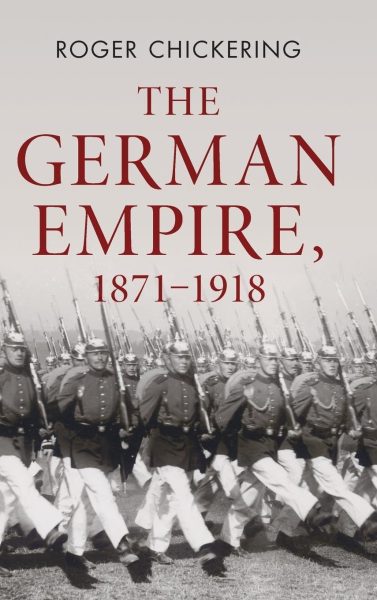
As Roger Chickering explains in his recent book The German Empire, 1871–1918, this battle between the German state and Catholics had been brewing for years and shows a Church in Germany that was orthodox, pious, and deeply fervent. It not only contrasts with the current German Church—which is suffering a severe hemorrhage of faithful—but also explains why the experience of German-American Catholics was so vibrant, giving the Church saints like St. John Nepomucene Neumann and St. Marianne Cope.
The conflict began in 1837, when the Prussian government imprisoned the Archbishop of Cologne over a dispute about mixed marriages between Catholics and Protestants. In the following decades, German Catholicism was revitalized. In 1844, more than half a million Catholics pilgrimaged to Trier to venerate the Holy Robe of Christ. Moreover, the number of religious organizations increased dramatically: between 1837 and 1864, Bavarian monasteries quintupled.
This alarmed many German Protestants—especially liberals and government officials—who believed that German unification and the legacy of the Protestant Reformation required the destruction of Rome’s power in Germany. They thought that weakening the Catholic Church would eliminate a “foreign intruder” from the German body politic, considered a superstitious remnant of the past, and pave the way for a unified national Protestant Church.
Unfortunately for Catholics, liberal Protestants and their allies held a majority in the Reichstag of the newly founded German Empire in 1871, and they used their power to introduce an article in the federal penal code that imposed up to two years in prison on any cleric who addressed political matters in a “disturbance of public order.” This pulpit paragraph was the opening shot of what came to be known as the “culture war” or Kulturkampf.
A series of anti-Catholic laws followed that measure. One law allowed the state to remove clerics from their positions as local school inspectors. Another prohibited religious orders from teaching in state schools. Another expelled the Jesuits and other orders from Germany. Several required the clergy to study exclusively at German universities and to pass a “culture exam,” from which Protestant theologians were exempt. In addition, papal disciplinary decisions were subject to Prussian state oversight.
In response, Pope Pius IX declared that Catholics’ obedience to civil authority was valid only as long as the state did not order anything contrary to God’s commandments or the Church. In 1873, the bishops forbade Catholics from complying with the May Laws. The Prussian Parliament was undeterred: it banned all religious orders and established mandatory civil marriage. As Chickering notes, “the liberals abandoned their own political ideals, this time those of religious tolerance, freedom of assembly, and equal protection under the law.”
By 1876, the twelve Prussian Catholic bishops were in prison or exile. Approximately 200 priests were fined or imprisoned, along with more than a hundred Catholic editors. Twenty Catholic newspapers were shut down.
That same year, Marian apparitions were reported in Marpingen, in the Prussian Saar region. More than 100,000 pilgrims flocked to the site, which was called the “German Lourdes.” (Ecclesiastical investigations—the last concluded in 2005—determined that “the events of Marpingen cannot be confirmed as of supernatural origin.”)
Whatever the veracity of the visions, the persecution only strengthened German Catholics. They boycotted national celebrations of Sedan Day—commemorating the Prussian victory over France in 1870—which Catholics called “Satan’s Day.” On feasts like Corpus Christi, they occupied public spaces with processions, demonstrations, and festivals. Catholic politicians like Ludwig Windthorst, a great adversary of Otto von Bismarck, mobilized local associations to increase Catholic representation in parliament. The Catholic Center Party nearly doubled its seats in the Prussian Parliament, becoming the second largest political force.
By the mid-1870s, Prussian elites realized that political Catholicism would not be easily defeated. “Catholicism had become a tenacious and enduring political reality in the new Germany, a significant parliamentary presence,” Chickering writes. In fact, Catholic newspapers grew from 126 in 1871 to 221 in 1881 and 446 in 1912. King William I of Prussia feared that liberal attacks on the Catholic Church had transformed it from an agent of social order into a subversive force.
Nevertheless, some anti-Catholic laws survived, though applied irregularly, such as the pulpit paragraph, the law against the Jesuits, and the expatriation law. However, the size, dynamism, and cohesion of German Catholicism were largely reinforced by the Kulturkampf. “Images of the German Catholic Church as a besieged fortress or a bastion resisting the world persisted well into the twentieth century.”
Although that fruit is less visible in the current German Church, it undoubtedly survives among millions of American Catholics descended from those brave men and women. It is a hopeful lesson in a time when many Catholics face a hostile cultural and political environment: sometimes political persecution against the Church produces the opposite effect, galvanizing the faithful and deepening their commitment to the faith.
About the author
Casey Chalk is the author of The Obscurity of Scripture and The Persecuted. He contributes to Crisis Magazine, The American Conservative and New Oxford Review. He holds degrees in history and education from the University of Virginia and a master’s in theology from Christendom College.