


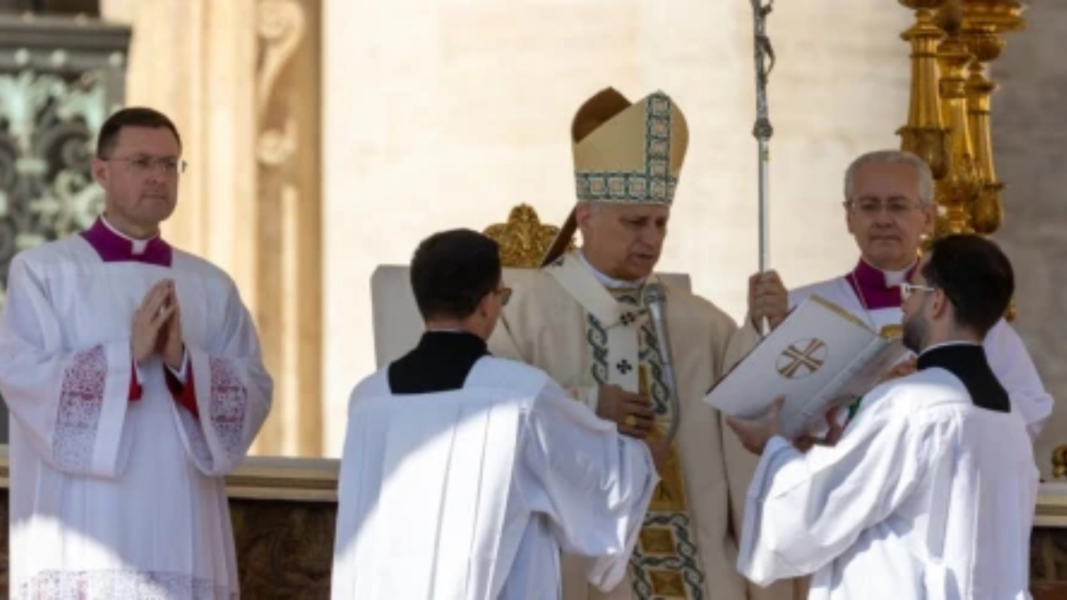
In St. Peter’s Square, Pope Leo XIV presided over the canonization of seven new saints: Ignatius Maloyan, Peter To Rot, Vincenza Maria Poloni, Maria Carmen Rendiles Martinez, Maria Troncatti, Jose Gregorio Hernandez, and Bartolo Longo. In his homily, the pontiff emphasized that the most precious gift in the eyes of God is faith, the “lit lamp” that the new saints knew how to keep alive amid trials and sufferings.
In a catechetical and pastoral tone, the Pope warned that without faith the world plunges into nothingness, and he recalled that authentic prayer is what maintains that bond of trust with God. He presented the new saints as witnesses of hope and love, concrete examples of how to live the Gospel in contexts of persecution, illness, mission, and dedication to the poor.
Below is the complete homily of Leo XIV:
Homily of the Holy Father Leo XIV
Solemn Mass and Canonization of the Blesseds: Ignatius Choukrallah Maloyan, Peter To Rot, Vincenza Maria Poloni, Maria del Monte Carmelo Rendiles Martinez, Maria Troncatti, Jose Gregorio Hernandez Cisneros, Bartolo Longo
St. Peter’s Square – 29th Sunday in Ordinary Time, October 19, 2025
Dear brothers and sisters:
The question with which the Gospel we have proclaimed concludes opens our reflection: “When the Son of man comes, will he find faith on earth?” (Lk 18:8). This question reveals what is most precious in the eyes of God: faith, that is, the bond of love between God and man. Precisely today, seven witnesses stand before us, the new saints and new holy women, who, by the grace of God, have kept the lamp of faith lit; indeed, they themselves have been lamps capable of spreading the light of Christ.
Faith, compared to great material and cultural goods, scientific and artistic ones, stands out; not because these goods are despicable, but because without faith they lose their meaning. The relationship with God is of utmost importance because He created all things from nothing at the beginning of time, and saves from nothingness all that ends in time. A land without faith would be populated by children who live without a Father, that is, creatures without salvation.
That is why Jesus, the Son of God made man, asks about faith: if it disappeared from the world, what would happen? Heaven and earth would remain as they are, but our heart would lack hope; the freedom of all would be defeated by death; our desire for life would plunge into nothingness. Without faith in God, we cannot hope for salvation. Jesus’ question unsettles us, yes, but only if we forget that it is He Himself who pronounces it. The words of the Lord are always Gospel, that is, joyful proclamation of salvation. This salvation is the gift of faith that we receive from the Father, through the Son, with the power of the Holy Spirit.
Dear brothers and sisters, precisely for this reason Christ speaks to his disciples of the need to pray “always, without growing weary” (Lk 18:1). Just as we do not tire of breathing to sustain the life of the body, so prayer sustains the life of the soul. Faith, certainly, is expressed in prayer, and authentic prayer lives by faith.
Jesus points out this bond with a parable. A judge remains deaf to the persistent requests of a widow, whose insistence finally leads him to act. At first glance, that tenacity presents itself to us as a great example of hope, especially in times of trial and tribulation. The woman’s perseverance and the judge’s reluctant behavior prepare a provocative question from Jesus. God, the good Father, “will not he do justice to his chosen ones, who cry to him day and night?” (Lk 18:7).
Let these words resonate in our conscience. The Lord is asking us if we believe that God is a just judge for all. The Son asks us if we believe that the Father always wants our good and the salvation of every person. In this regard, two temptations test our faith. The first gains strength in the scandal of evil, leading us to think that God does not hear the cry of the oppressed nor have pity on the innocent. The second temptation is the claim that God must act as we want. Then, prayer ceases to be such and becomes an order, with which we teach God how to be just and effective.
Jesus, the perfect witness of filial trust, frees us from both temptations. He is the innocent one, who above all during his passion prays thus: “Father, your will be done” (Lk 22:42). These are the same words that the Master gives us in the Our Father. No matter what happens, Jesus entrusts himself as Son to the Father; therefore we, as brothers and sisters in his name, proclaim: “It is truly right and just, our duty and salvation, always and everywhere to give you thanks, holy Father, through Christ Jesus, your beloved Son” (Roman Missal, Eucharistic Prayer II, Preface).
The prayer of the Church reminds us that God does justice to all, giving his life for all. Thus, when we cry out to the Lord: “where are you?”, we transform this invocation into prayer, and then we recognize that God is there where the innocent suffers. The cross of Christ reveals the justice of God. And the justice of God is forgiveness. He sees evil and redeems it, taking it upon himself. When we are crucified by pain and violence, by hatred and war, Christ is already there, on the cross for us and with us. There is no cry that God does not console, no tear that is far from his heart. The Lord listens to us, embraces us as we are, to make us as He is. He is the way; whoever rejects God’s mercy remains in darkness, and whoever welcomes forgiveness welcomes peace as a gift from the Father, a gift given by the Spirit.
Dear brothers and sisters, now we understand that Jesus’ questions are an energetic invitation to hope and action. When the Son of man comes, will he find faith in God’s providence? It is this faith, precisely, that sustains our commitment to justice, because we believe that God saves the world out of love, freeing us from fatalism. Therefore, let us ask ourselves: when we hear the call of those in difficulty, are we witnesses of the Father’s love, as Christ has been for all? He is the humble one who calls the arrogant to conversion, the just one who makes us just, as the new saints of today attest. They are not heroes, or champions of any ideal, but authentic men and women.
These faithful friends of Christ are martyrs for their faith, like the bishop Ignatius Choukrallah Maloyan and the catechist Peter To Rot; they are evangelizers and missionaries like Sister Maria Troncatti; they are charismatic foundresses, like Sister Vicenta Maria Poloni and Sister Carmen Rendiles Martinez; they are benefactors of humanity with hearts aflame with devotion, like Bartolo Longo and Jose Gregorio Hernandez Cisneros. May their intercession assist us in trials and their example inspire us in the common vocation to holiness. As we journey toward that goal, let us not tire of praying, grounded in what we have learned and firmly believe (cf. 2 Tm 3:14). In this way, faith on earth sustains hope in heaven.