


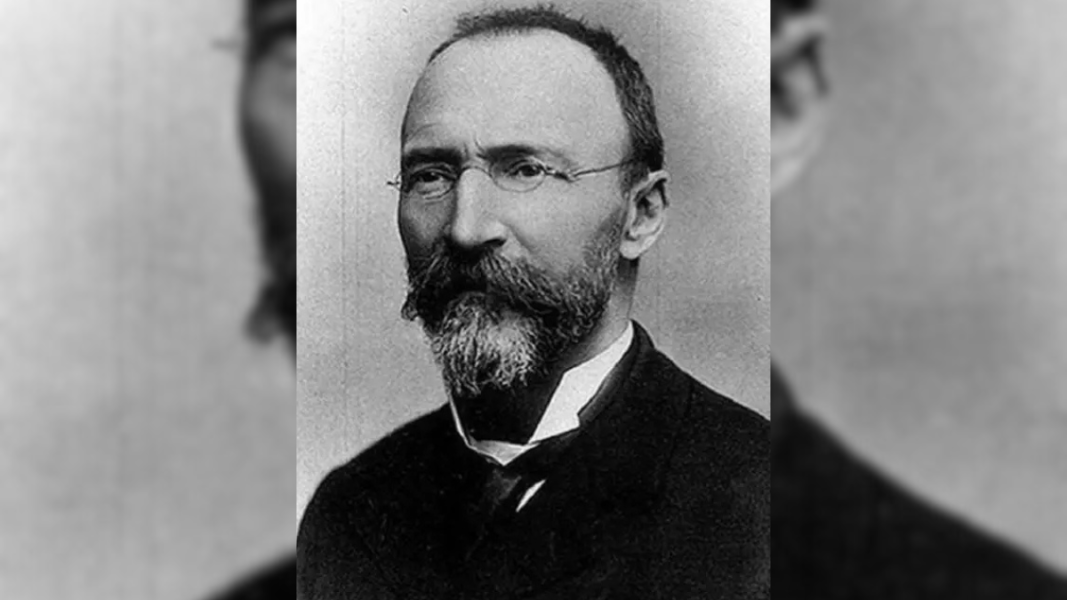
Bartolo Longo was born on February 10, 1841 in Latiano, in the province of Brindisi, Italy. From a well-off family and with great intellectual talent, he studied Law in Lecce and graduated from the University of Naples, practicing as a lawyer.
Crisis and conversion
During his university years, he drifted away from the faith, letting himself be carried away by spiritualist currents and esoteric practices that were very widespread in his time. However, God’s grace reached him: in 1865 he returned to the Church, embracing Christian life with renewed fervor. He became a Dominican tertiary and found in the Rosary the great mission of his life.
“If what you have promised is true… that those who promote the Rosary will be saved, I will be saved, because I will not leave this land of Pompeii without spreading devotion to your Rosary here”.
That day, as the bells of the Angelus rang, he understood that his mission was decided.
The Shrine of the Virgin of the Rosary of Pompeii
In 1872 he arrived in the valley of Pompeii to manage the properties of the Countess Marianna Farnararo, widow of De Fusco. Seeing the spiritual and material abandonment of the inhabitants, he decided to dedicate his life to their evangelization and assistance.
On November 13, 1875 he introduced the image of the Virgin of the Rosary in Pompeii, and on May 8, 1876 he laid the first stone of the Shrine of Our Lady of the Rosary, which over the years would become a worldwide Marian pilgrimage site.
He was also a writer and journalist: he published devotional books, edited the newspaper Il Rosario e la Nuova Pompei, and in 1883 composed the famous Supplication to the Virgin of Pompeii, which is still prayed throughout the world on May 8 and the first Sunday of October.
Marriage and works of charity
Bartolo married the Countess De Fusco, with whom he lived in conjugal chastity. Together they established works of great social impact: an orphanage for girls (1887), homes for the children of prisoners (1892 and 1922), and the Congregation of the Dominican Sisters “Daughters of the Holy Rosary of Pompeii”, dedicated to supporting these initiatives.
In a gesture of total detachment, in 1906 he donated all his properties to the Holy See, showing that his life and goods were only for God and for the Virgin.
Death and recognition by the Church
Bartolo Longo died on October 5, 1926 in Pompeii, leaving as a legacy a Marian shrine of universal reach and a devotion that transformed lives around the world. He was beatified by Saint John Paul II on October 26, 1980 in St. Peter’s Square.
On the upcoming October 19, 2025, Pope Leo XIV will canonize him, officially confirming him as a saint of the universal Church.